One gymnast, one bar, real swing physics: the Blender-authored gymnast hangs from the high bar on a pendulum energy model — tap at the bottom of the swing to pump, and her arc grows until she is turning full giants. Tap up high to let go: she tucks into a spin that carries the swing’s momentum, opens out on the way down, and plants a landing on the royal-blue crash mat. Release phase, spin recovery and landing spot are judged into a score the flip cards celebrate — stick a 9 and the celesta agrees. Botch the release and she tumbles, shakes it off, walks back on a real gait and remounts for the next attempt. Piano waltz, glockenspiel pumps, harp release and taiko landings — every sound a sampled instrument.
1 · AI conceptConcept prompt
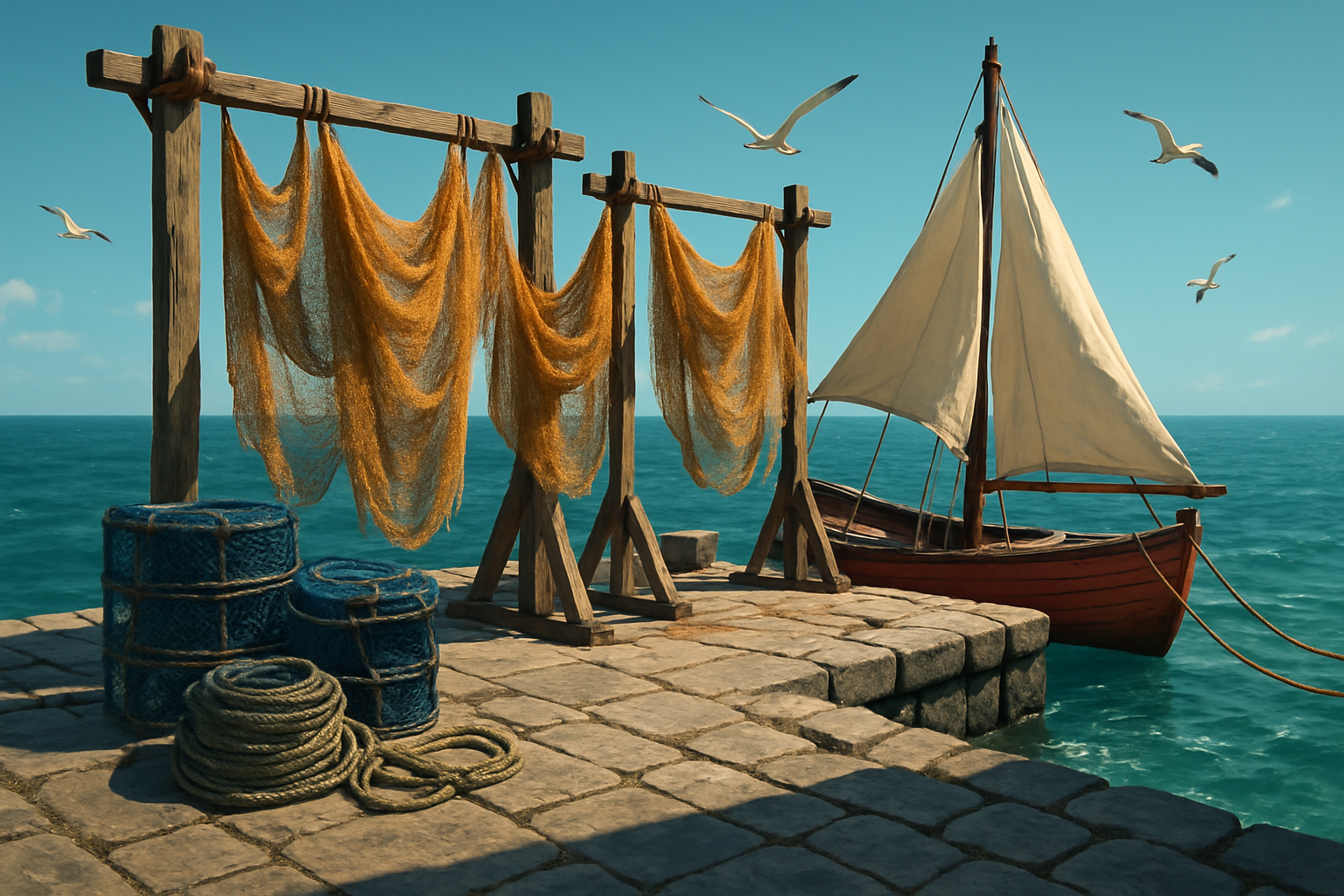
A weathered stone harbour quay at midday: tall wooden drying racks hung with ochre fishing nets billowing in the wind, a stack of blue crab pots and coiled rope on the flagstones, a small red-hulled fishing boat moored alongside with a furled cream sail, gulls circling, bright cool sea light with hard shadows, turquoise water, high-end stylized 3D game render, no text, no watermark, no UI
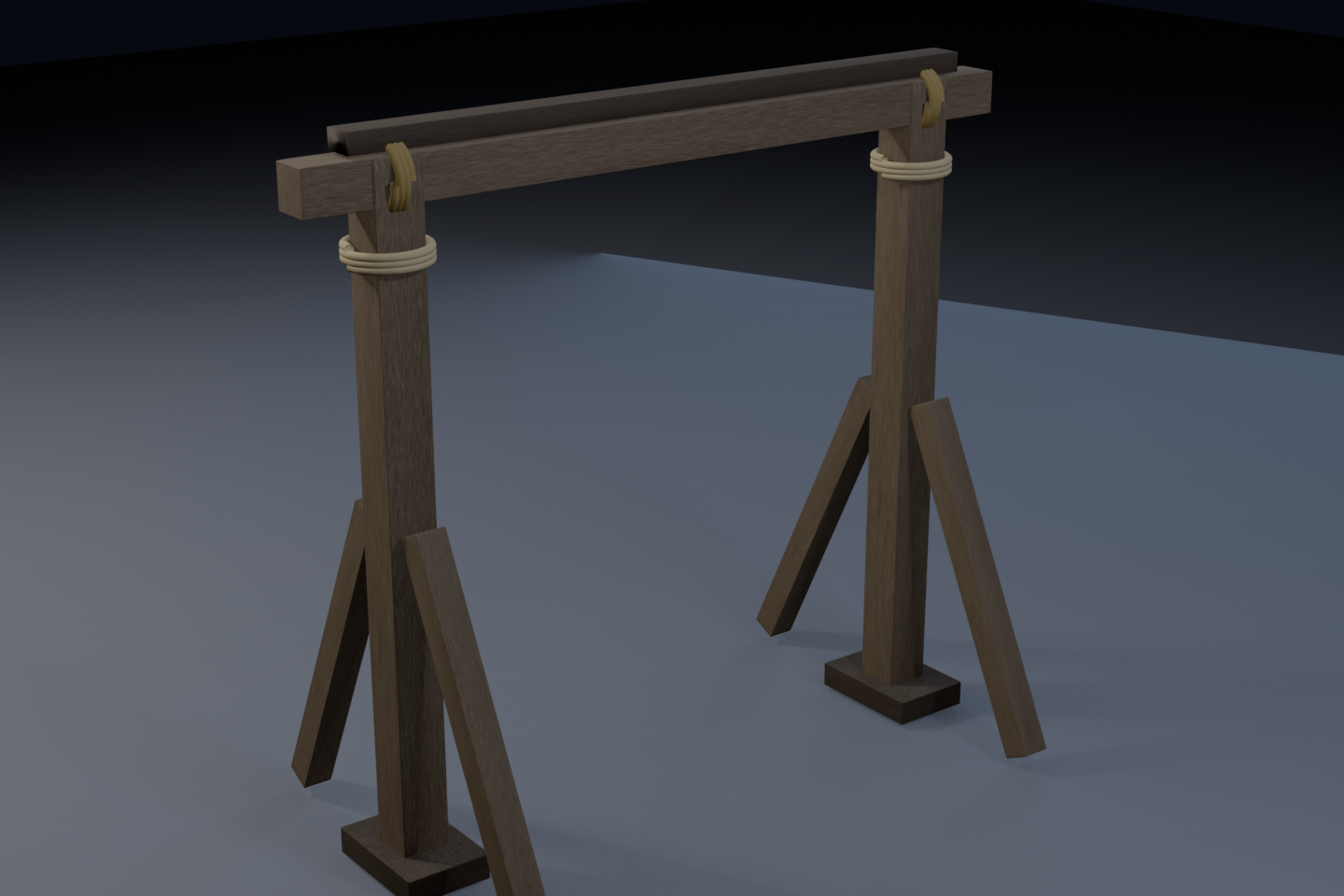
2 · Blender render (code-modeled)
Tap once for sound - tap/space low = pump, high = release - R resetsOpen fullscreen ↗
Made by AI, compiled by the real Unity 6 engine. This piece is an experiment with its control group left hanging in the shot, and unlike the last few it returned a negative result — which is the more useful kind to have in writing. Unity ships a Cloth component for simulating fabric. It had never been tried in this lab, and a code-built WebGL build is exactly the setting where engine features quietly stop working: distance fog and GPU instancing were both found stripped here in earlier pieces. So the rack carries two identical nets. The left one has a real Cloth component with pinned top edge, gravity, damping and a wind gust. The right one is the same mesh pushed around by a sine wave, the way this lab has always faked fabric. The panel reports how far the vertices of each actually travelled. The Cloth net does not move at all — it constructs, accepts its coefficients, answers every query, and hangs as a rigid board — while the hand-driven net beside it ripples. The control was built to look different from the probe on purpose: a sine wave is not a solver, and its only job was to make an inert simulation impossible to mistake for a still scene. The other nets on the quay are driven the way the result says fabric must be driven here. Rack, crab pots, rope coils and boat are code-modeled Blender exports.