One gymnast, one bar, real swing physics: the Blender-authored gymnast hangs from the high bar on a pendulum energy model — tap at the bottom of the swing to pump, and her arc grows until she is turning full giants. Tap up high to let go: she tucks into a spin that carries the swing’s momentum, opens out on the way down, and plants a landing on the royal-blue crash mat. Release phase, spin recovery and landing spot are judged into a score the flip cards celebrate — stick a 9 and the celesta agrees. Botch the release and she tumbles, shakes it off, walks back on a real gait and remounts for the next attempt. Piano waltz, glockenspiel pumps, harp release and taiko landings — every sound a sampled instrument.
1 · AI conceptConcept prompt
A grey heron standing in shallow marsh water at first light, its long neck drawn back in a slow S-curve ready to strike, slate-grey plumage with a white throat, a black crest plume trailing from the eye, a long amber dagger bill and long ochre legs in the water; tall green reeds and cattails around it, mist low over still water, soft pink dawn sky, high-end stylized 3D game render, no text, no watermark, no UI
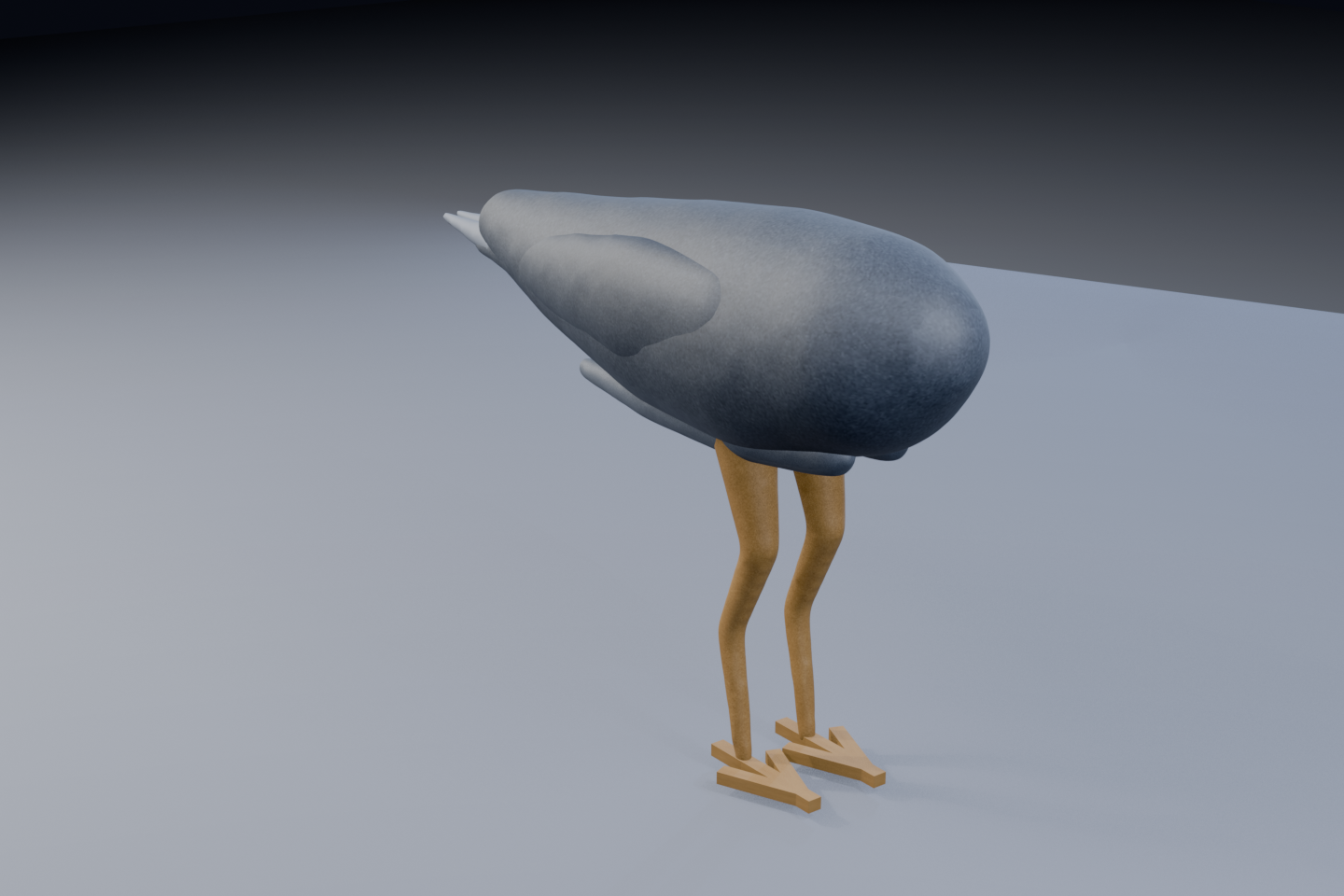
2 · Blender render (code-modeled)
Tap once for sound - tap/space low = pump, high = release - R resetsOpen fullscreen ↗
Made by AI, compiled by the real Unity 6 engine. This piece is an experiment with its control group left in the shot. Every character this lab has built for ninety-odd cycles has been rigid parts on pivots, because rigid parts are what a code-built scene can be sure of — and rigid parts cannot bend. So the heron has two necks. The left one is a SkinnedMeshRenderer built entirely at runtime: its vertices, triangles, bone weights and bindposes are all constructed in code, with no saved asset behind them. The right one is the segmented chain this lab has always used. Both are driven by the same curve from the same function, so they cannot drift apart. The panel measures the deformed vertices rather than the bone angles, because a bone chain can rotate perfectly while the mesh it drives stays rigid — which is the exact failure worth catching, and bone angles would call it healthy. It works, and the difference is visible without reading anything: the skinned neck is one smooth curve, and the rigid one facets at every joint. The bird, its head and the reeds are code-modeled Blender exports; the reeds are built from plain cones because a two-metre blade three centimetres thick is the worst possible shape to hand a voxel remesher.