Props/Sets · Full Pipeline
Tannery Yard
Saddle-stitch the seat seam of a part-finished saddle clamped in a stitching pony. A marker runs the seam and SPACE sets a stitch where it is - each one a real model node appearing in place - while SHIFT pulls the thread tight, and tension has its own band: slack gapes, over-tight puckers the leather. A saddler's seam is judged on regularity, so evenness is the score. Underneath, the cycle that proved runtime detail maps work - every surface in this workshop carries close-range grain because of it.
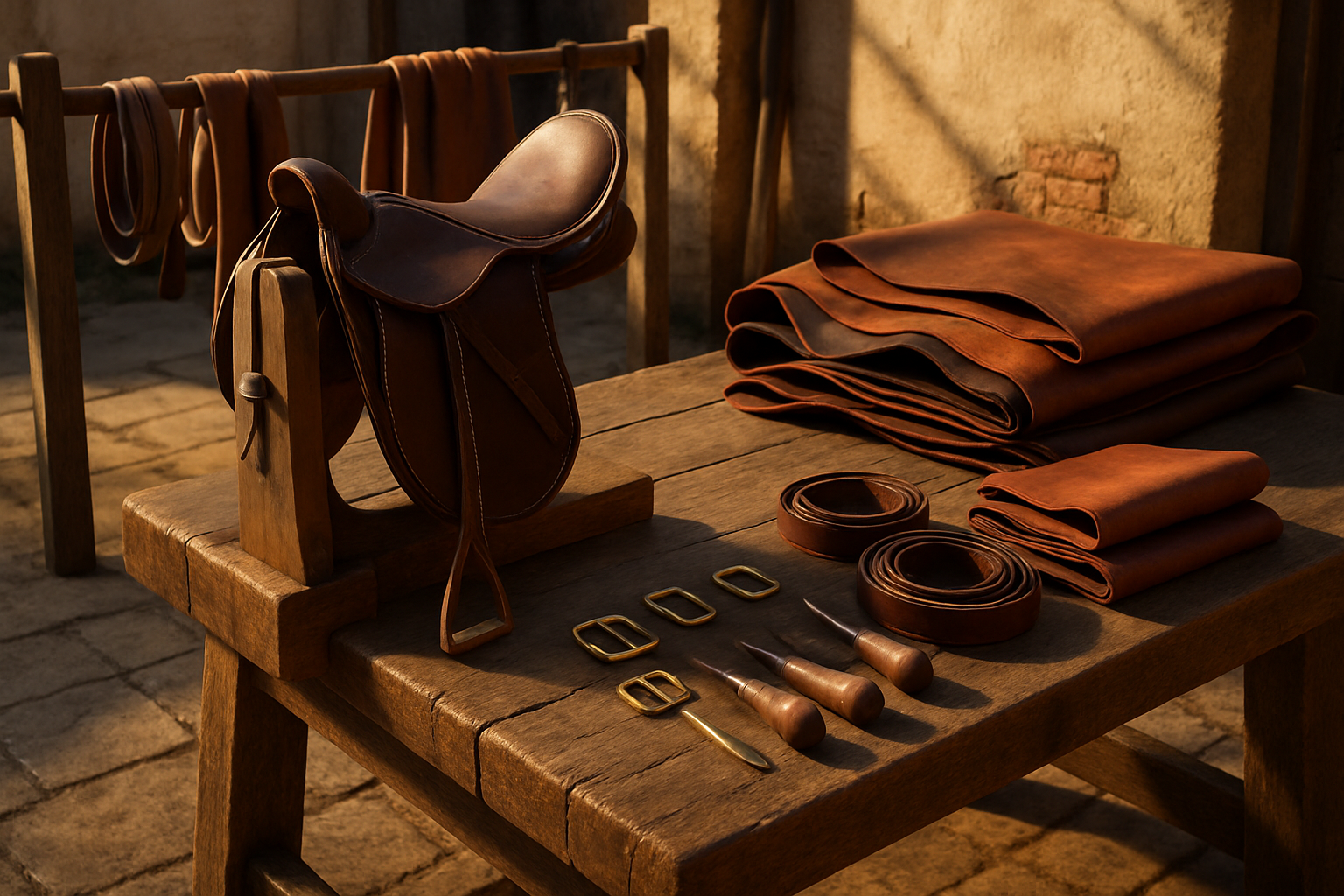
Concept prompt
A leather workshop yard in late afternoon: a heavy oak workbench with a half-stitched saddle clamped in a stitching pony, coiled belts and hides, brass buckles and awls laid out on the bench, and worn stone flags underfoot.
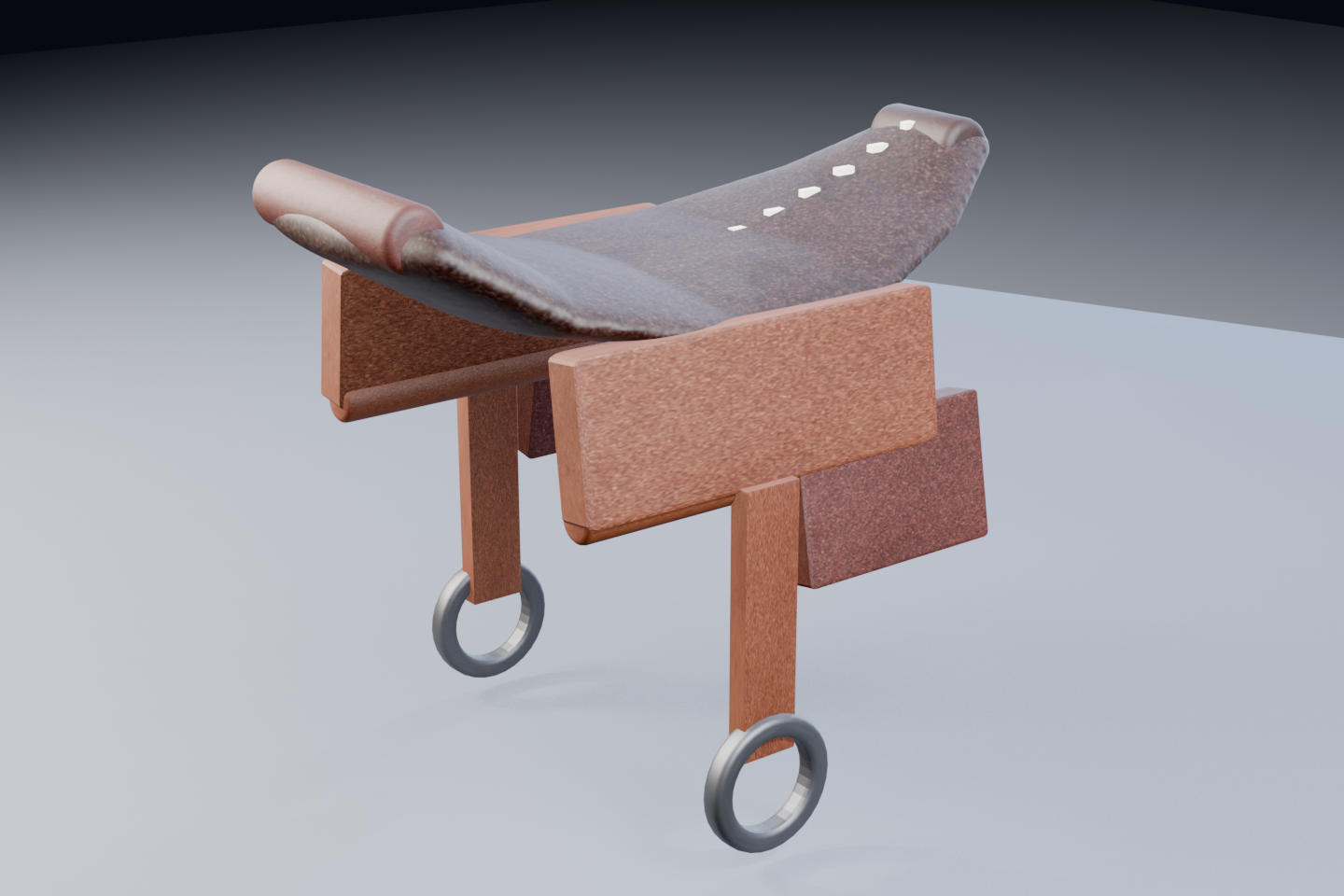
Tap once for sound - tap/space low = pump, high = release - R resets
Open fullscreen ↗
Made by AI, compiled by the real Unity 6 engine. This piece is an experiment with its control group left visible. In ninety cycles this lab had never once used Unity's own animation system — every piece animated by hand in code — and two engine features tested here before, distance fog and GPU instancing, turned out to be silently stripped from a code-built WebGL build. An AnimationClip built entirely at runtime is the same shape of thing: no saved asset, nothing for the build pipeline to see and keep. So the lion's head is loaded twice. The left head is driven by the runtime clip; the right head is driven by hand with the same curve, the same period and the same amplitude. The panel reports how far each one actually travelled since boot, because a rig that never leaves its starting value is inert no matter how alive the scene looks. Both bindings pass — position and rotation alike — and the clip matches its control to three digits, which is the opposite of what fog and instancing did. The lion, drum, drummer and lanterns are code-modeled Blender exports; the head is seated on the body from its measured renderer bounds rather than by eye.