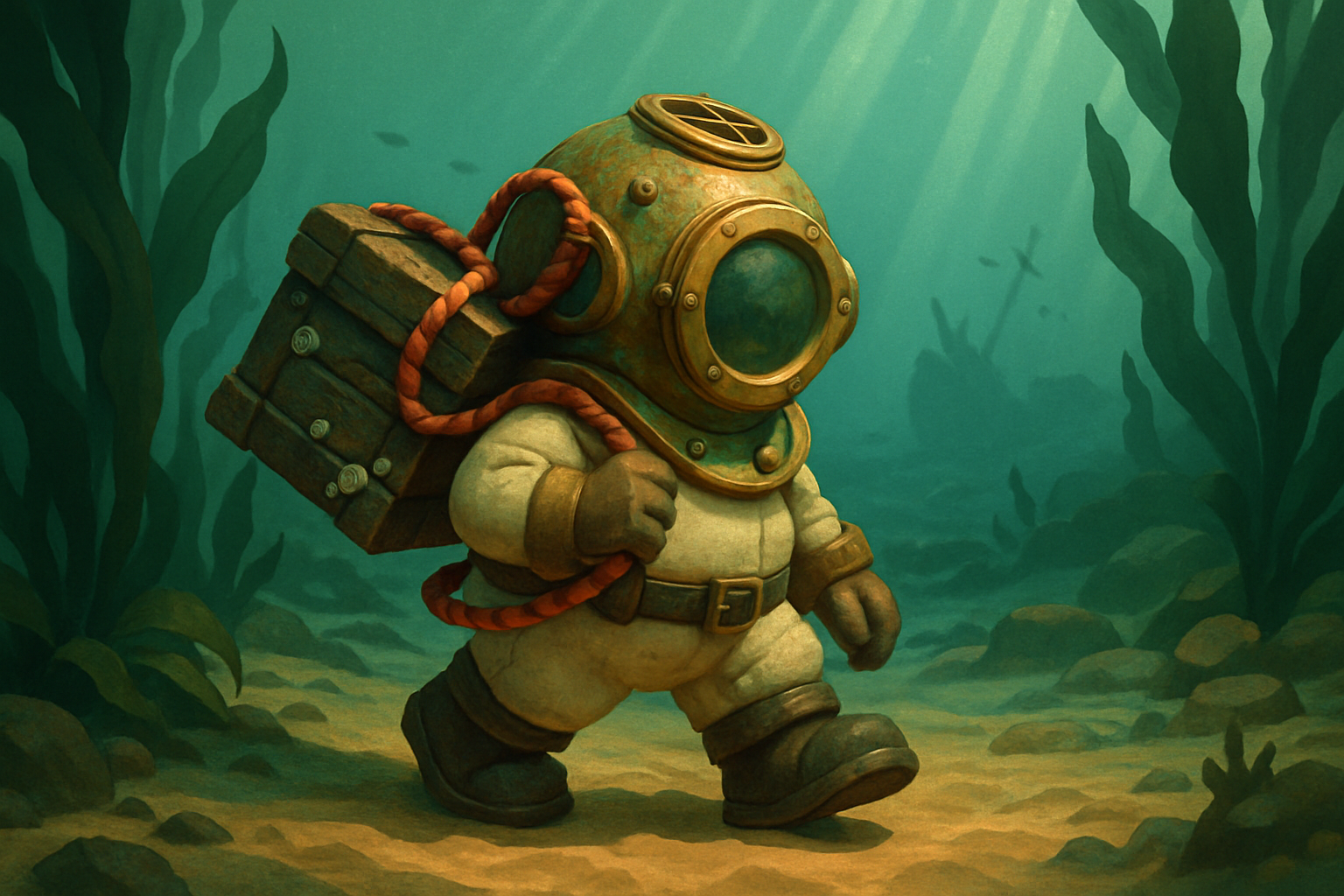
Key art
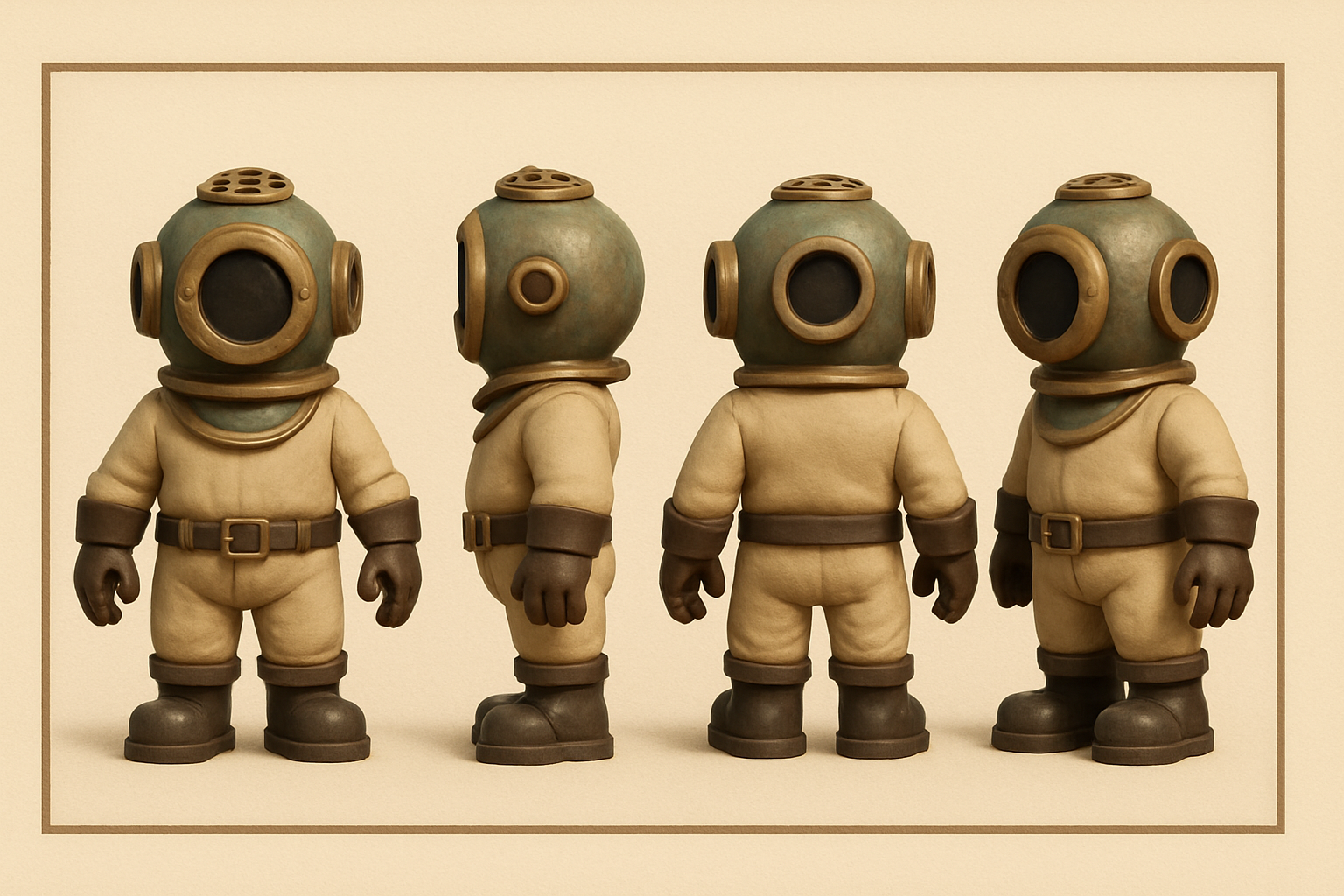
Orthographic turnaround
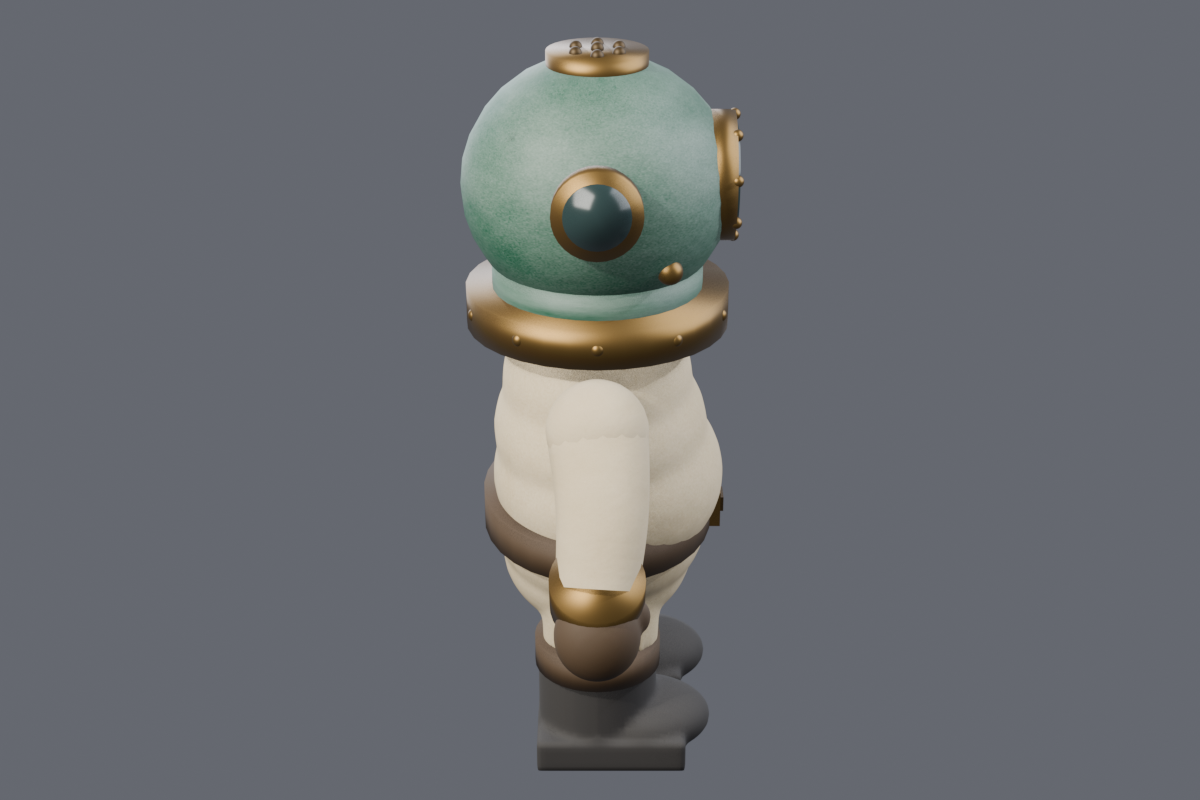
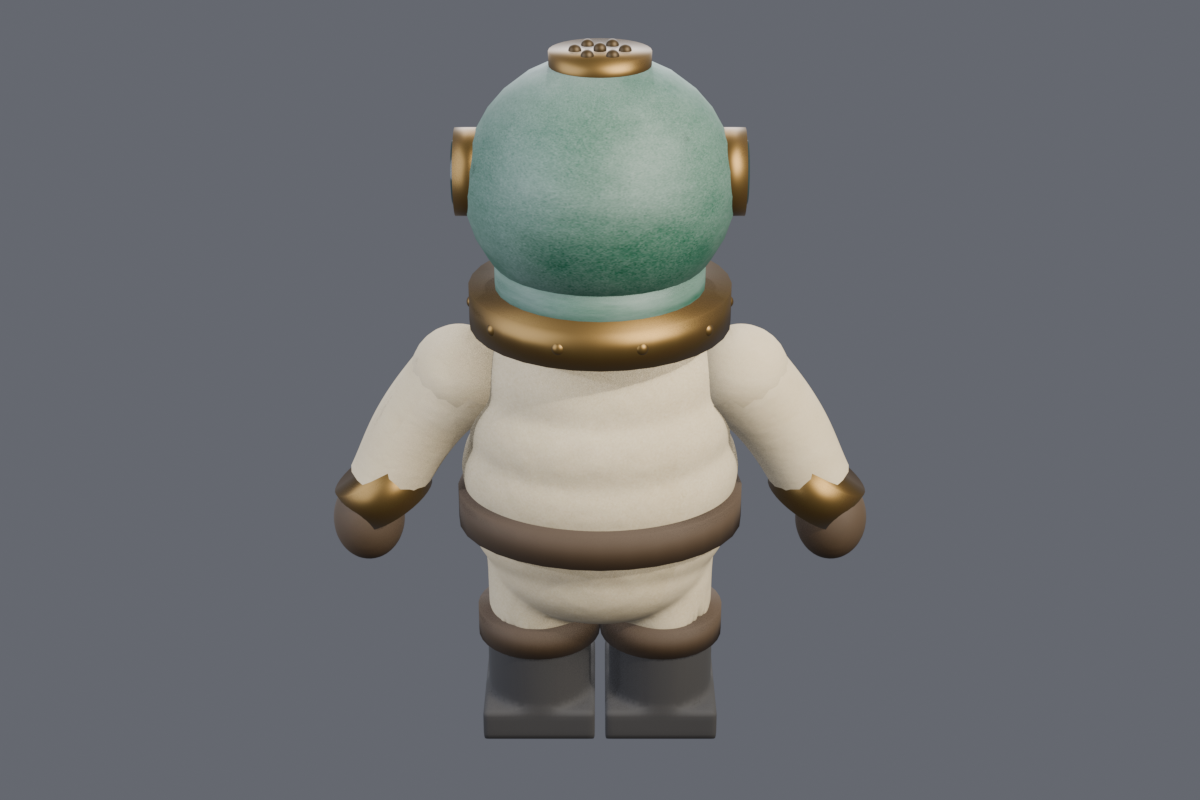
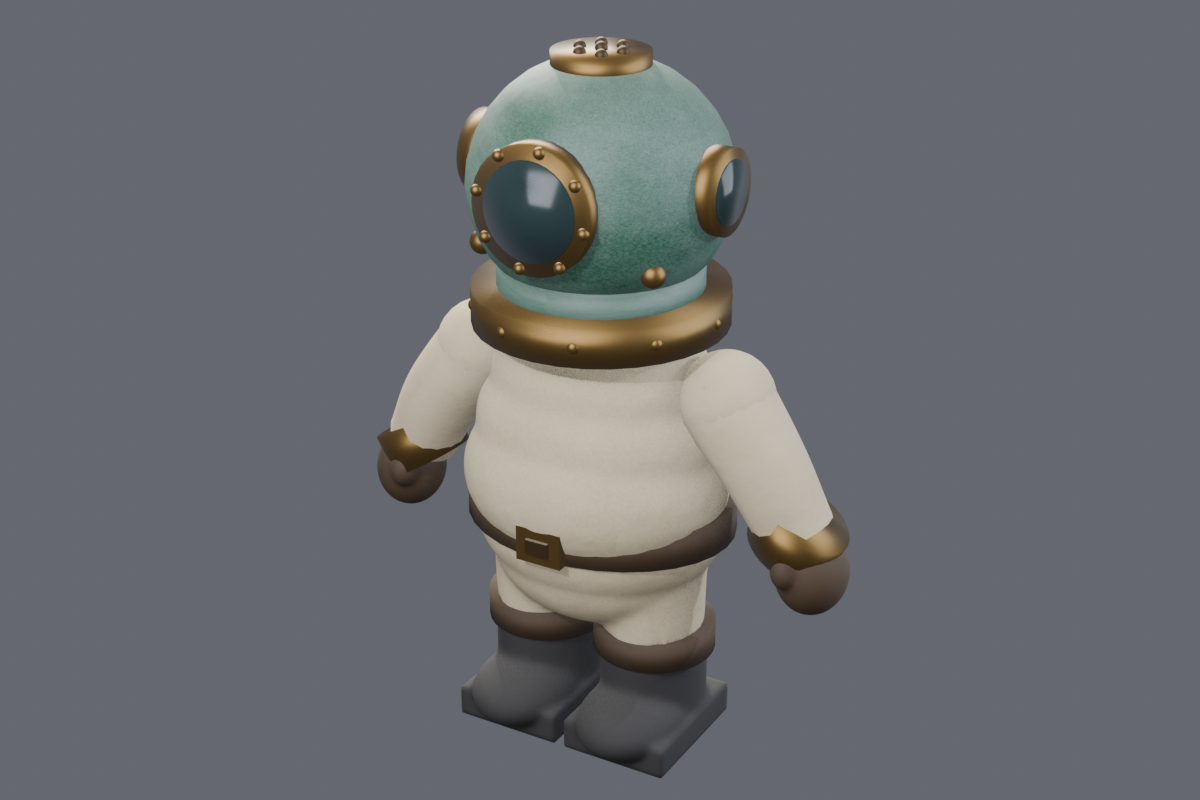
The modelling contract: four views, identical equipment, consistent proportions. Aged brass with verdigris patina, open-glass bolted portholes, perforated top vent, leather belt, dark gloves, weighted boots.
Environment zones
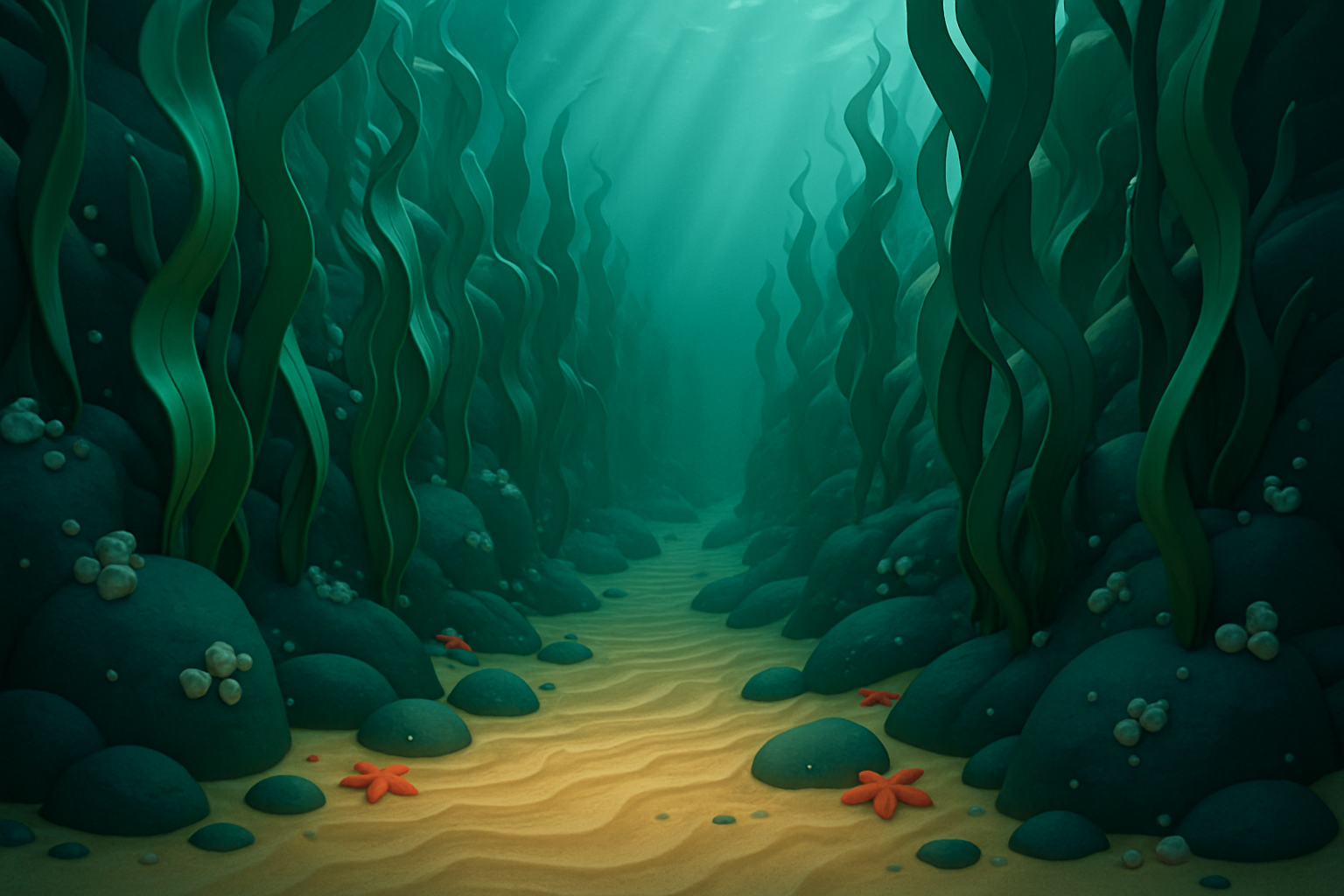
Kelp Gully — the bright shallows: rippled sand, emerald kelp ribbons, coral-red starfish.
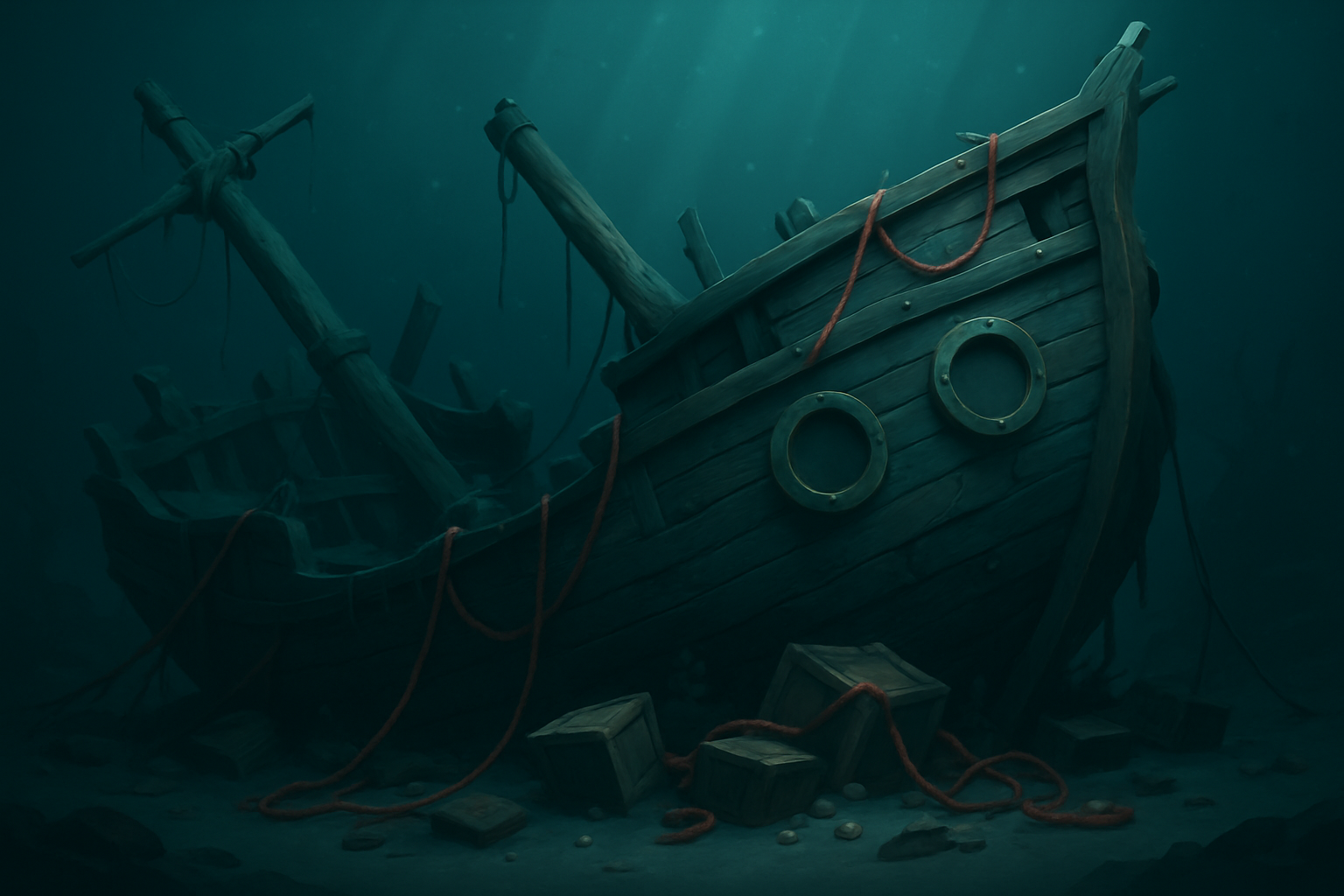
Wreck of the Gilded Gannet — the dark zone: matte verdigris portholes, spilled crates, coral rope.
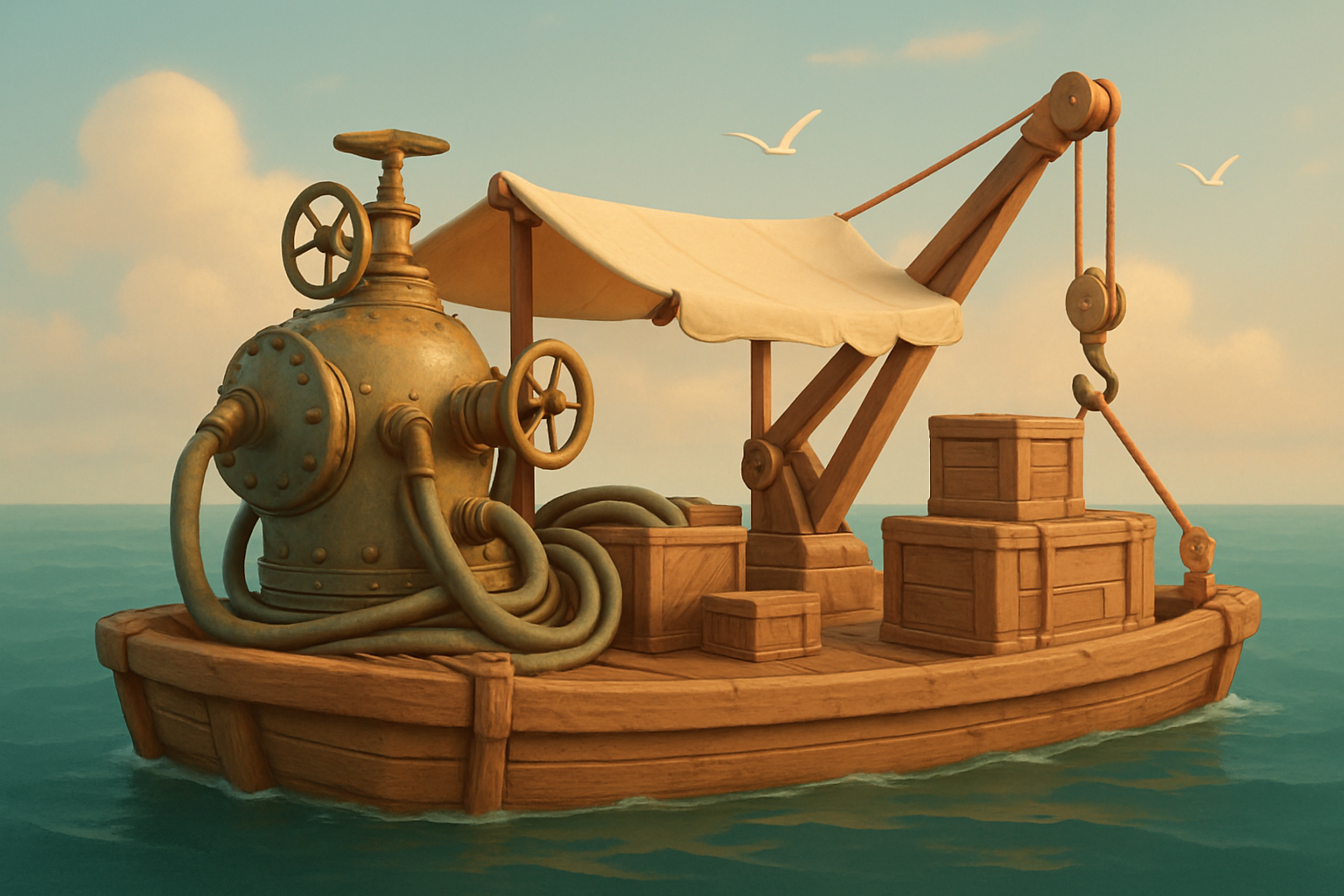
Surface Tender Barge — above the water: the air pump, hose coils and crane the diver works from.
Props & materials
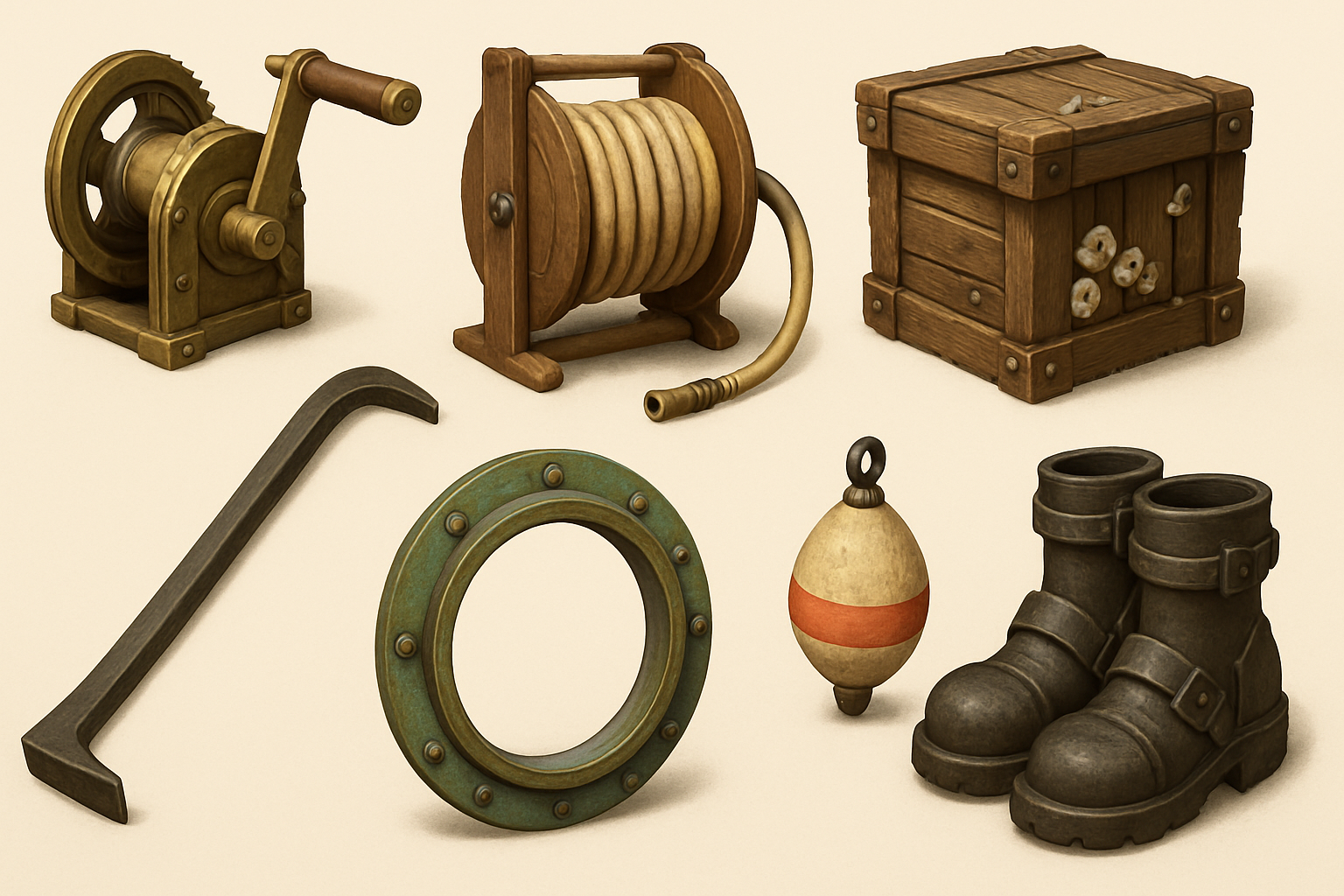
Seven props at one scale: hand winch, hose reel, salvage crate, pry bar, porthole, message buoy, weighted boots.
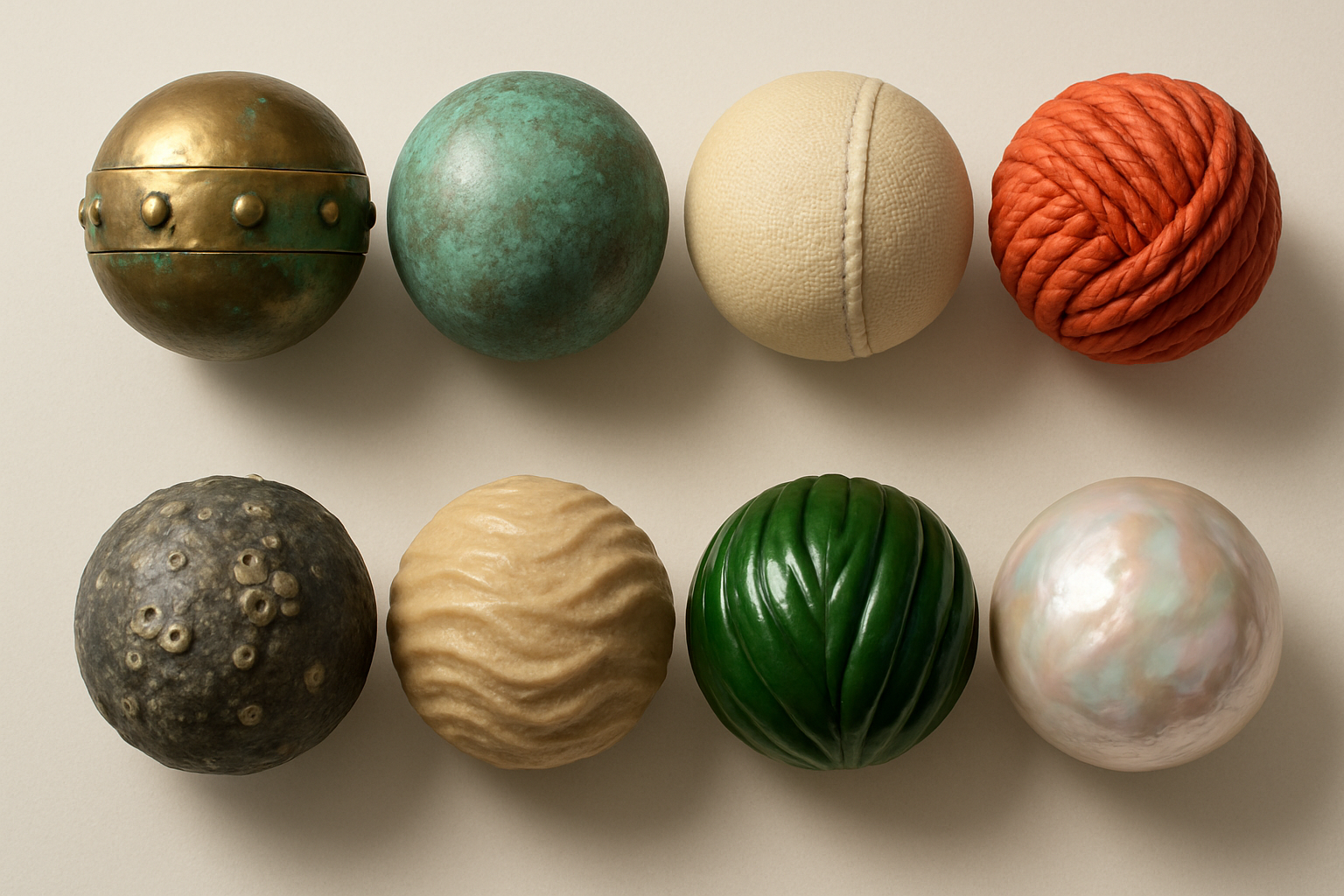
Eight materials: aged brass, verdigris copper, waxed canvas, coral rope, barnacled iron, wet sand, kelp, mother-of-pearl.
The buildability probe
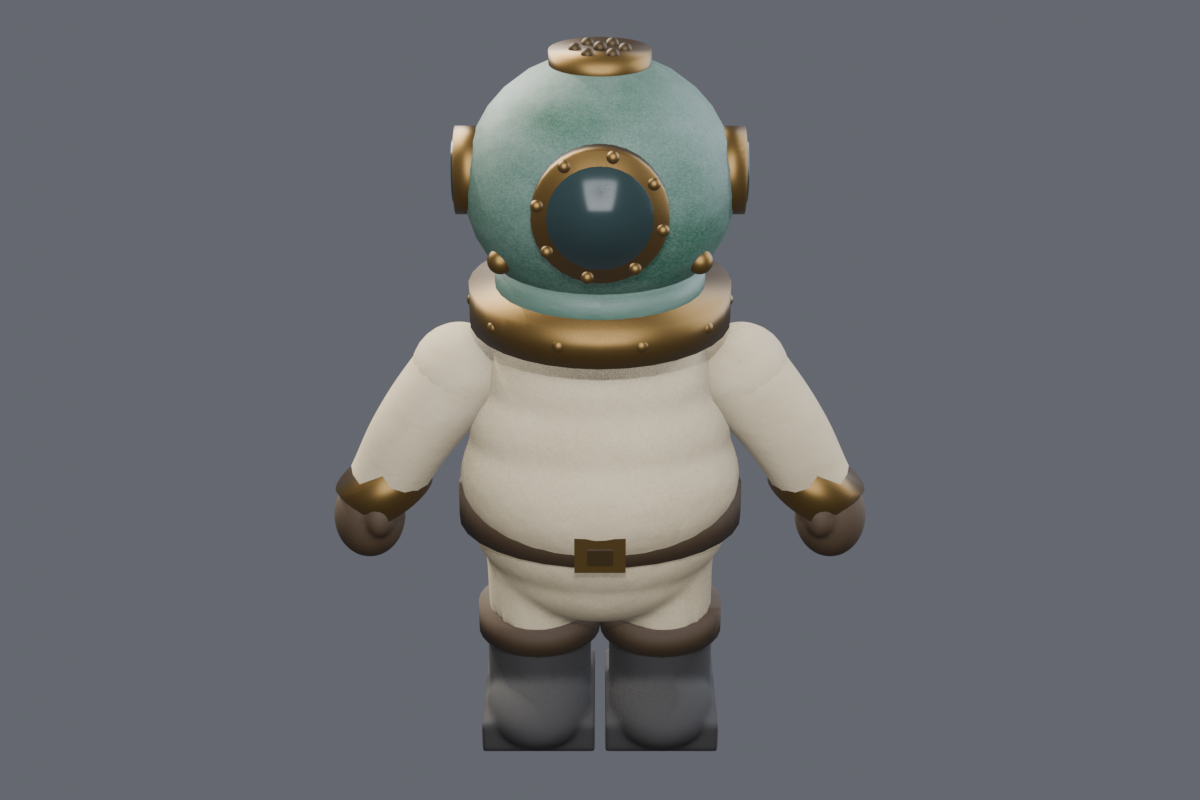
A pack only ships after an asset has actually been modelled from it. The Brass Diver below was authored headless in Blender from the turnaround sheet alone — fused canvas volumes, curve-tube limbs, brass fittings — across seven audit-driven rounds, then compared back against the sheet for silhouette, proportions and signature details. Verdict: the turnaround under-specified nothing.
What the pack proved. Enumerated per-position prompts fix swatch-count drift on material
boards; a framed-poster border clause keeps four-view turnarounds fully inside the frame; and any element left
unnamed in a prompt (glove colour, vent pattern) will drift between sheets — the element inventory is the contract
that catches it. Full findings feed the platform's concept generation pipeline.