Pieces
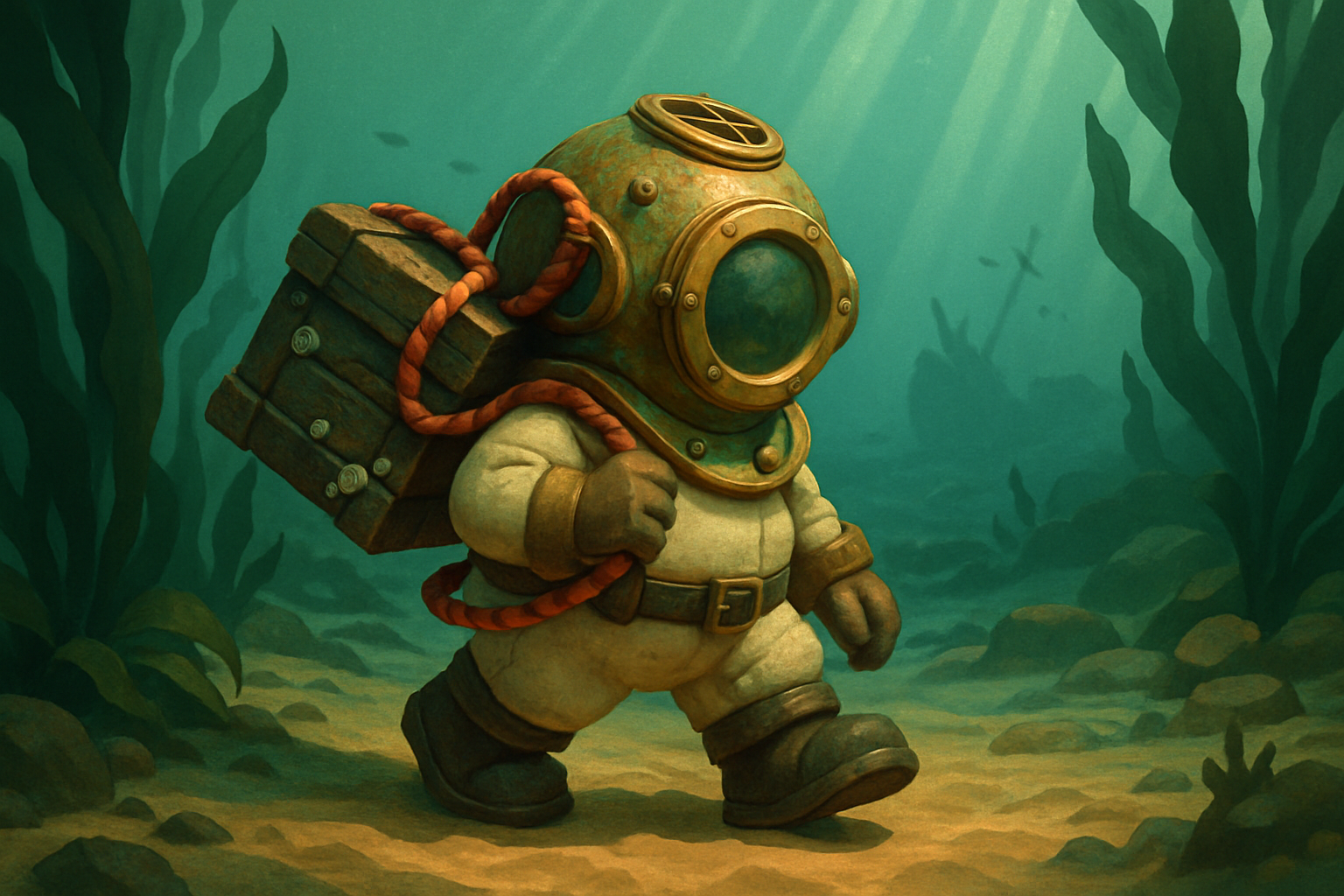
Each card is a piece produced by the loop above — newest first.
Concept art is a promise about what can be built. Most AI concept images break that promise — beautiful, and unbuildable. Every pack here is stress-tested the only way that matters: an asset is actually modeled from it before the pack ships.
Try the AI Game BuilderA real pack speaks production’s language: key art for mood, an orthographic turnaround for modeling, three environment zones for level variety, a prop sheet at consistent scale, a material board for surfaces. One palette, one subject, no contradictions.
The coherence audit catches what makes packs useless downstream: a key-art hero whose proportions disagree with the turnaround, zones in different palettes, props at impossible scales. Sheets that disagree get regenerated with sharper prompts — and the prompt delta is the research.
The decisive gate no image-only workflow has: a hero asset is actually modeled from the turnaround in Blender, rendered as a turntable, and compared back. A sheet that under-specifies — hidden back, ambiguous joints — fails the pack, not the modeler.
Every named thing across the sheets is extracted into a written element inventory — the contract the production build must satisfy, row by row, with the verifier blocking completion on missing elements. The pack isn’t inspiration; it’s specification.
An original direction with a committed palette, shape language, mood.
Key art, turnaround, zones, props, materials — generated.
Sheets must agree; offenders regenerate with sharper prompts.
A hero asset modeled from the turnaround — or the pack fails.
The pack, its probe asset, and the prompt formulas that worked.
Each card is a piece produced by the loop above — newest first.
Hidden backs, ambiguous joints, materials that read as paint rather than surfaces, proportions that disagree between sheets. Beautiful images that can’t answer a modeler’s questions — the probe exposes them before production pays the price.
Prompt formulas: the deltas that fixed failed sheets — palette anchor clauses, orthographic-consistency phrasing, material-board vocabularies. Those flow back into the platform’s concept generator so every customer pack improves.
Every 3D game build gets the full seven-sheet pack with element-inventory enforcement; 2D games get a right-sized set under the same coherence rules.
Because the failure mode isn’t ugliness — it’s incoherence and under-specification, which you only discover in production. The probe finds it in the lab instead, and each failure sharpens the prompts permanently.
The builder draws a full pack, proves it element by element, and builds what it shows.
Try the AI Game Builder