A border checkpoint at three in the morning. A permit comes through the hatch; the posted rules and the open ledger say what a valid one looks like. Press 1-4 to inspect a field - the name, the date, the seal, the photograph - then S to stamp it through or D to turn it away. Get it wrong and the desk tells you exactly what you missed, in the same words the rules use. The interface here is PAPER: a ruled ledger, a rubber date stamp on its ink tray, permits with photographs, a brass bell push, and a rack of stamped files behind you.
1 · AI conceptConcept prompt
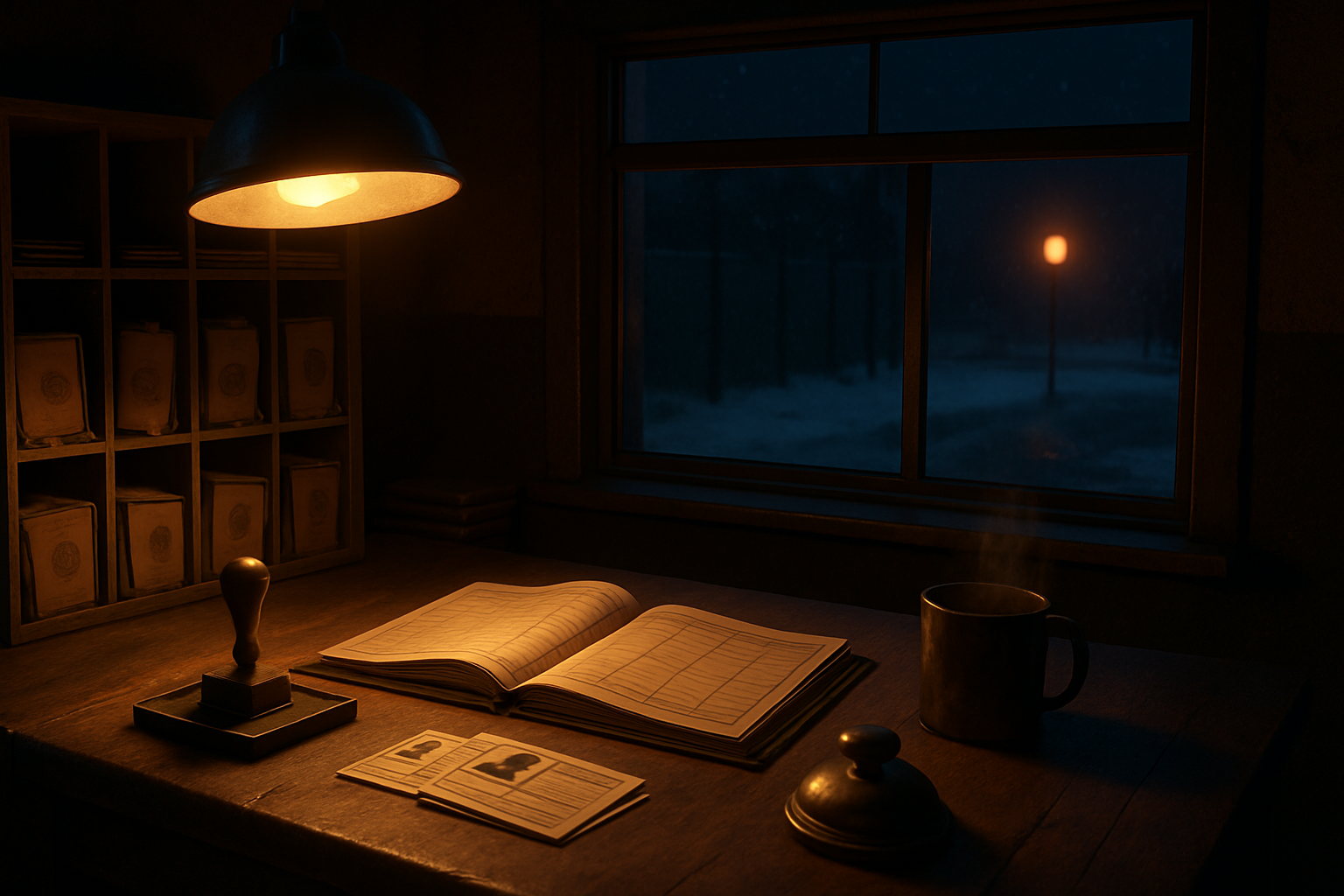
A night border checkpoint interior: a worn wooden inspection desk under a single hooded lamp, an open ledger with ruled columns, a rubber date stamp and ink pad, a stack of paper permits with photographs, a brass bell push, a pigeonhole rack of stamped files behind, a sliding glass hatch onto a dark snowy yard with a queue lamp glowing outside, cold blue night against warm amber lamplight, steam from a tin mug.
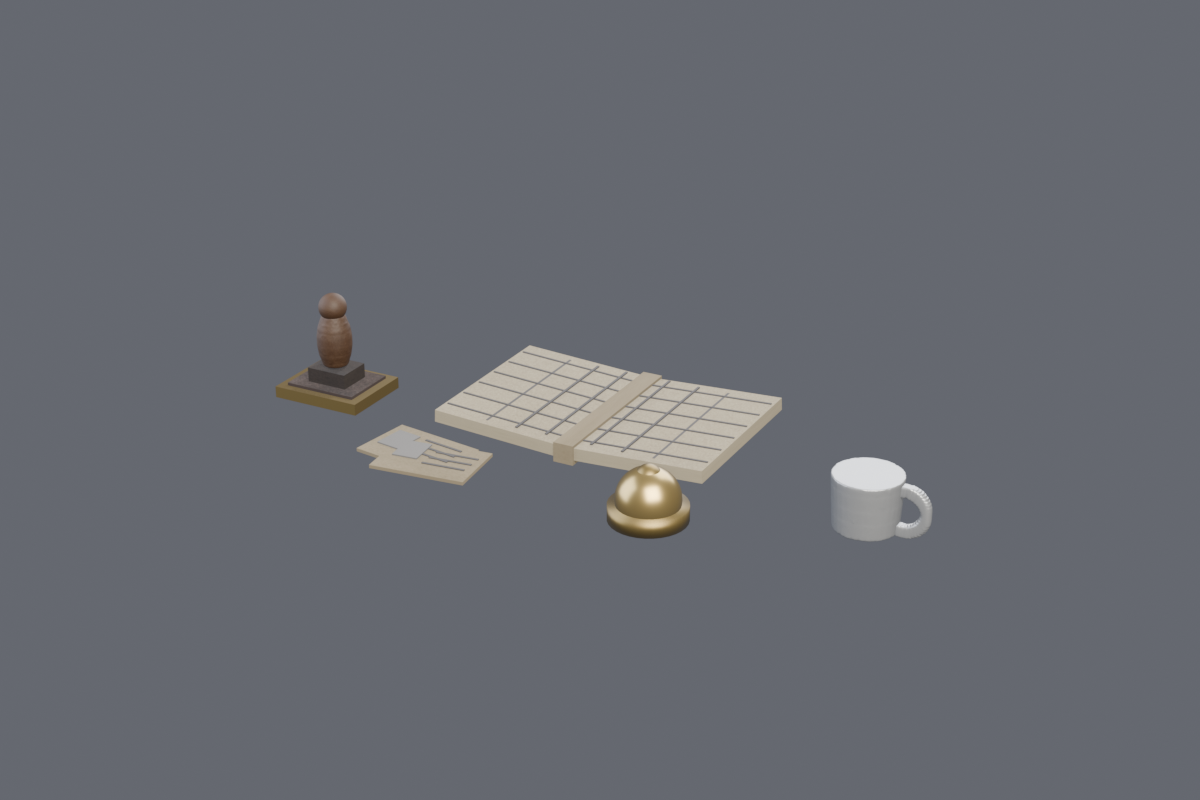
2 · Blender render (code-modeled)
Tap once for sound - 1-4 inspects a field - S stamps APPROVED - D refuses - R new shiftOpen fullscreen ↗
Made by AI, compiled by the real Unity 6 engine. This lab has seven interface pieces and every one of them is a readout you OPERATE - a sonar console, a telescope eyepiece, an arcade screen, a radio dial, a shop panel, a diagnostics sweep, a combat HUD. You turn them, tune them, watch them resolve. Not one asks you to JUDGE the interface: to hold what a document claims against what a rule book requires and decide. So this one puts the interface on paper and makes you the one who is wrong. The whole room is modelled rather than implied - the desk and its worn front edge, the ruled ledger, the turned stamp on its felt pad, the pigeonhole rack, the window with its mullions and sill, and beyond the glass a snowy yard with a conifer line, falling snow and a queue lamp burning on its post. The score is written for the lab's canonical composer: a clarinet line over a contrabass, celesta only where the desk speaks, and every pitch played from its own sampled note file rather than one sample stretched across octaves.