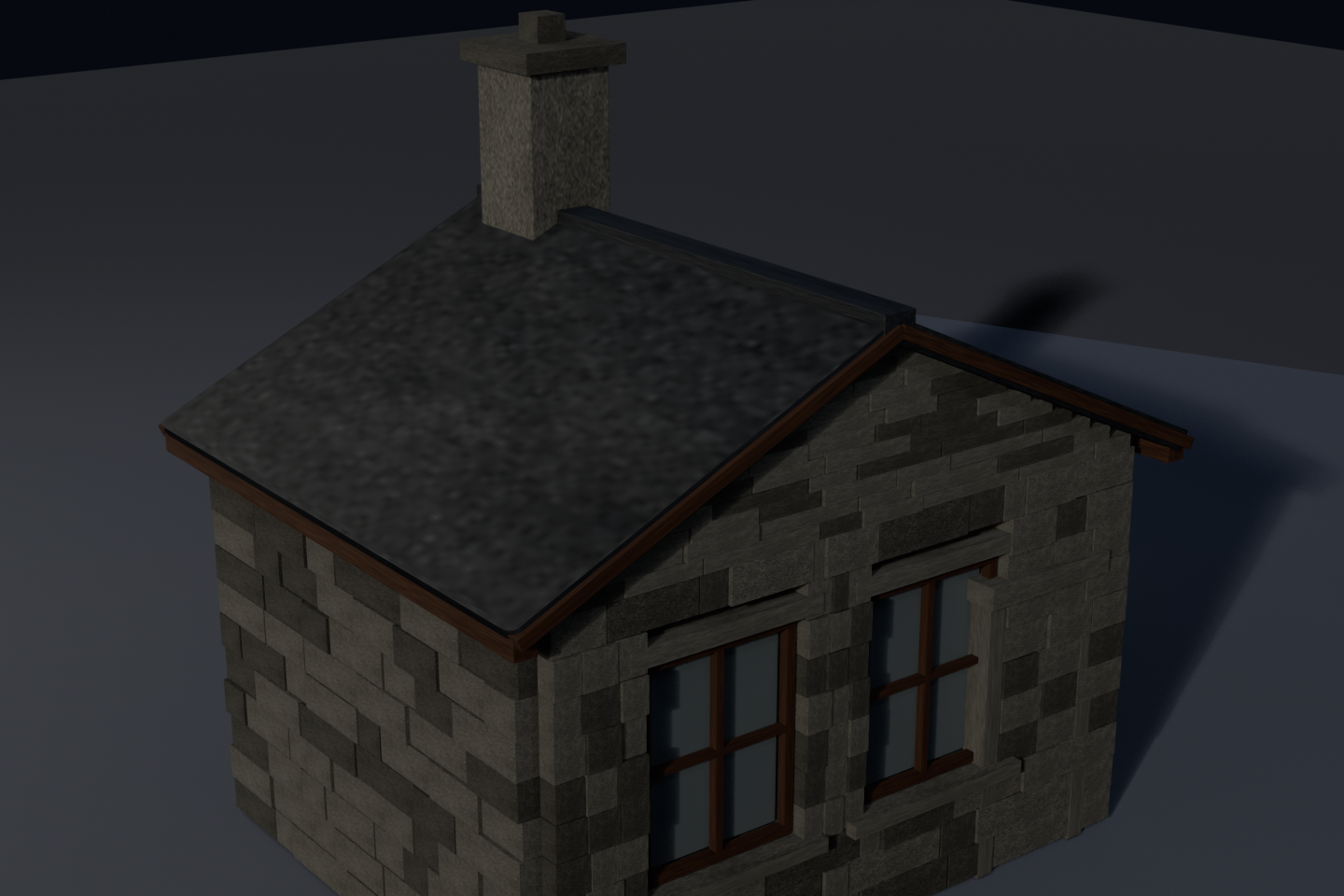
Millrace
A hill sawmill on a fast beck. This piece exists to prove a rule rather than to show a hero: the operator audited the lab's previous two builds and found the same class of failure in both - the character or the instrument was good and the rest of the frame was not. Flat single-colour ground, cover thin enough to read as bare earth, water that looked like a footpath, two-stop gradient skies, and props you could walk straight through. So millrace is built to a six-class environment floor from its first round, and every class is measured at boot rather than judged by eye: ground detail in texels per metre, ground cover in instances and coverage, a collider on every solid, water that moves and mirrors, and a sky with real cloud forms over ranked fells.
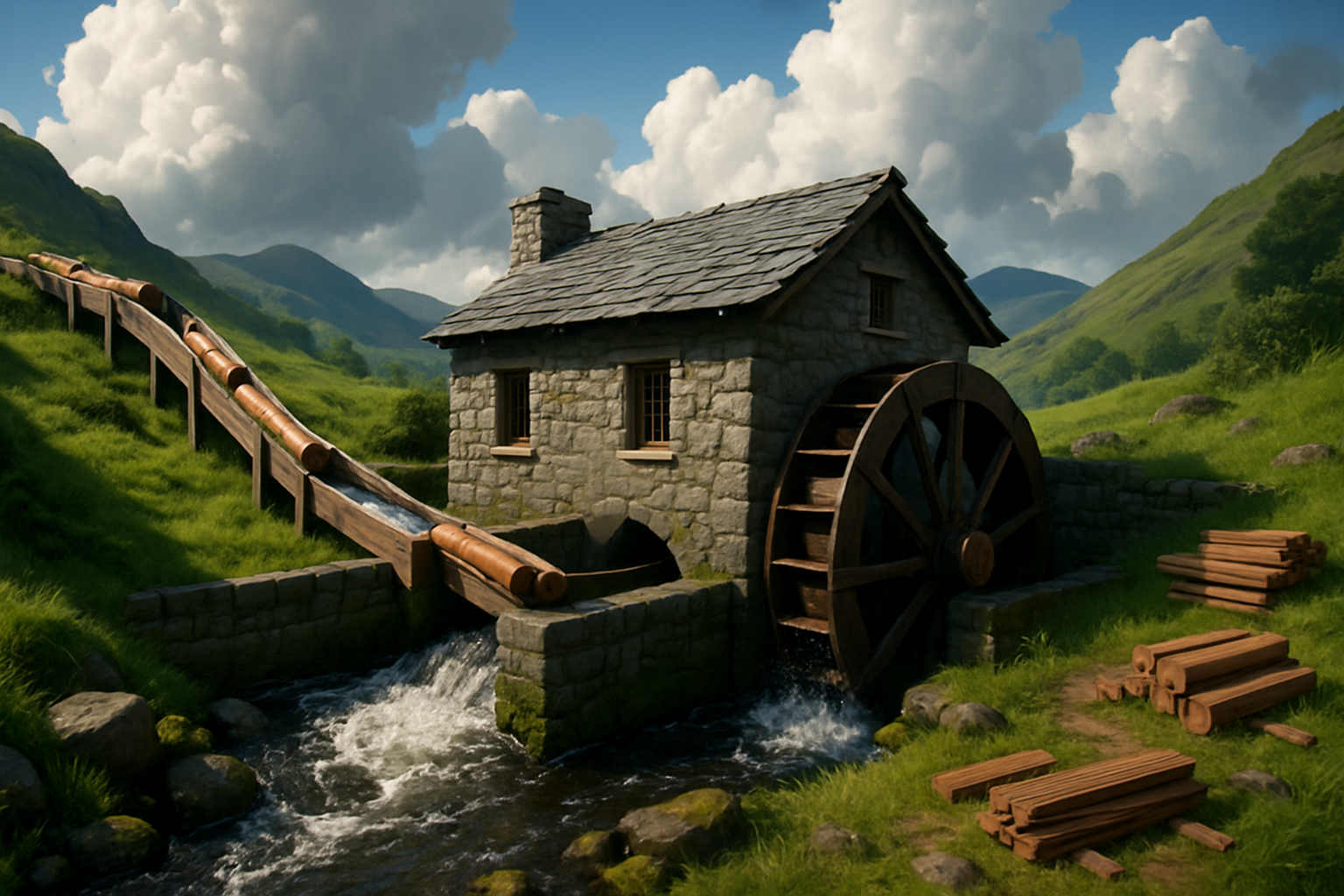
Concept prompt
high-end stylized 3D game render, a stone hill sawmill beside a fast rocky beck in late summer, a timber log flume running down from the fell delivering pine logs into a walled mill race, a big wooden water wheel on the mill house, the mill house of coursed stone with a slate roof deep eaves recessed mullioned windows and a stone chimney, dark peaty water with white broken foam over rocks and wet mossy stone banks, dense lush green grass and ferns covering the banks and yard everywhere, scattered cut timber and stacked planks, layered receding fells behind under a big sculpted cumulus sky with sunlight breaking through, palette wet grey stone, deep green grass, warm pine timber, white foam, blue-grey cloud