Bay Check
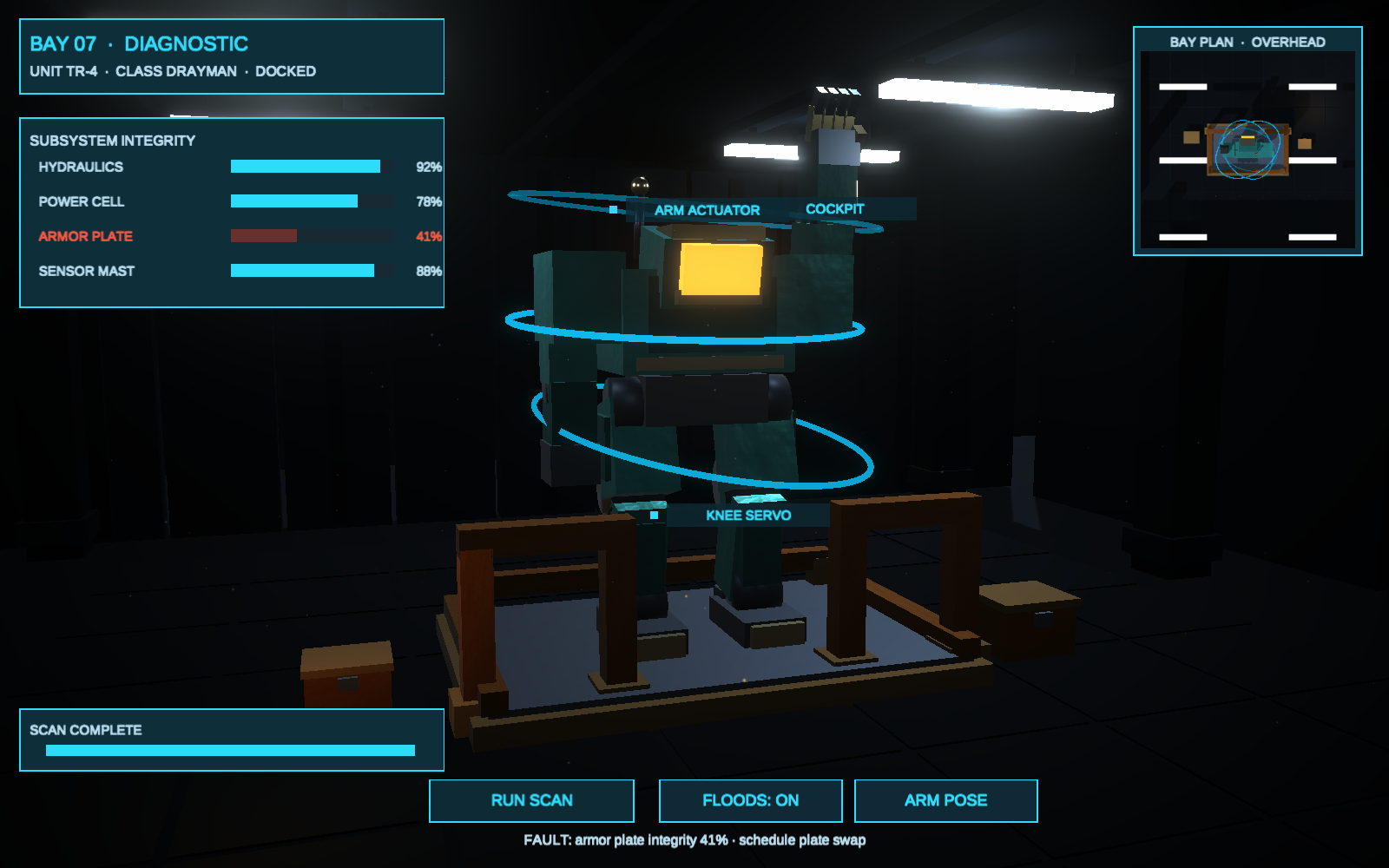
A diagnostics console wired to a real scene. Every readout is bound to live state and every control changes something you can see: RUN SCAN sweeps emissive scanner rings up the hull while the subsystem bars resolve one after another and a bad armour plate turns the row red, FLOODS cuts the hangar lighting down to cell light, and ARM POSE swings the mech's arm at a pivot modeled into the Blender export. The callout tags are pinned to hull anchors and re-projected every frame, so they hold their part as you orbit, and the overhead bay plan is a second camera rendering into the panel.
Play it now
Desktop: click the console buttons, drag to orbit · keys: space scan, F floods, A arm · Phone: tap the buttons, drag to orbit
The concept is the contract
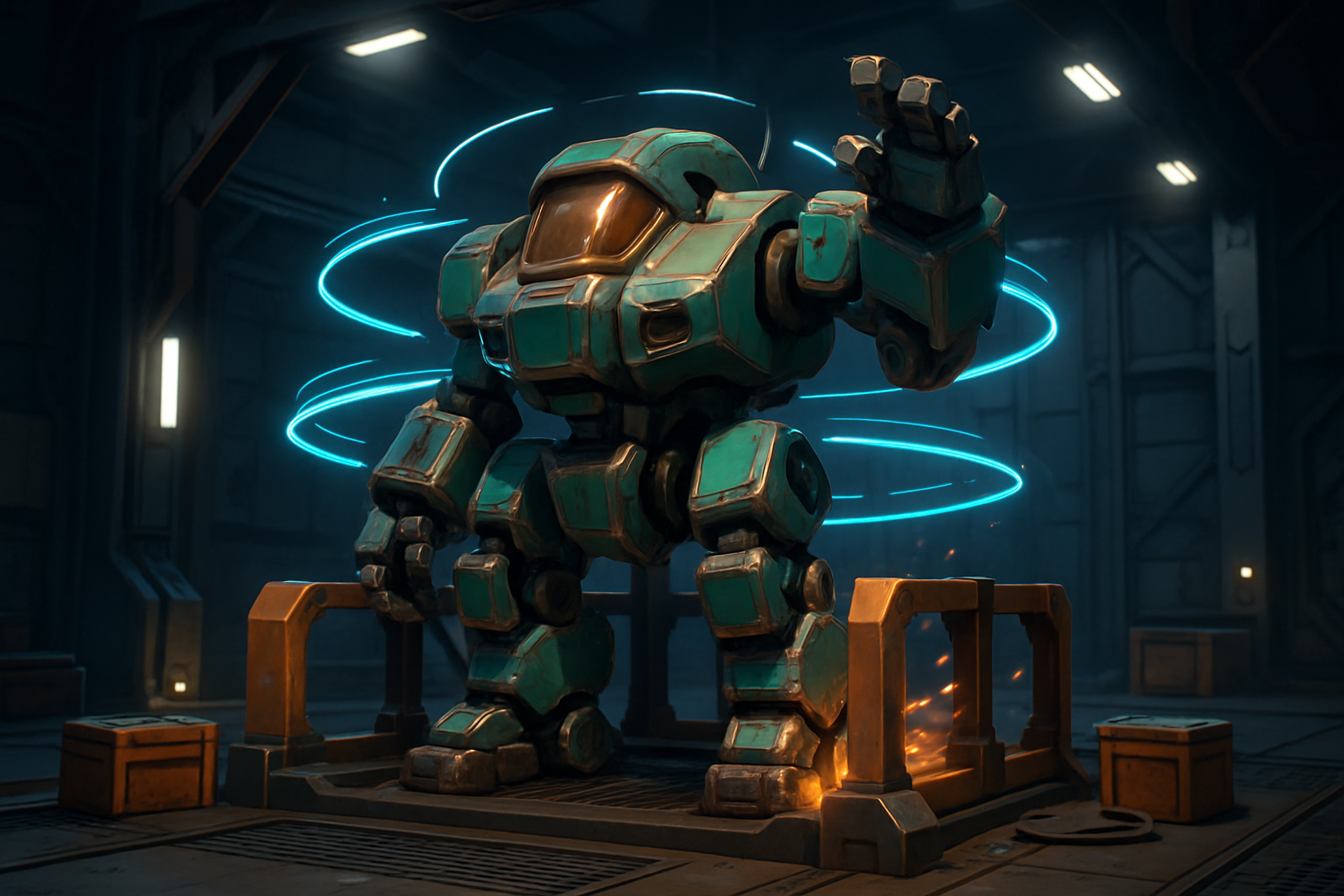
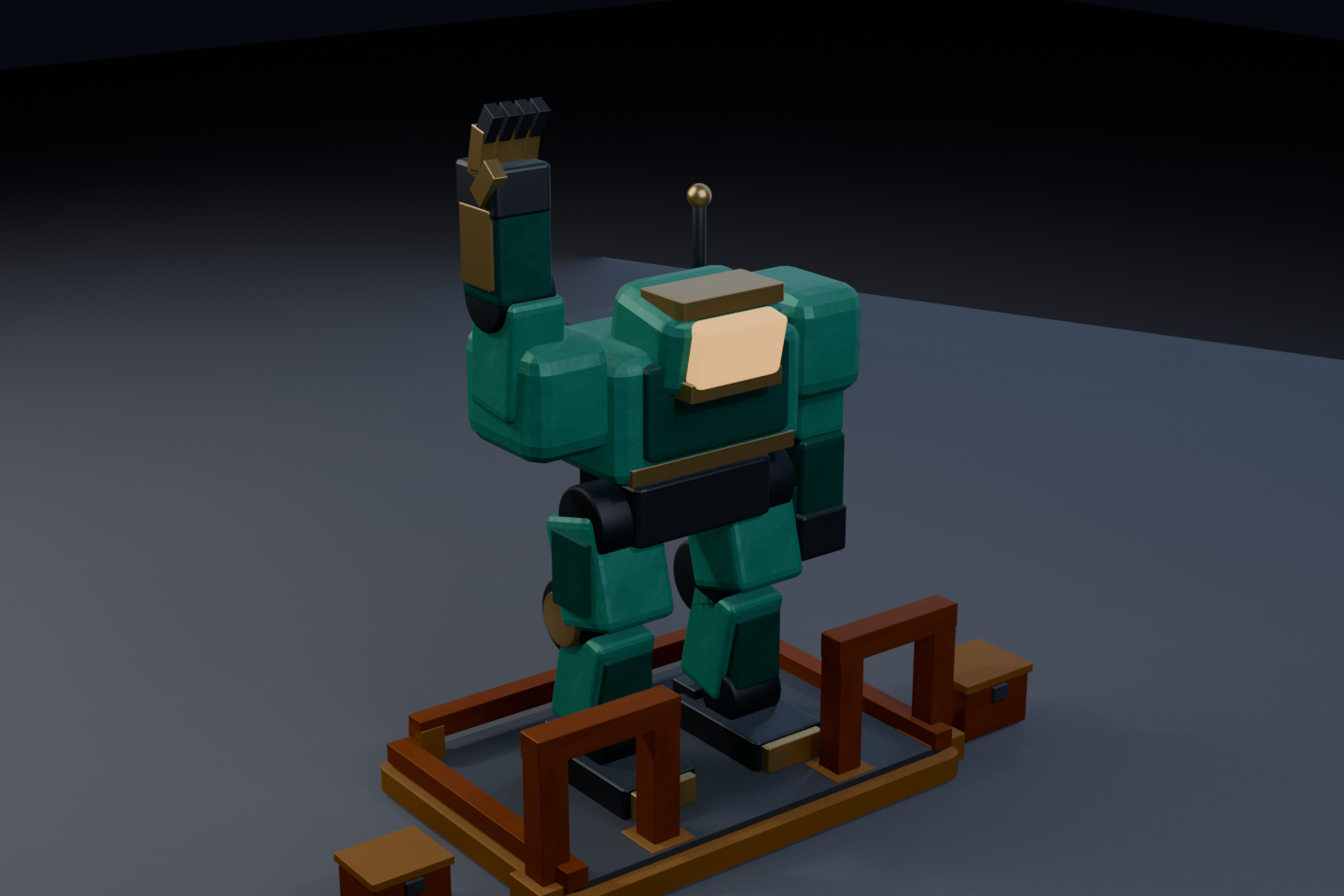
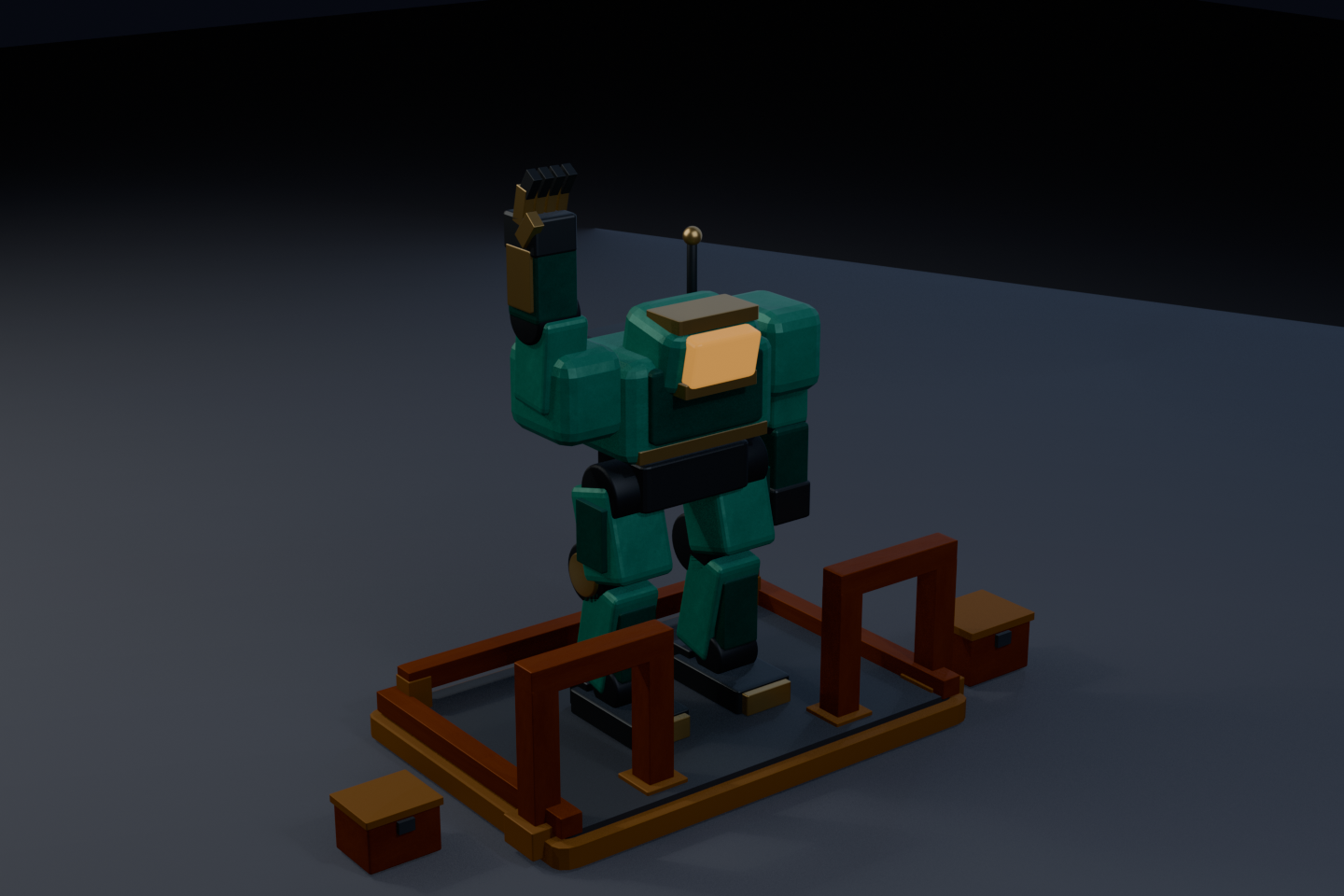
The piece was concepted first — an AI key-art painting — and its hero assets were then code-modeled in headless Blender and audited against that concept. The pair below is the contract and the build.
Concept prompt
a chunky stylized repair-bay mech standing in an open service cradle inside a hangar, boxy armored torso with a rounded cockpit canopy, thick jointed legs and one articulated arm raised, teal painted panels with amber warning stripes and worn metal edges, glowing cyan holographic scanner rings sweeping around it, floor grating and toolboxes, cool industrial lighting with warm sparks, high-end stylized 3D game render, no text, no watermark, no UI
Code-modeled in Blender
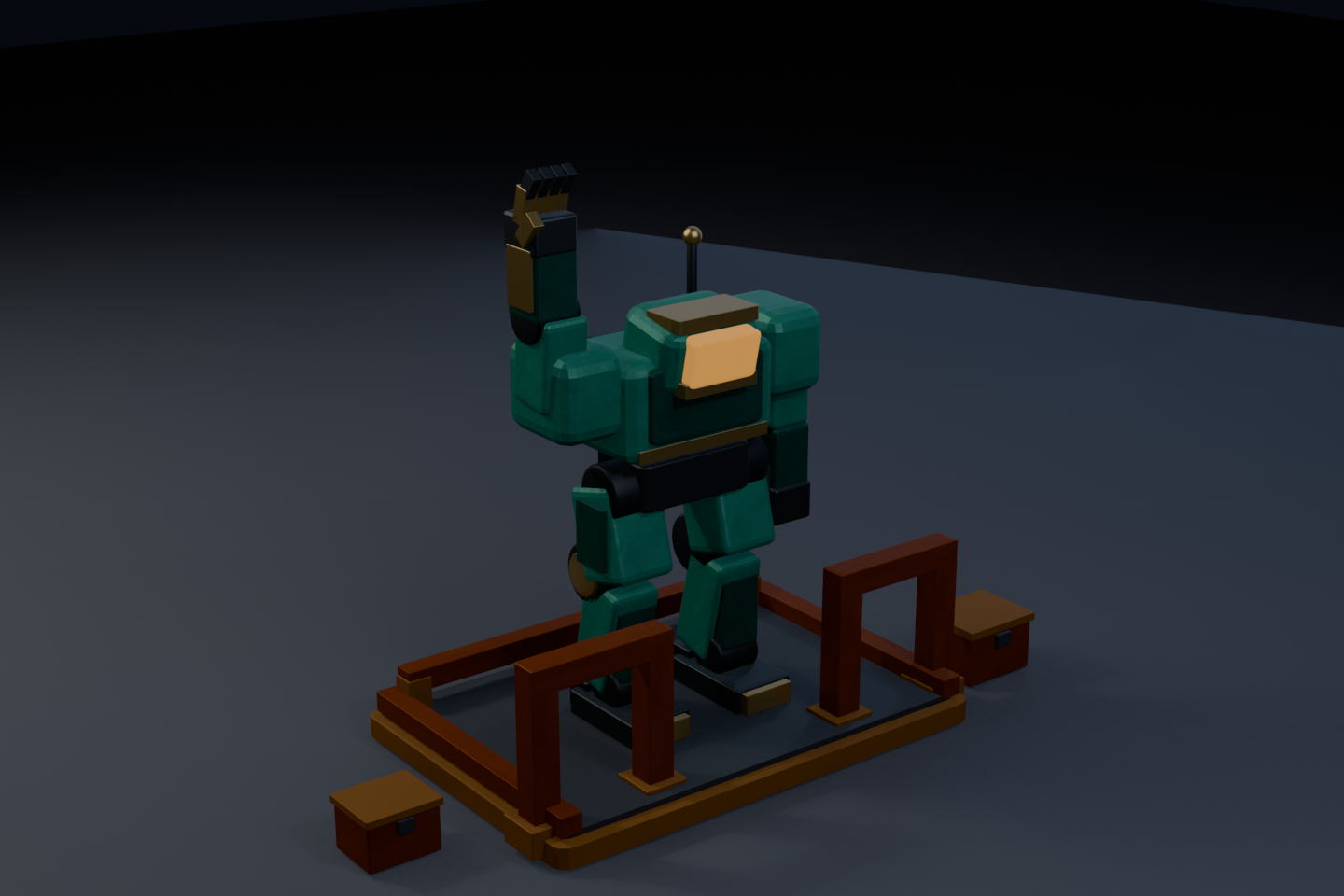
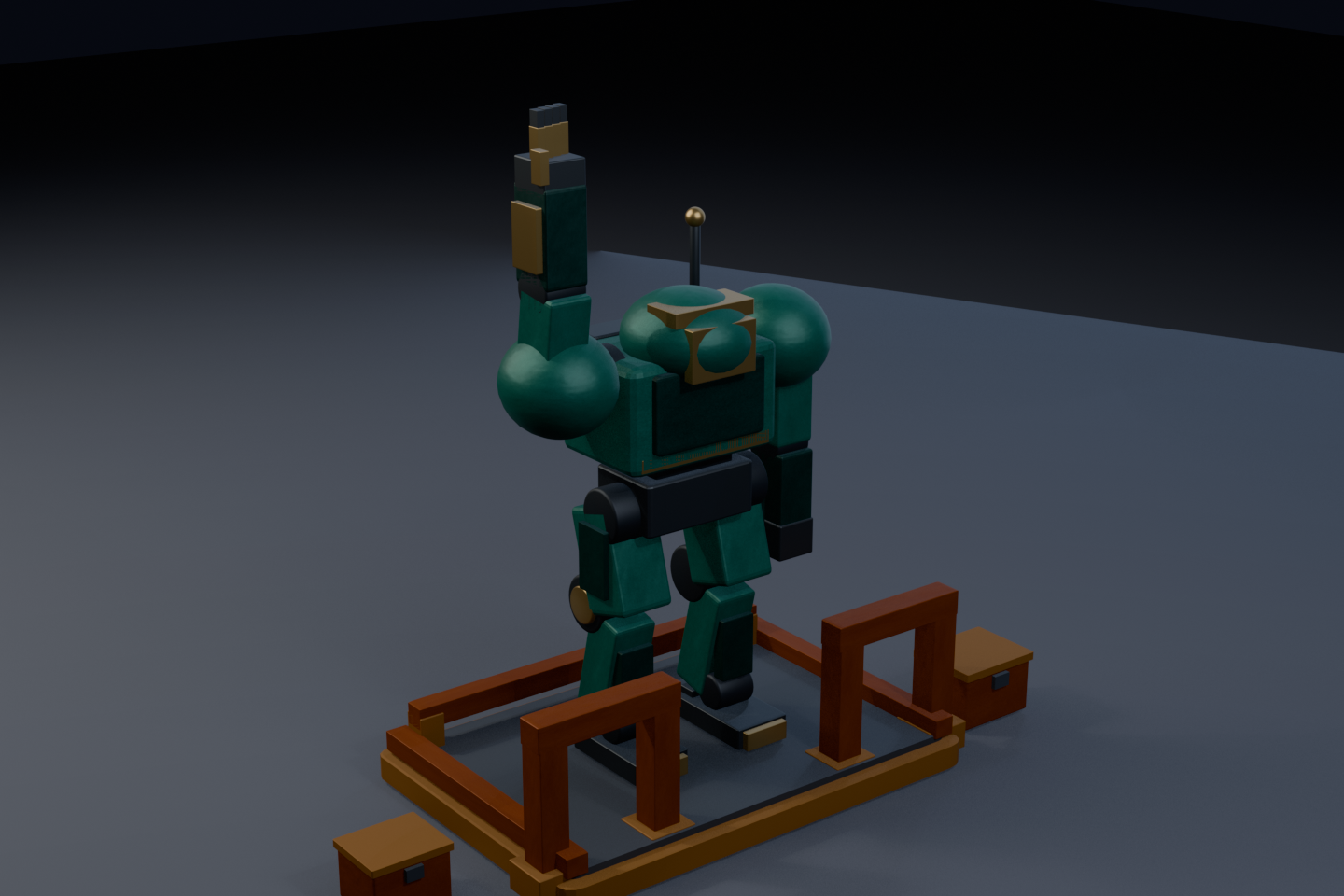
The hero assets were modelled by agents writing Blender code against the platform sculpt kit — no downloaded models anywhere — and rendered by the studio harness for audit before entering the engine scene.
Made by AI, compiled by the real Unity 6 engine
The HUD is built entirely in code against the engine's own UI system — panels, bars, buttons, an event system and a RenderTexture minimap — over a Blender mech and cradle streamed in through glTFast. The mech's arm swings at a pivot locator modeled into the export rather than a skinned skeleton, the scanner rings are emissive line loops, and the sweep tone, confirm blips and fault buzz are synthesized sample by sample at runtime.