Beacon Point
One continuous fifty-five-second take, and you hold the playhead. The camera rides a Catmull-Rom spline — a low approach over open water, a skim past the rocks, a bank around the keeper's cottage, a spiral climb up the tower, a hold at the lamp, a wide pull-back — while a second spline drives what it looks at, focal length breathes per waypoint, and the camera banks into turns from the path's own curvature. Drag anywhere to scrub the take backwards or forwards; release and it resumes rolling; keys one to five jump straight to a chapter. Above it all the lamp sweeps a real volumetric beam — an additive cone married to a spotlight — across a sunset that grades from ember orange at the waterline to violet and early stars.
Play it now
Desktop: drag scrubs the take, 1-5 jump chapters · Phone: drag to scrub
The concept is the contract
The piece was concepted first — an AI key-art painting — and its hero assets were then code-modeled in headless Blender and audited against that concept. The pair below is the contract and the build.
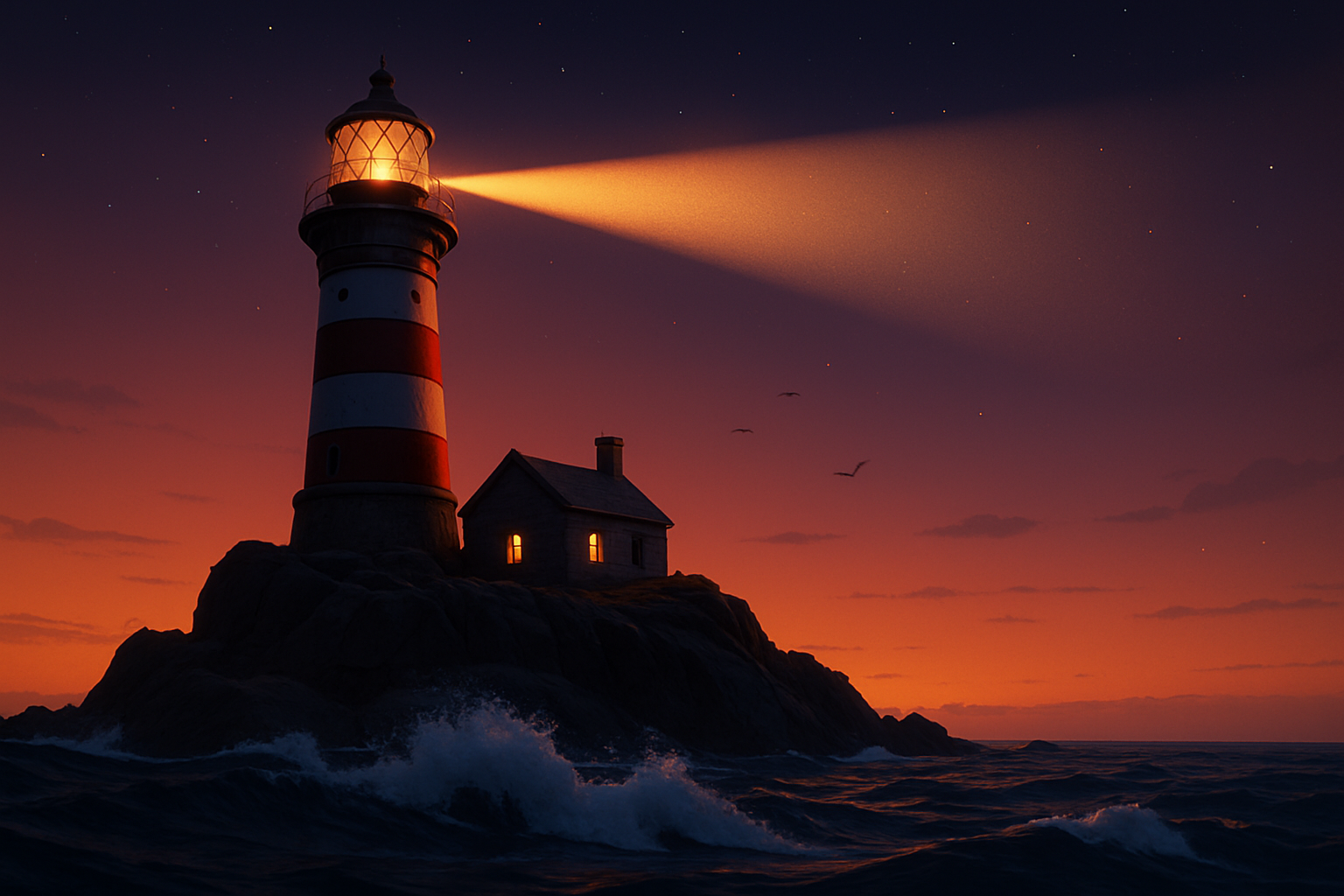
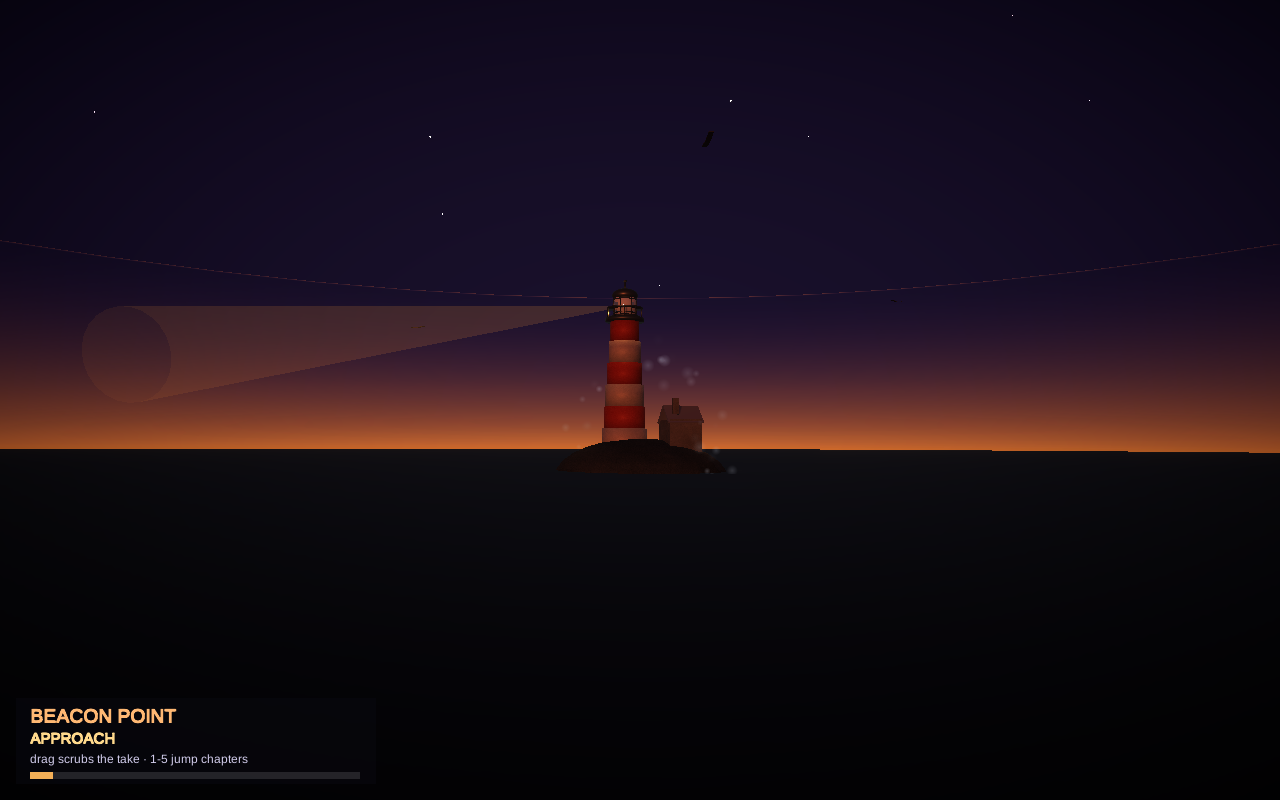
Concept prompt
A red-and-white banded lighthouse on a rocky islet at sunset, seen from low over the water in a sweeping cinematic angle: the glass lamp room at the top casting a long visible beam of warm light across the dusk sky, a small stone keeper's cottage with a lit window beside the tower, waves breaking white against the dark rocks, gulls in the distance, deep orange-to-violet gradient sky with early stars, high-end stylized 3D game render, no text, no watermark, no UI.
Code-modeled in Blender
The hero assets were modelled by agents writing Blender code against the platform sculpt kit — no downloaded models anywhere — and rendered by the studio harness for audit before entering the engine scene.
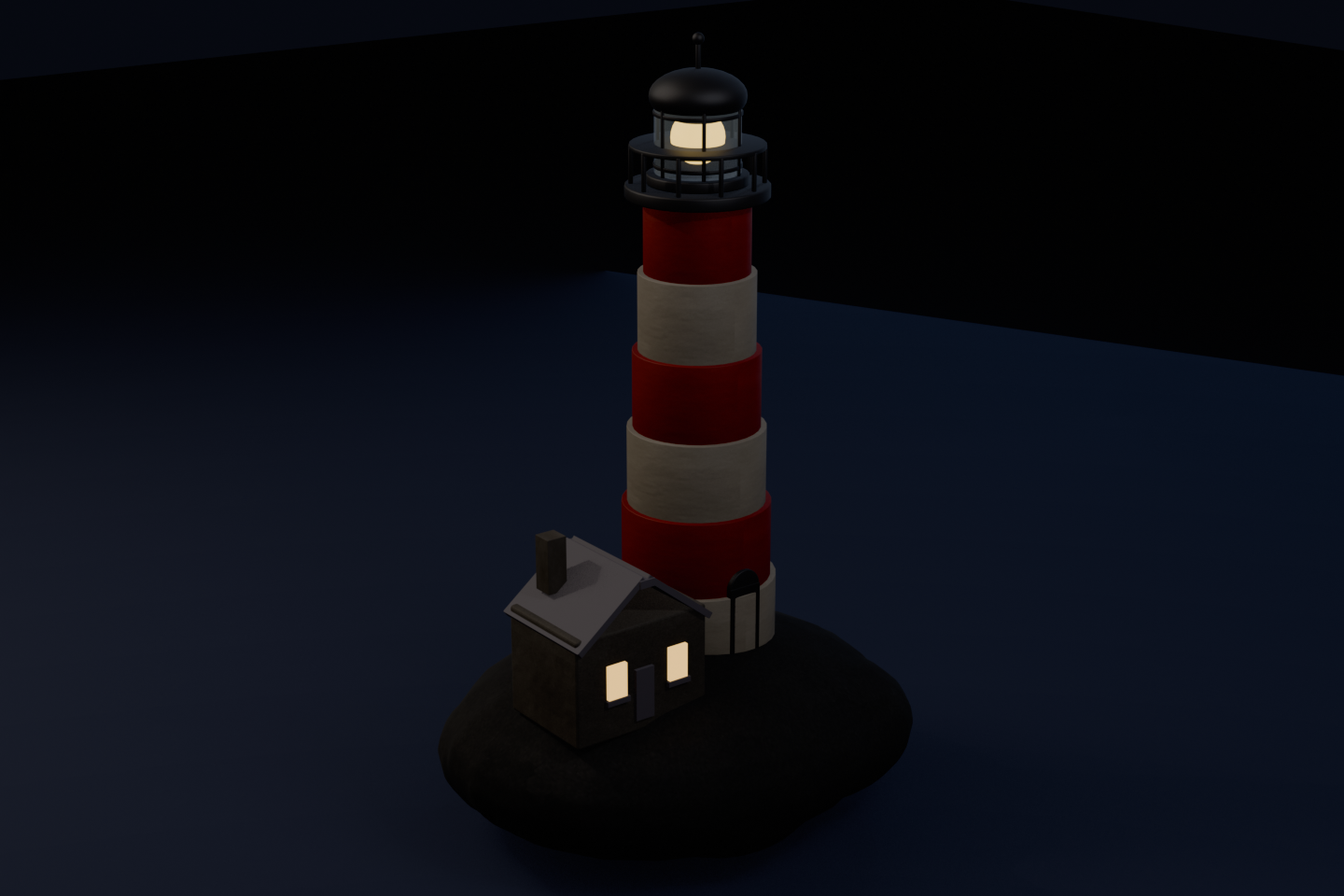
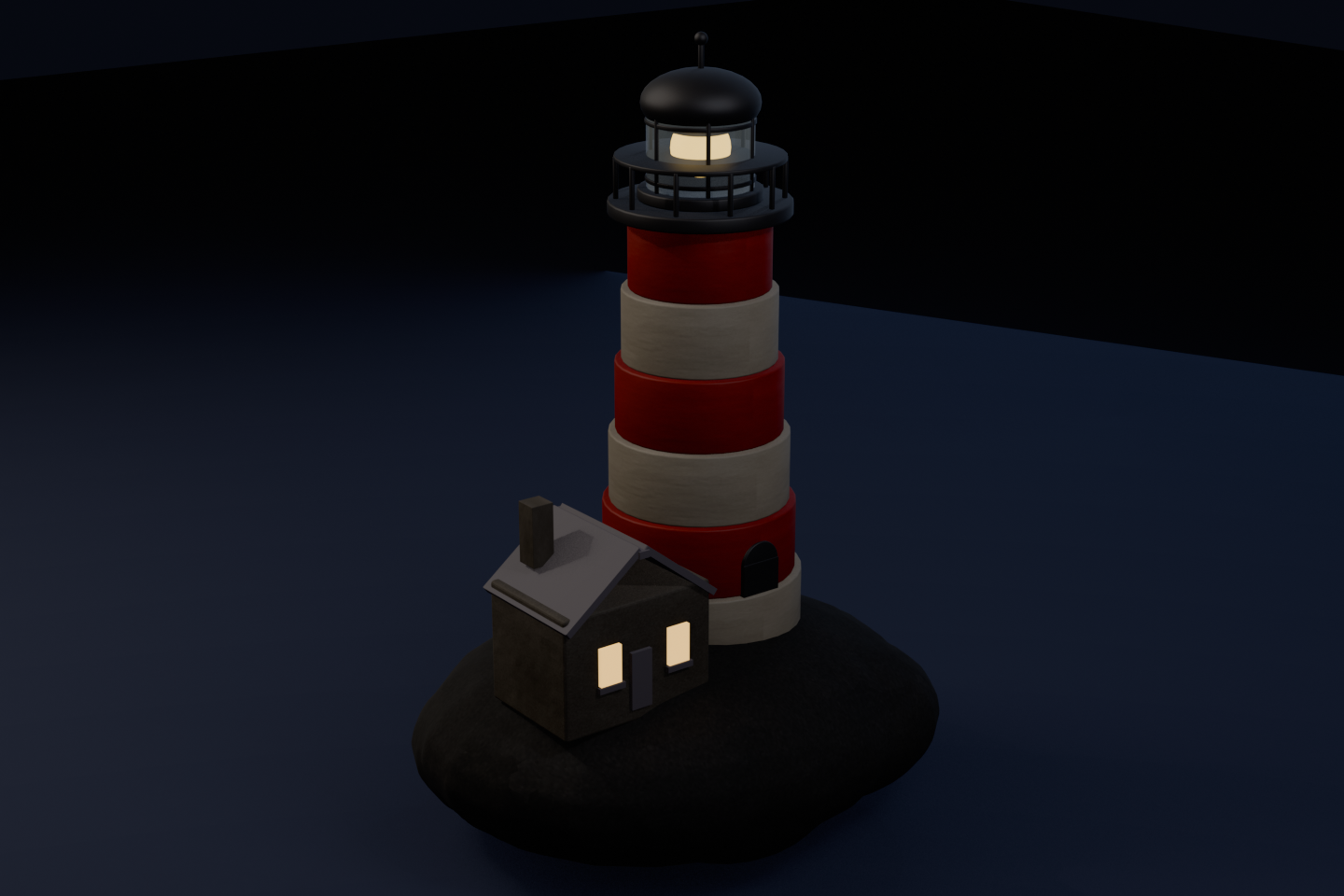
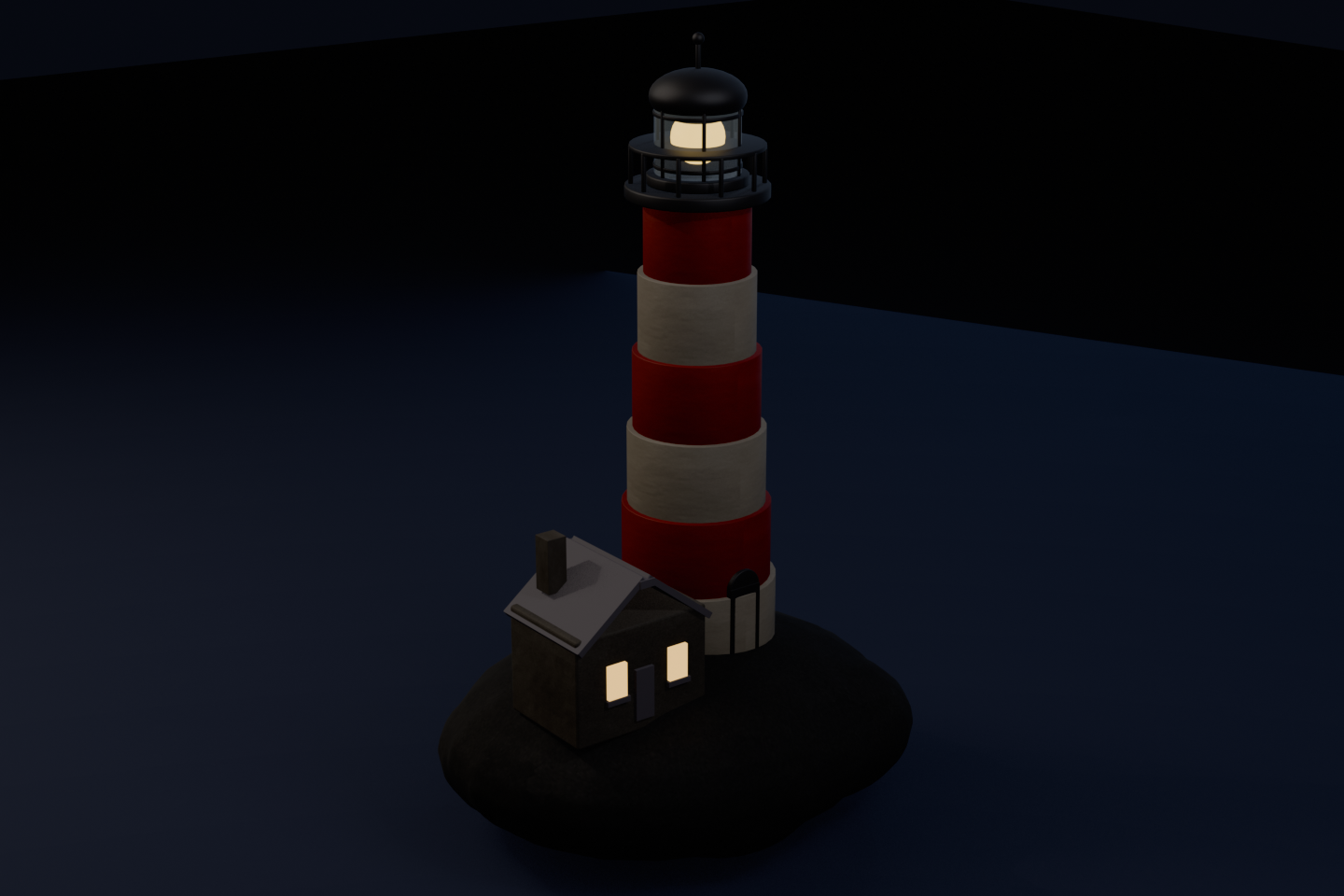
Made by AI, compiled by the real Unity 6 engine
The banded tower, keeper's cottage and fused rock islet are code-modeled Blender exports; the lamp core and cottage windows re-material to seeded emissive variants because glTF emissive does not glow through this import path. The beam cone and the sunset horizon band are procedural meshes built in code — the band is an inward-facing gradient cylinder the camera flies inside, a detail that cost one build to learn: single-sided triangles face outward and render nothing from within. Every chapter transition, scrub and jump logs a BENCH line.