Clock Atelier
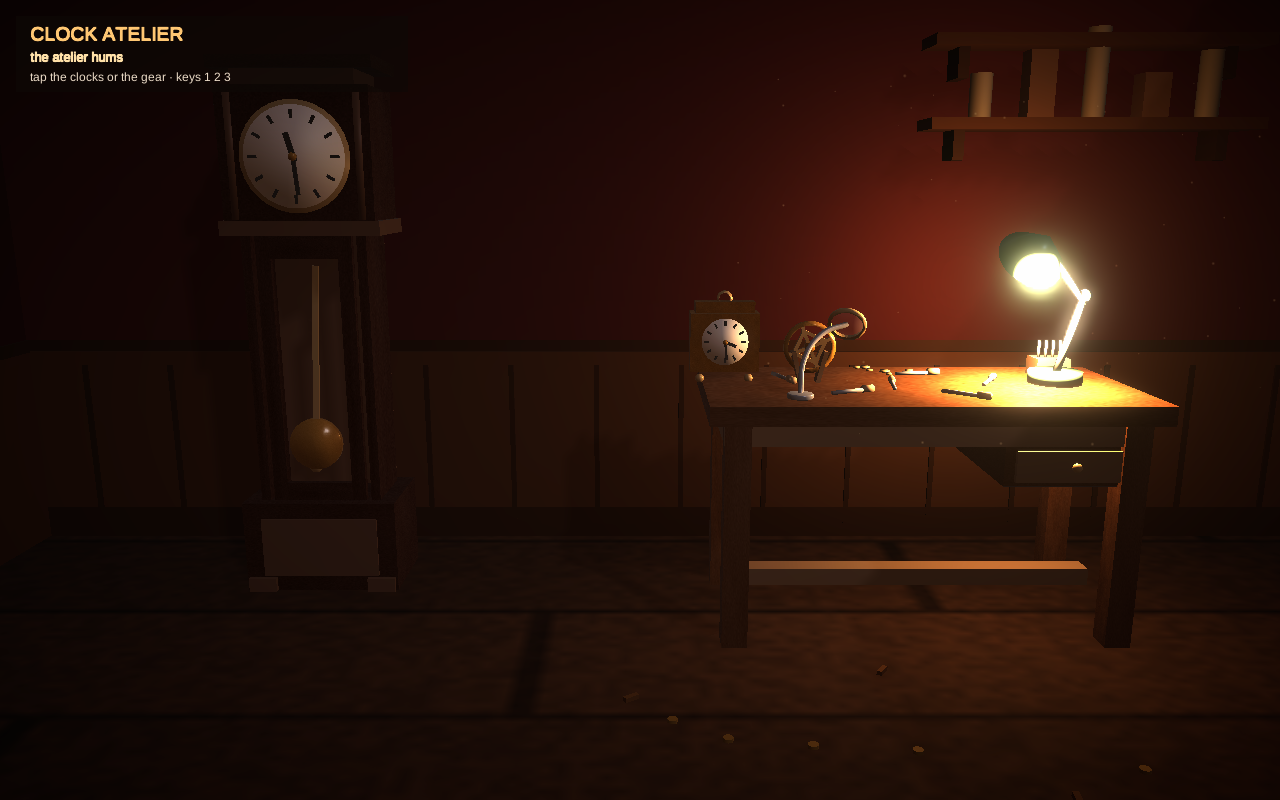
A clockmaker's corner at closing time. The grandfather clock is a Blender export whose pendulum group and hands ship as named nodes: the engine re-pivots them at load, swings the pendulum on a two-second beat and turns both clocks' hands on fast "atelier time". Every sound is a sampled instrument from the platform library — a woodblock tick-tock locked to the pendulum's extremes, a music-box lullaby over harp and upright bass that loops through the room, celesta Westminster quarters and three tubular-bell strikes when you tap the grandfather clock, a two-note celesta answer from the brass mantel clock, and a pitched woodblock ratchet when you spin the workbench gear. The desk lamp is the room's practical light with dust motes drifting through its pool, and the magnifier's lens is re-glazed in-engine with real transparency.
Play it now
Tap once for sound, then tap the clocks or the gear · Keys 1 2 3
The concept is the contract
The piece was concepted first — an AI key-art painting — and its hero assets were then code-modeled in headless Blender and audited against that concept. The pair below is the contract and the build.
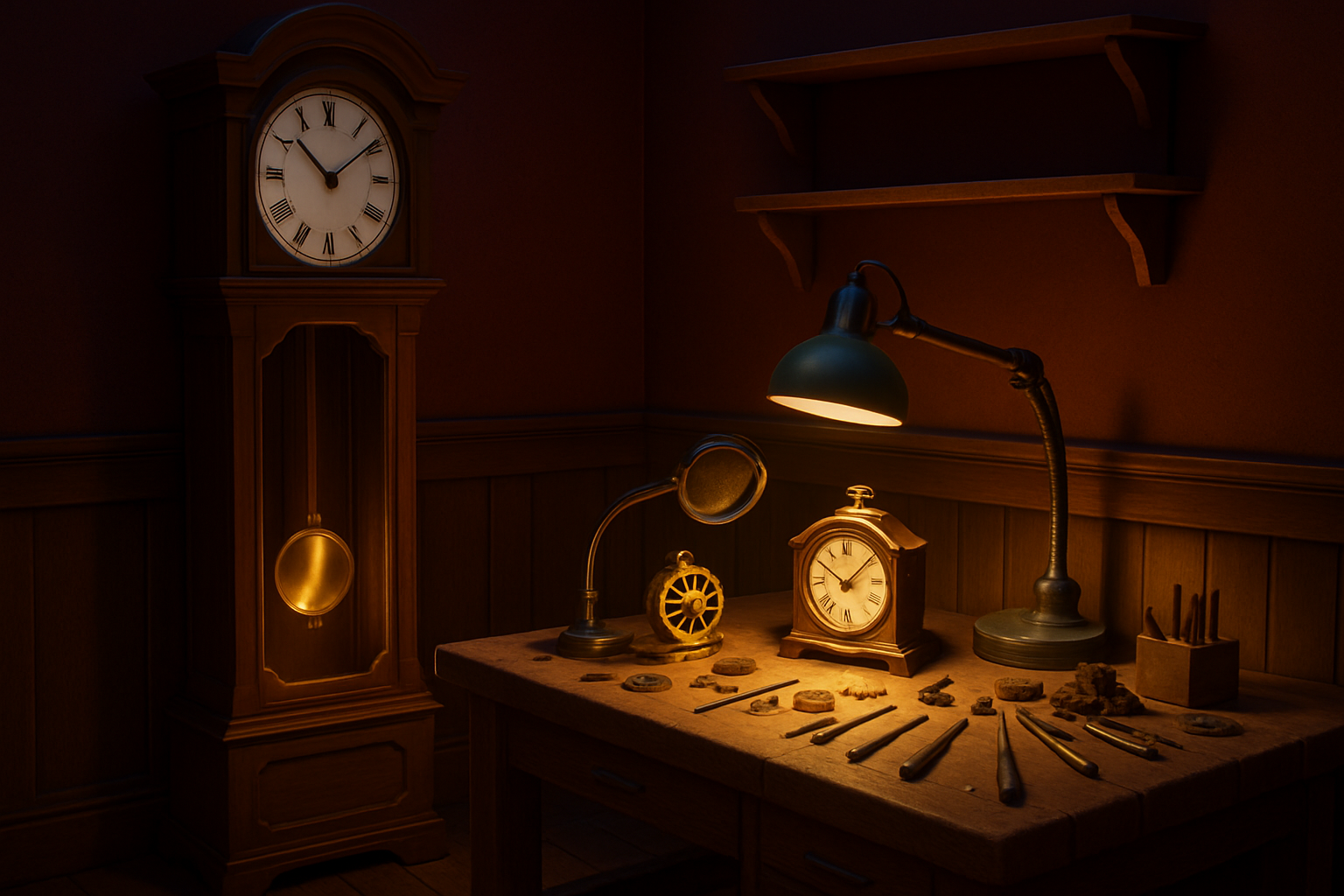
Concept prompt
A clockmaker's atelier at evening: a tall walnut grandfather clock with a glowing brass pendulum and roman-numeral face, a small brass mantel clock on a cluttered oak workbench with tiny gears, screwdrivers and a magnifying lamp, warm amber workshop light from a green-shaded desk lamp, deep burgundy wall with wood paneling, cozy craftsman mood with soft shadows, high-end stylized 3D game render, no text, no watermark, no UI
Code-modeled in Blender
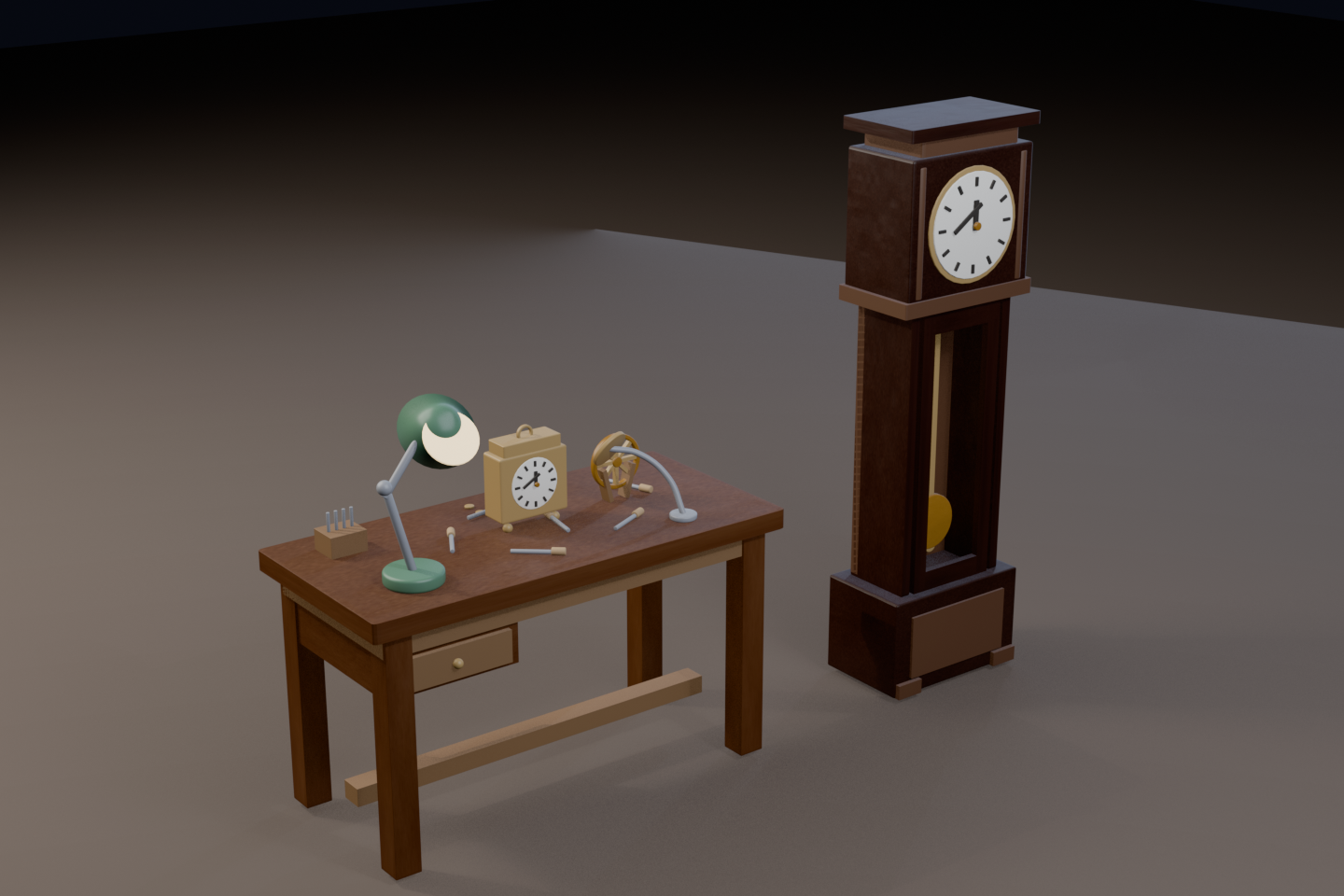
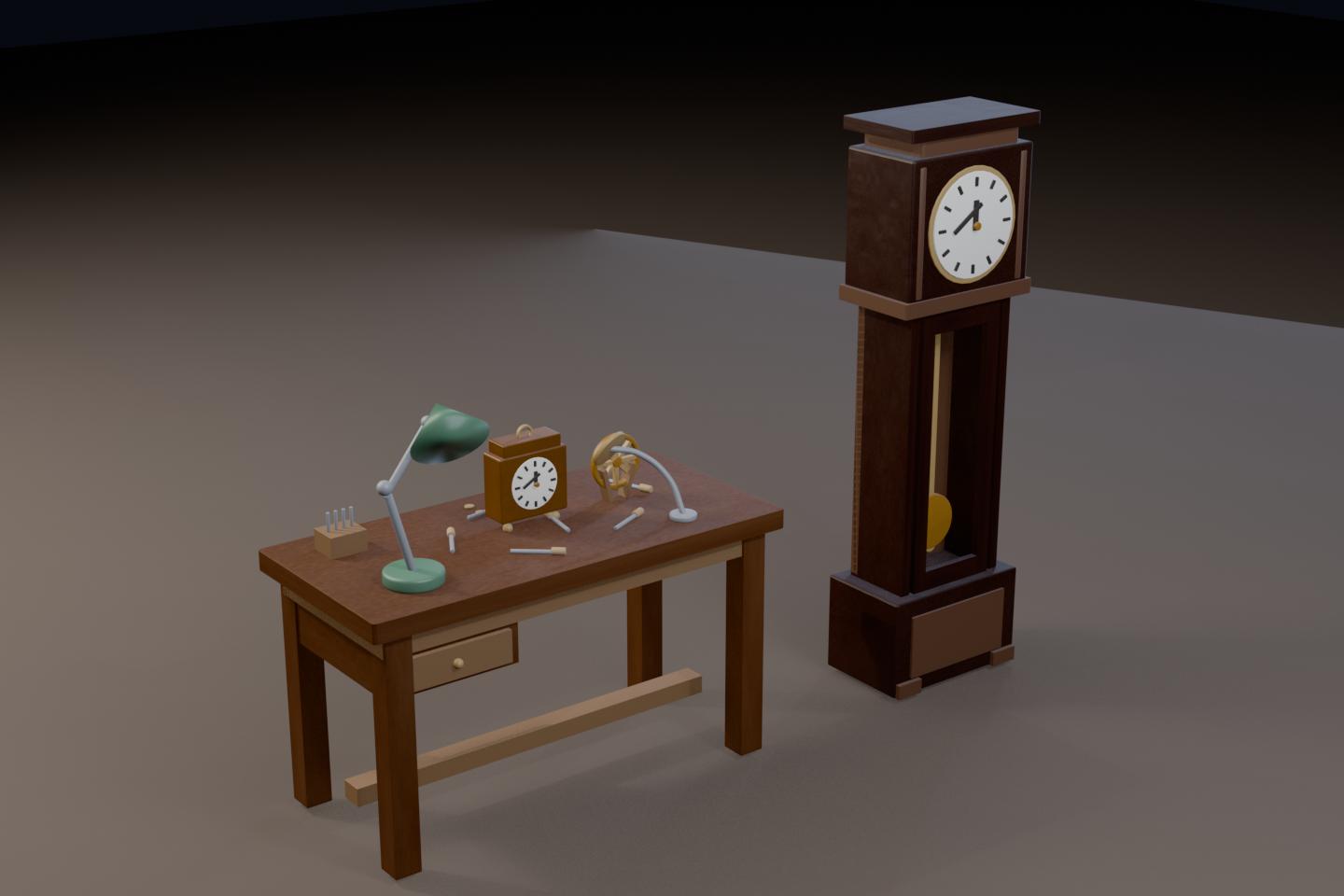
The hero assets were modelled by agents writing Blender code against the platform sculpt kit — no downloaded models anywhere — and rendered by the studio harness for audit before entering the engine scene.
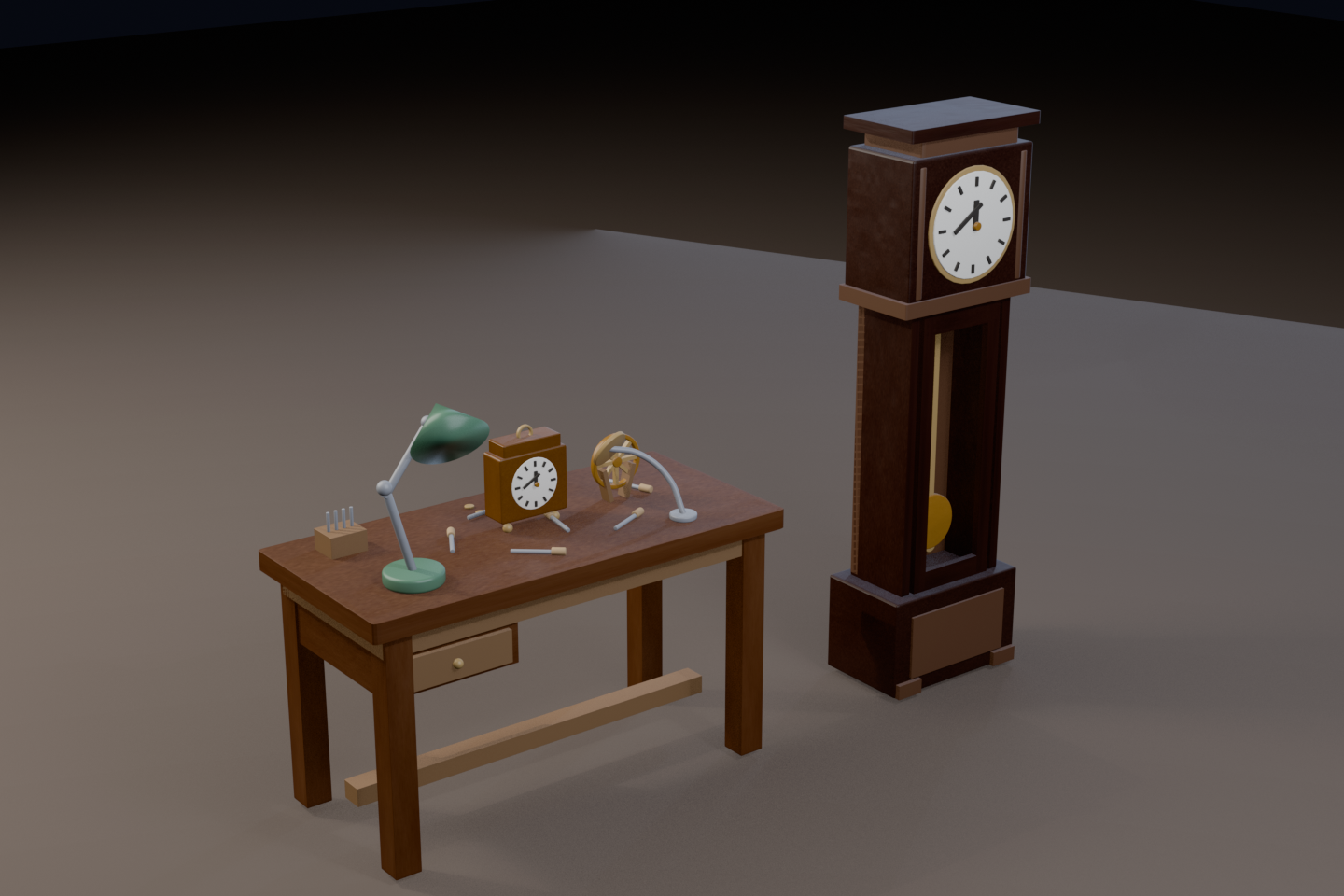
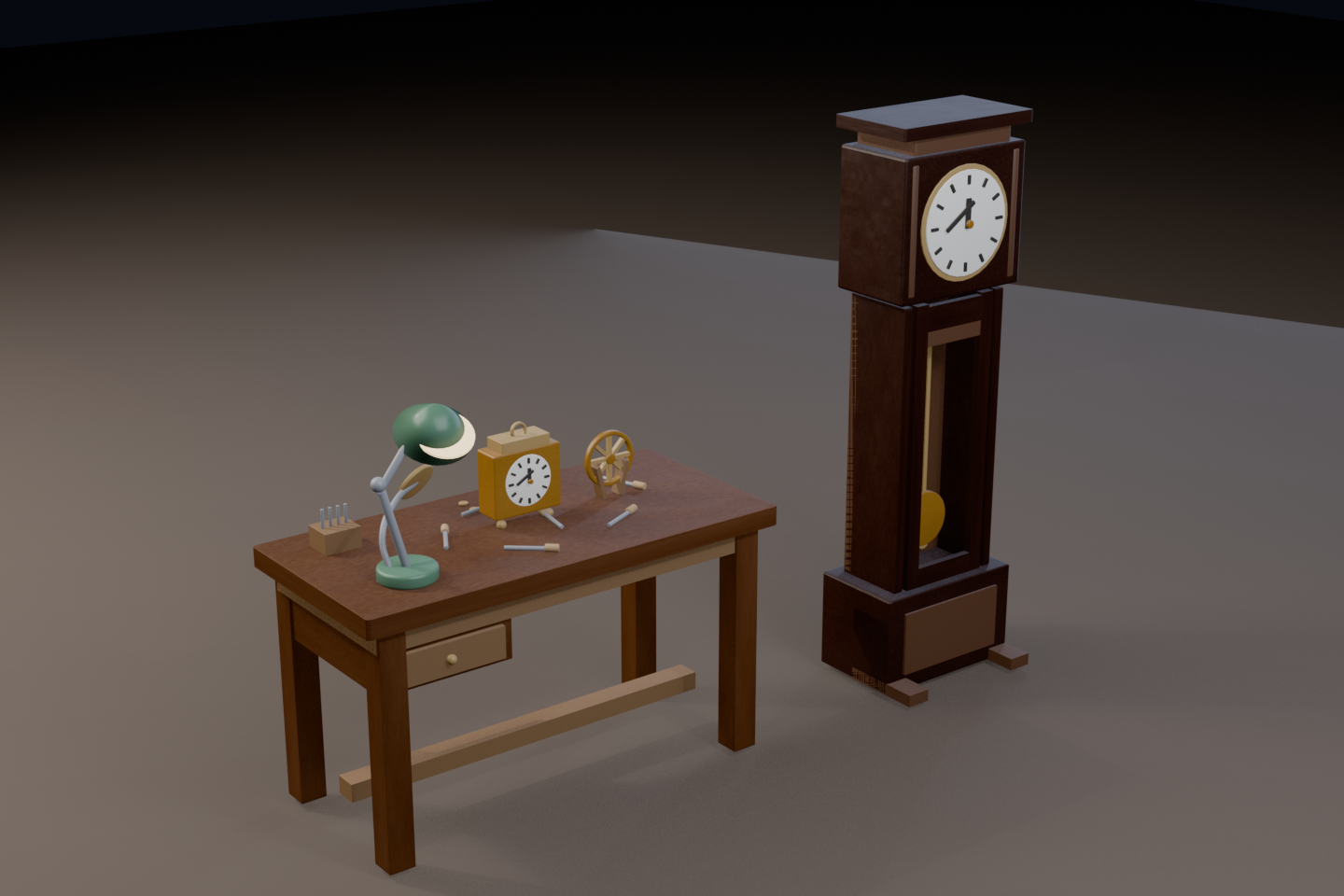
Made by AI, compiled by the real Unity 6 engine
Grandfather clock, workbench (with its gear, tool clutter and magnifier), mantel clock and desk lamp are four code-modeled Blender exports. The piece is the lab's first full run of the sampled-audio standard: nineteen notes from five instruments — music box, harp, acoustic bass, celesta, tubular bells — plus two woodblocks, sequenced in code with no audio middleware and no synthesis, and the live audit asserts every one of them fires from a real gameplay event.