Domino Run
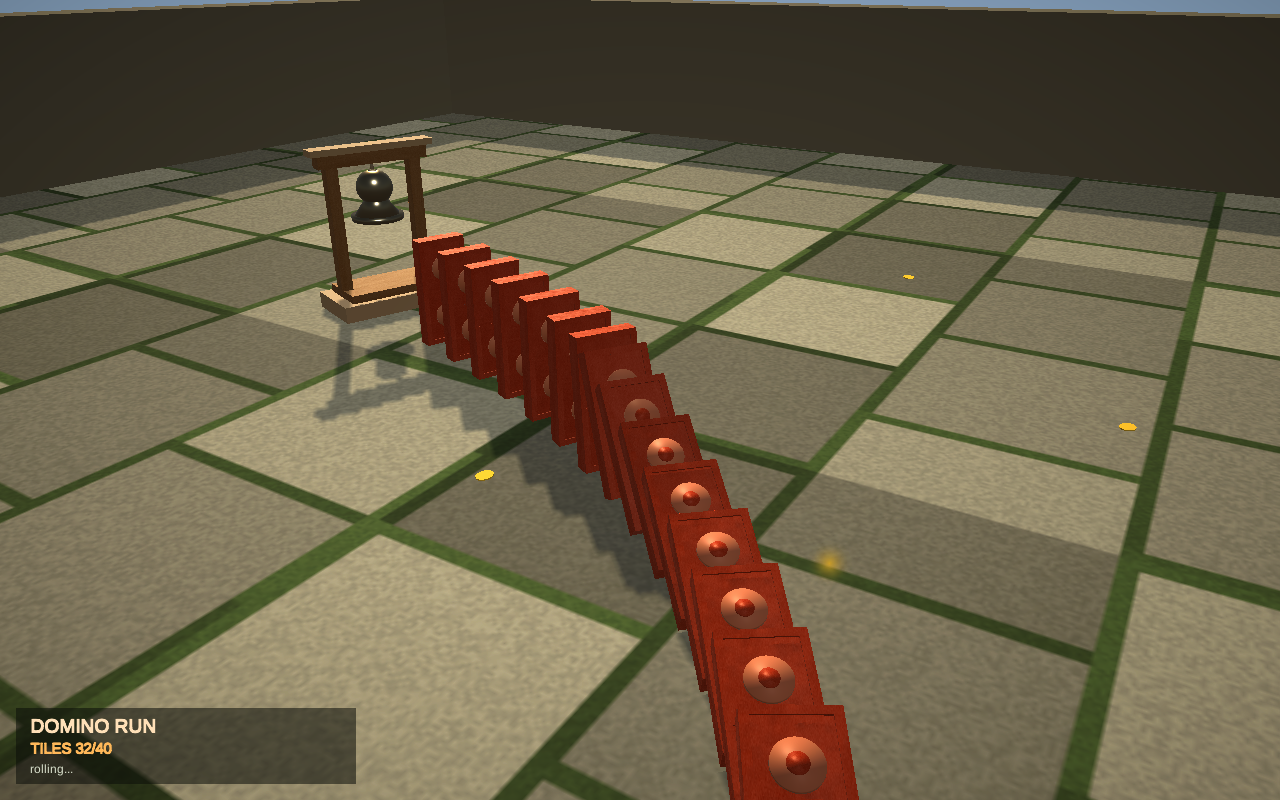
Every one of the forty carved tiles is a real rigidbody. Space releases the brass ball down the launch ramp; from there physics owns the show — the cascade sweeps the S-curve in about thirteen seconds while a chase camera rides the wave front, and the final tile strikes a paddle on the bell stand to swing the bronze bell, with the contact verified by its actual point in space. The counter in the corner is a live census of tile tilt, and R re-arms the whole line for another run — a reset that turned out to be the cycle's hardest engineering: rigidbodies teleported by their transforms silently snap back to their fallen poses, a trap now recorded in the lab's rulebook.
Play it now
Desktop: space rolls the ball, R re-arms the line, drag orbits · Phone: tap to roll, drag to orbit
The concept is the contract
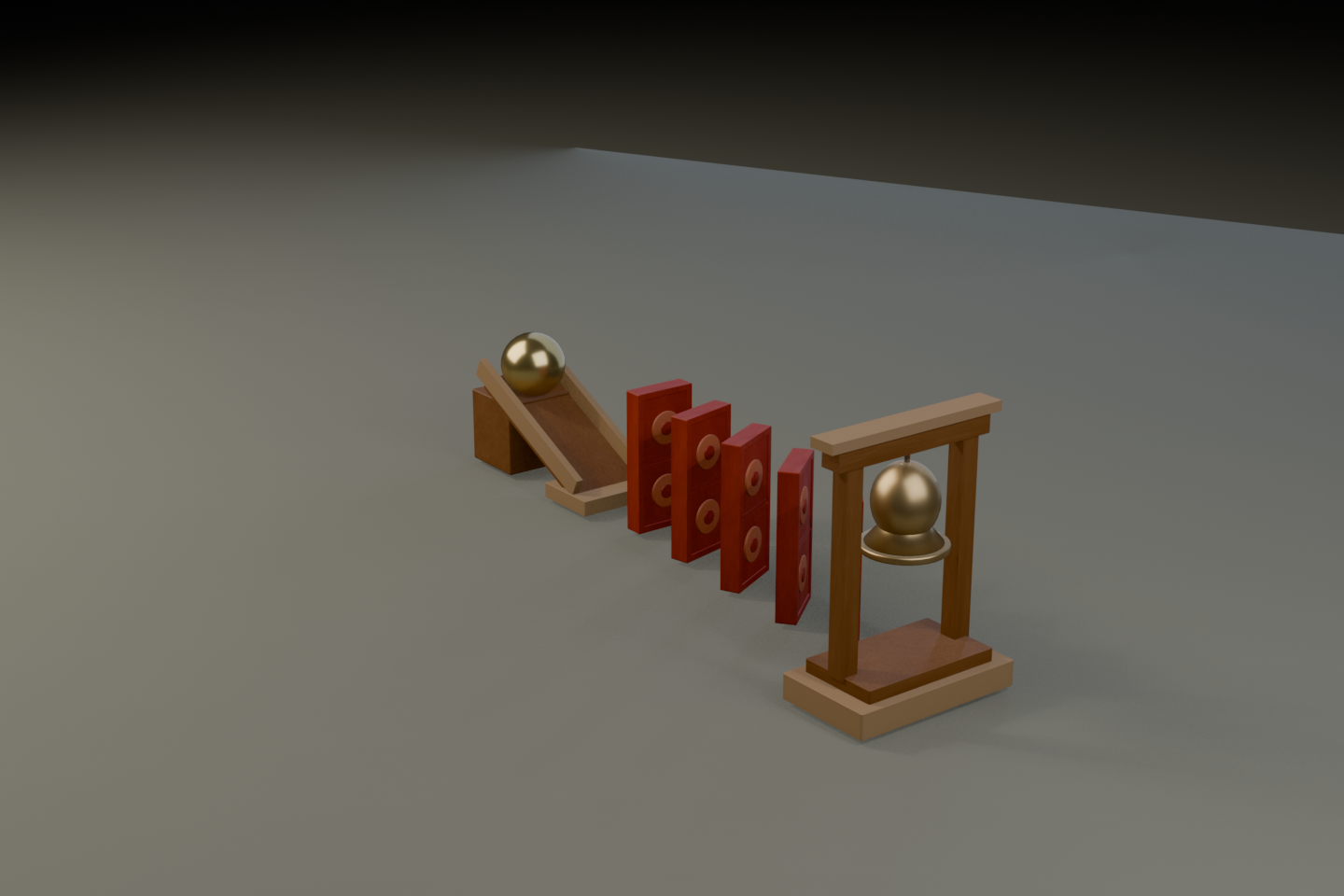
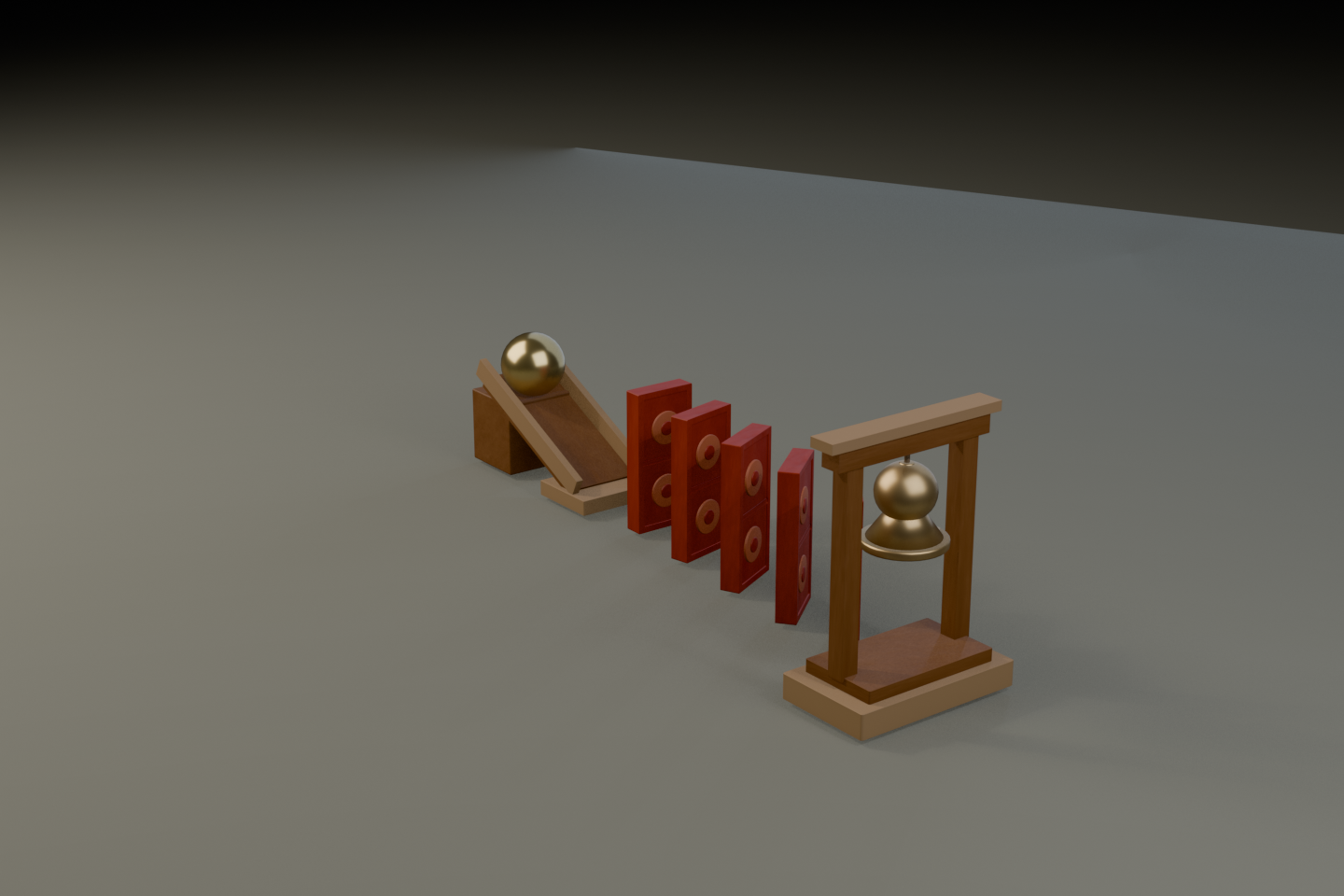
The piece was concepted first — an AI key-art painting — and its hero assets were then code-modeled in headless Blender and audited against that concept. The pair below is the contract and the build.
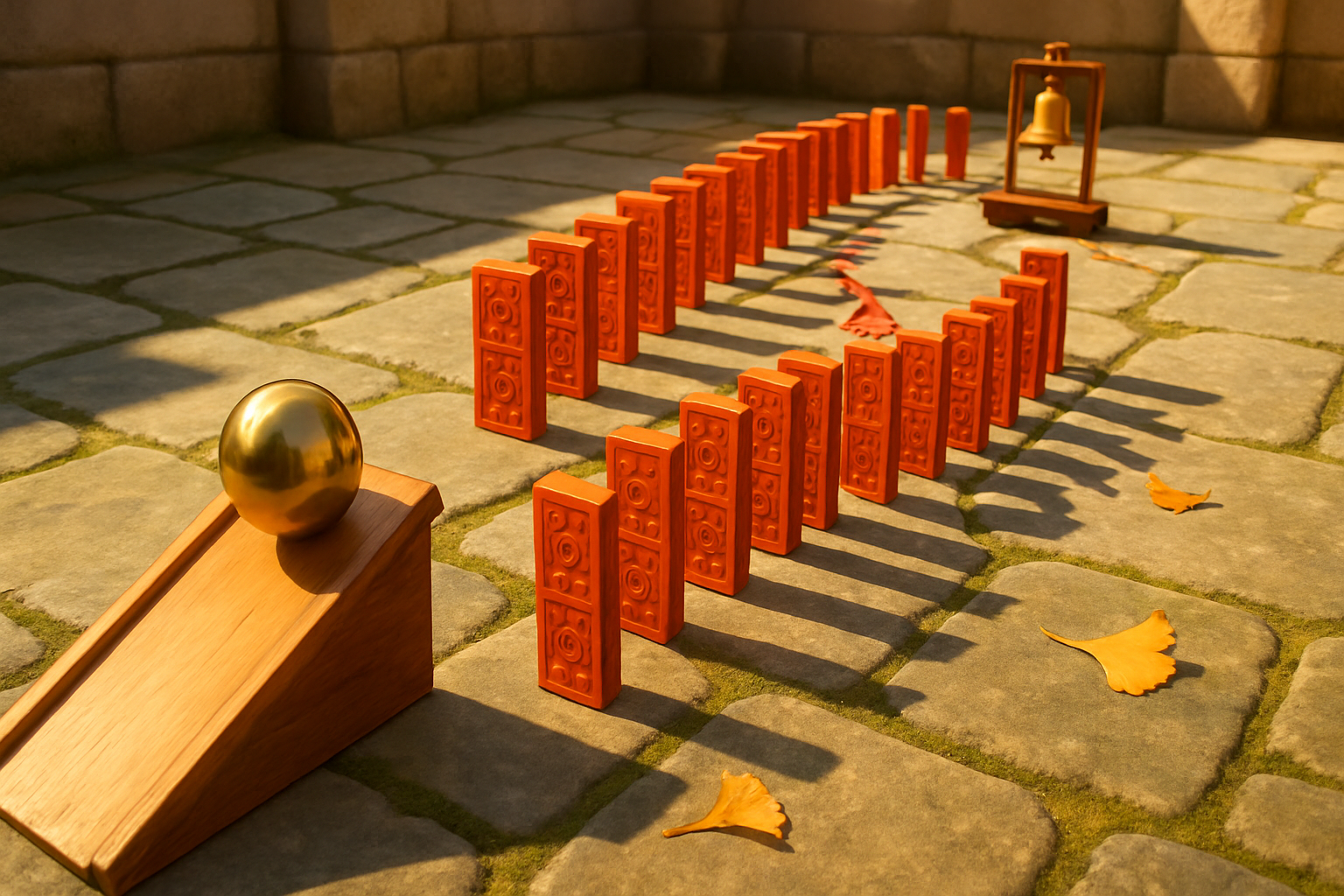
Concept prompt
A sunlit stone courtyard with a long winding line of tall carved vermilion domino tiles snaking between mossy flagstones, a polished brass ball resting at the top of a small wooden launch ramp at the line's start, a small bronze bell on a wooden stand at the far end, warm afternoon light with long soft shadows, a few fallen ginkgo leaves, high-end stylized 3D game render, no text, no watermark, no UI.
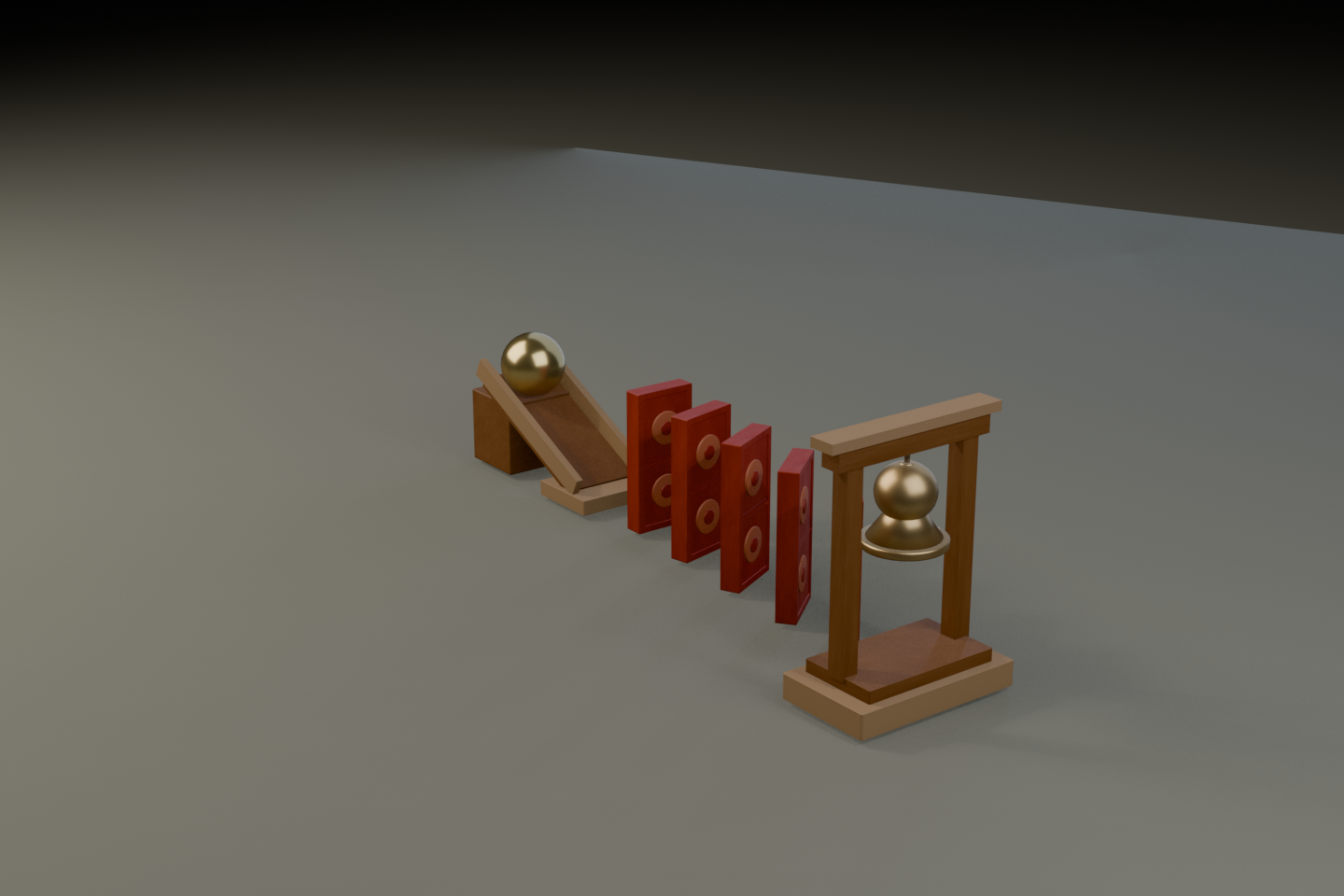
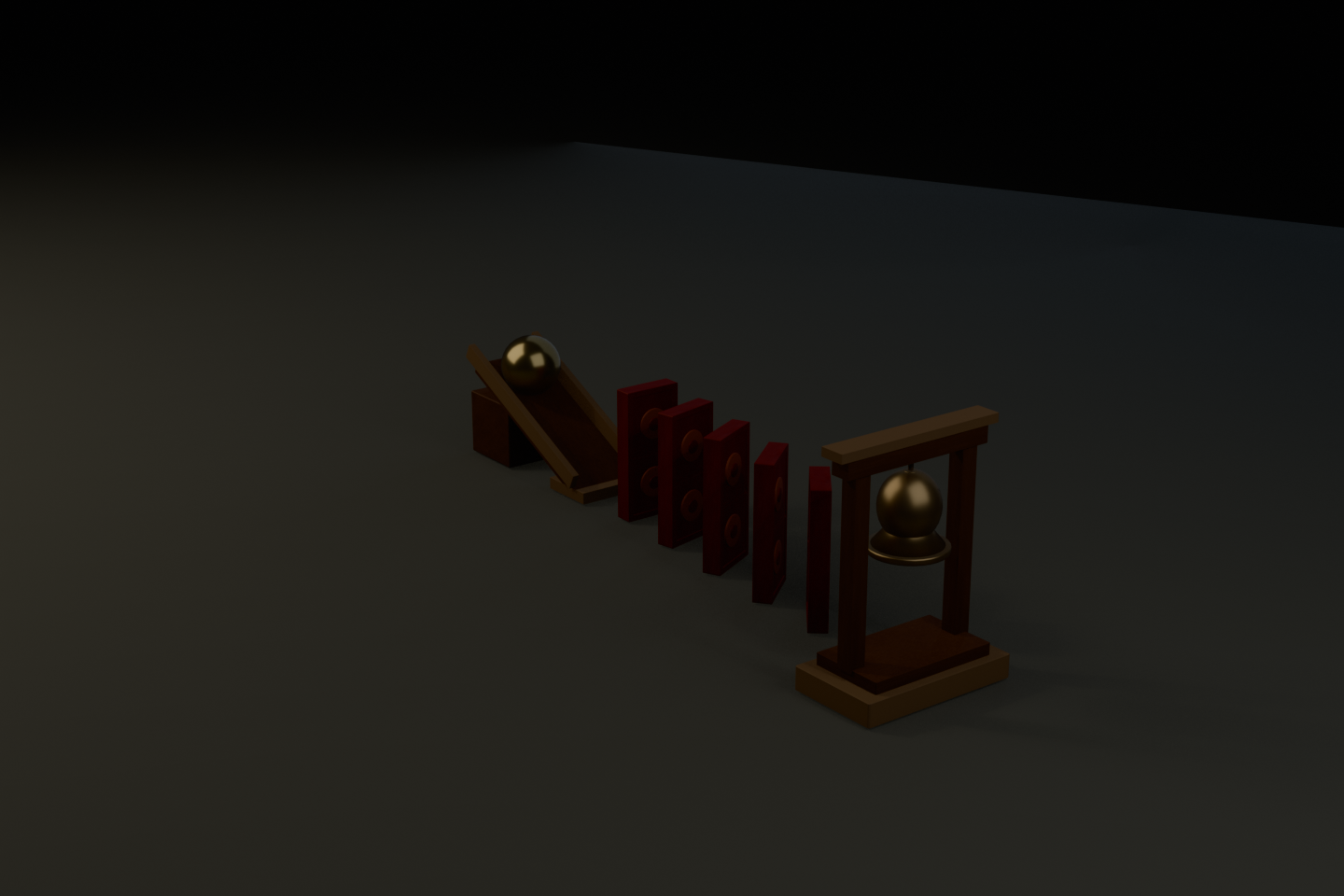
Code-modeled in Blender
The hero assets were modelled by agents writing Blender code against the platform sculpt kit — no downloaded models anywhere — and rendered by the studio harness for audit before entering the engine scene.
Made by AI, compiled by the real Unity 6 engine
The carved tile, launch ramp and bell are code-modeled Blender exports — one tile export feeds all forty instances, each given its own rigidbody and collider along a heading-integrated S-curve. Solver iterations are raised before any body exists so the low-frame-rate WebGL timestep keeps the chain stable, and the whole run is telemetry-logged: release, a monotonic fallen count every five tiles, the bell strike with its elapsed time, and the reset.