Fern Hollow
Walk a misty pine hollow at dawn with a lantern and find eight dry fronds hidden among hundreds of green ones. The fog is the obstacle, not the scenery - you genuinely cannot see them until the light reaches. SHIFT raises the lantern for a wider reveal that burns oil faster, and the oil is finite, so every raise is borrowed from your search. The fern floor and the pines are GPU-instanced, and the fog, the lantern glow and the close-range grain are three capabilities this lab had wrongly recorded as unavailable.
Play it now
Tap once for sound - tap/space low = pump, high = release - R resets
The concept is the contract
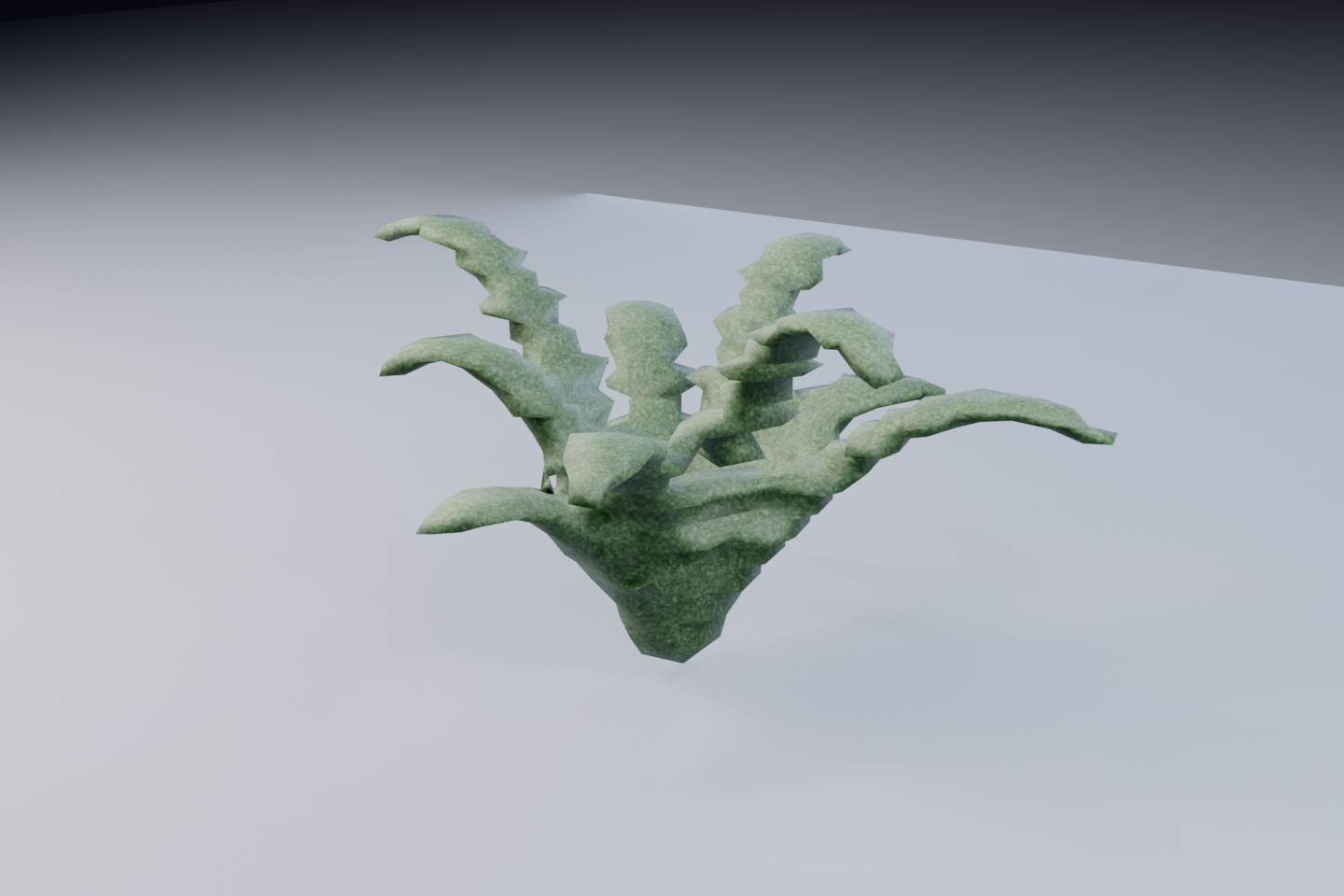
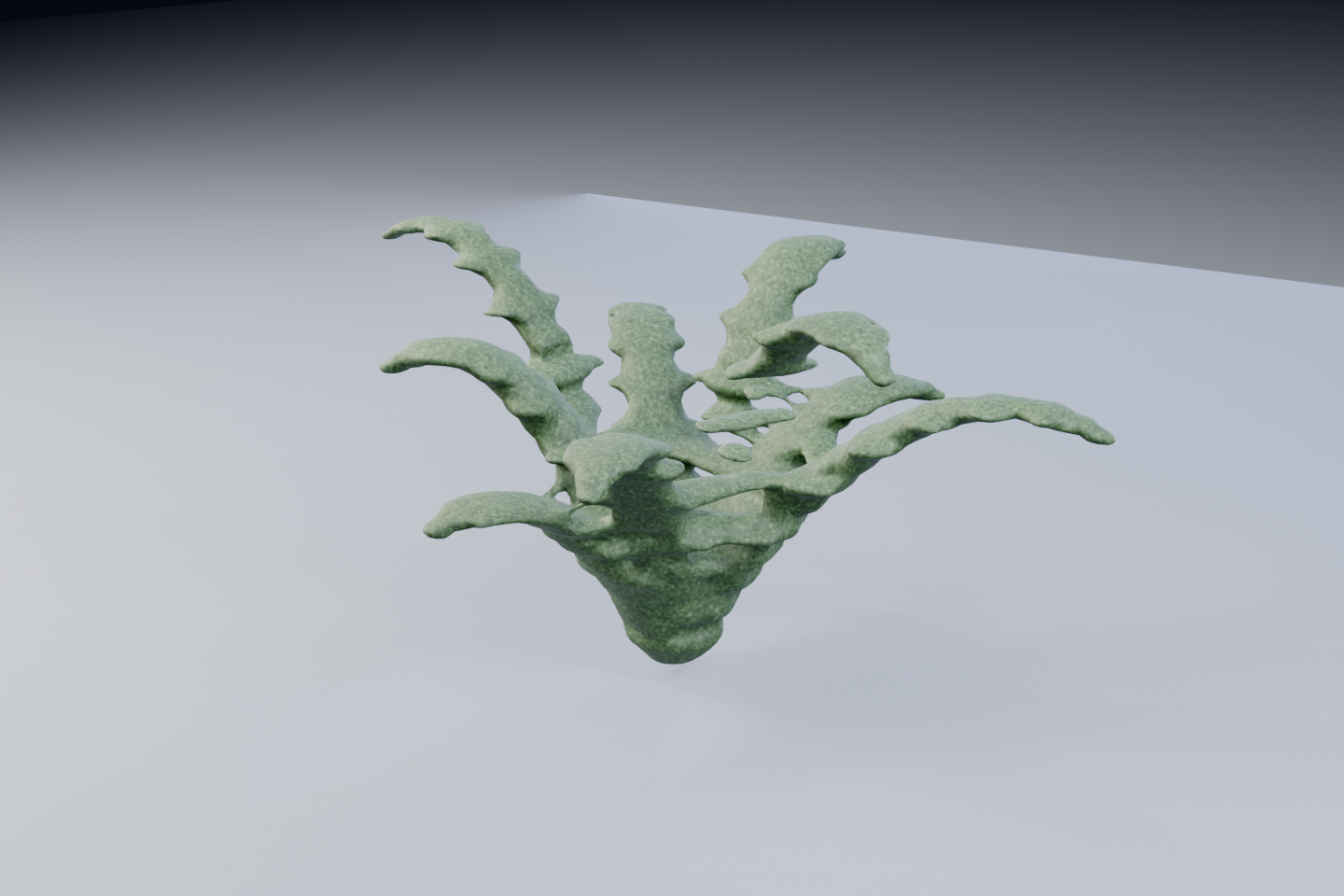
The piece was concepted first — an AI key-art painting — and its hero assets were then code-modeled in headless Blender and audited against that concept. The pair below is the contract and the build.
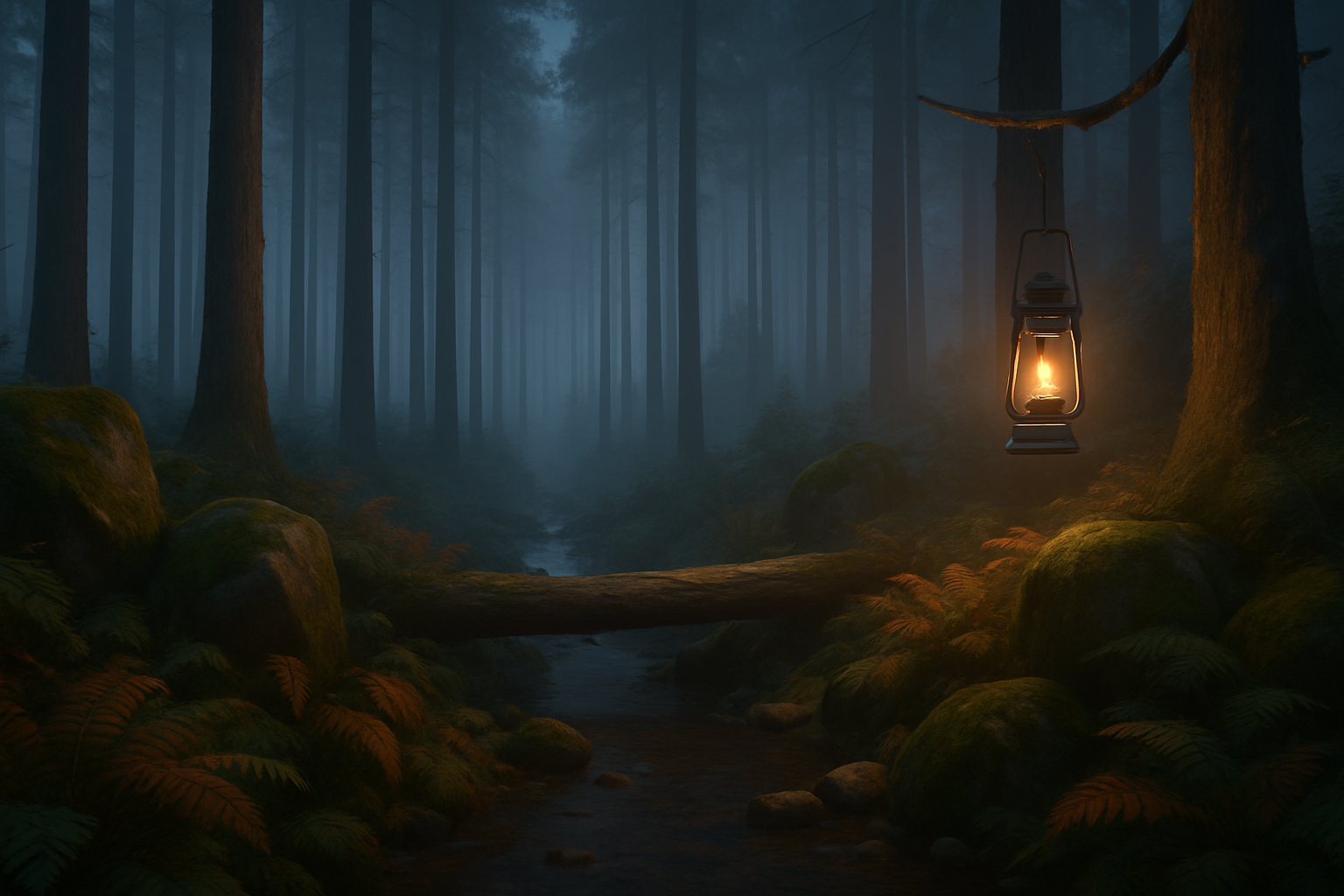
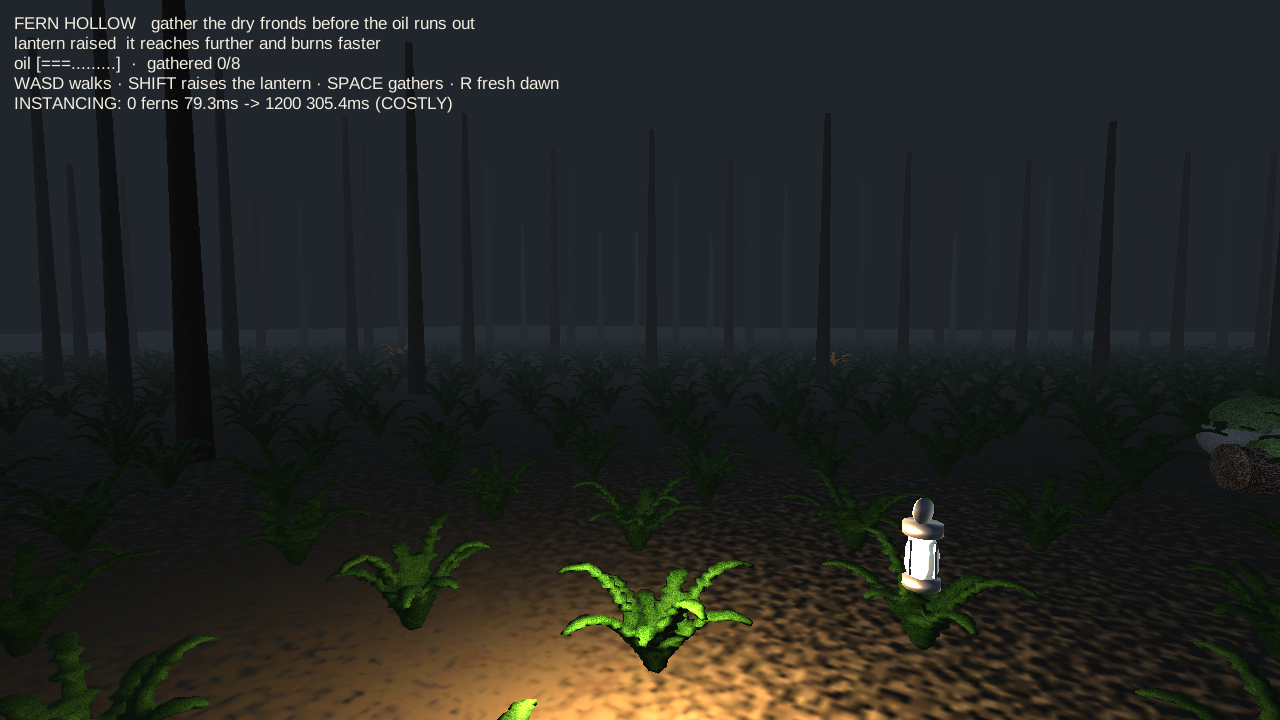
Concept prompt
A misty pine forest hollow at dawn: tall trunks receding into layered blue-grey fog, a dense floor of ferns catching the first light, moss-covered granite boulders, a fallen log across a shallow stream, and a small oil lantern glowing warm amber.
Code-modeled in Blender
The hero assets were modelled by agents writing Blender code against the platform sculpt kit — no downloaded models anywhere — and rendered by the studio harness for audit before entering the engine scene.

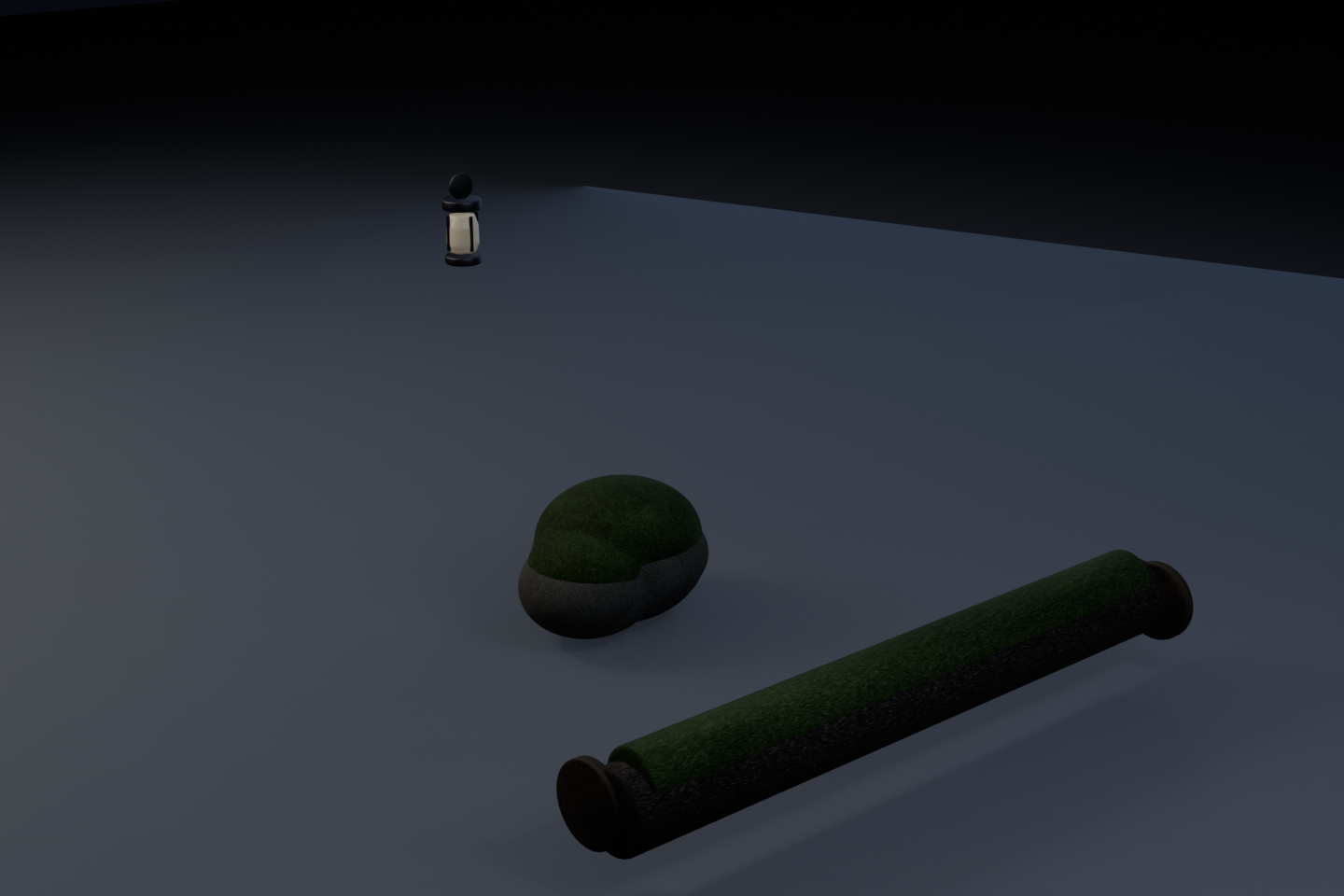
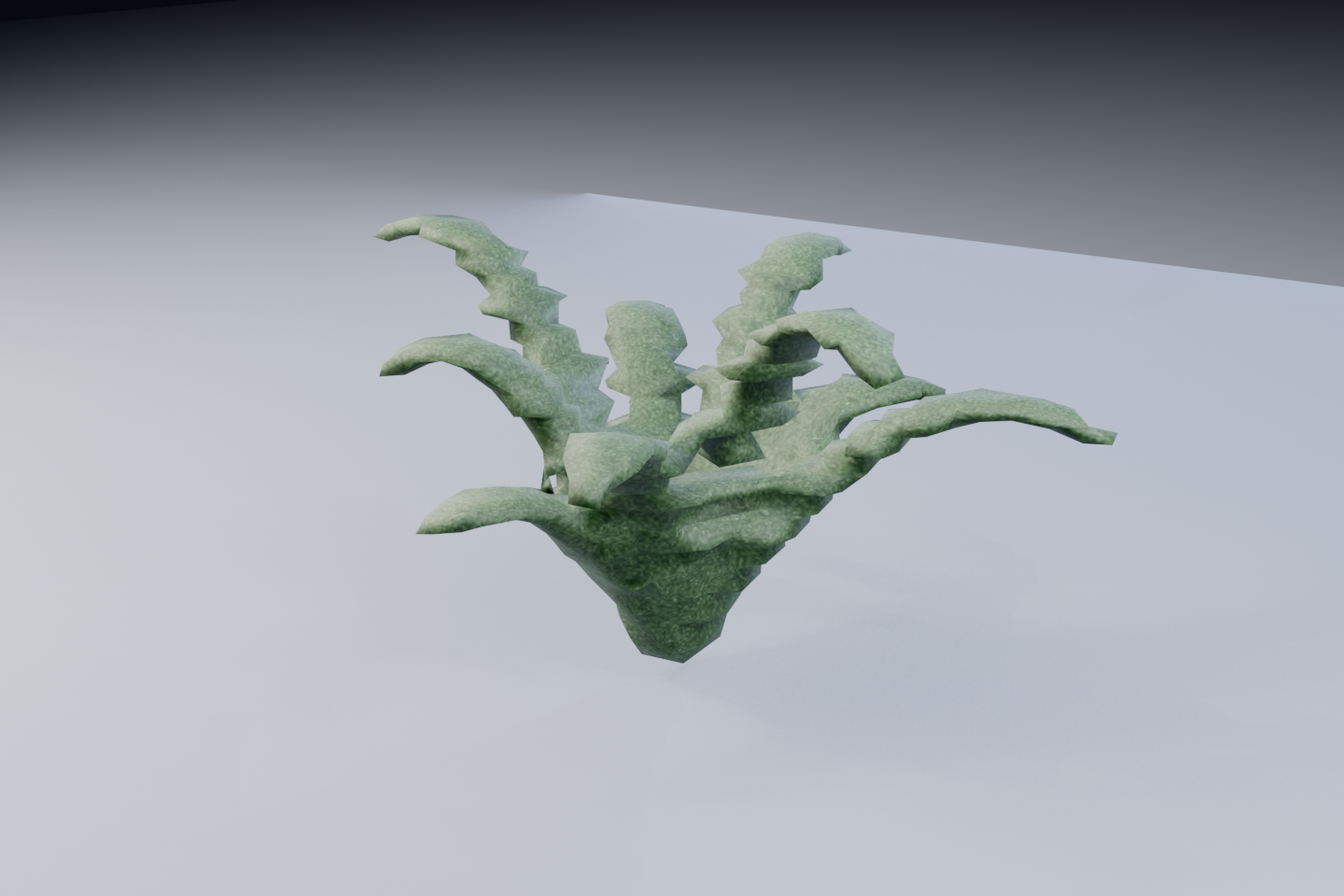
Made by AI, compiled by the real Unity 6 engine
This piece is an experiment with its control group left visible. In ninety cycles this lab had never once used Unity's own animation system — every piece animated by hand in code — and two engine features tested here before, distance fog and GPU instancing, turned out to be silently stripped from a code-built WebGL build. An AnimationClip built entirely at runtime is the same shape of thing: no saved asset, nothing for the build pipeline to see and keep. So the lion's head is loaded twice. The left head is driven by the runtime clip; the right head is driven by hand with the same curve, the same period and the same amplitude. The panel reports how far each one actually travelled since boot, because a rig that never leaves its starting value is inert no matter how alive the scene looks. Both bindings pass — position and rotation alike — and the clip matches its control to three digits, which is the opposite of what fog and instancing did. The lion, drum, drummer and lanterns are code-modeled Blender exports; the head is seated on the body from its measured renderer bounds rather than by eye.