Glaze & Fire
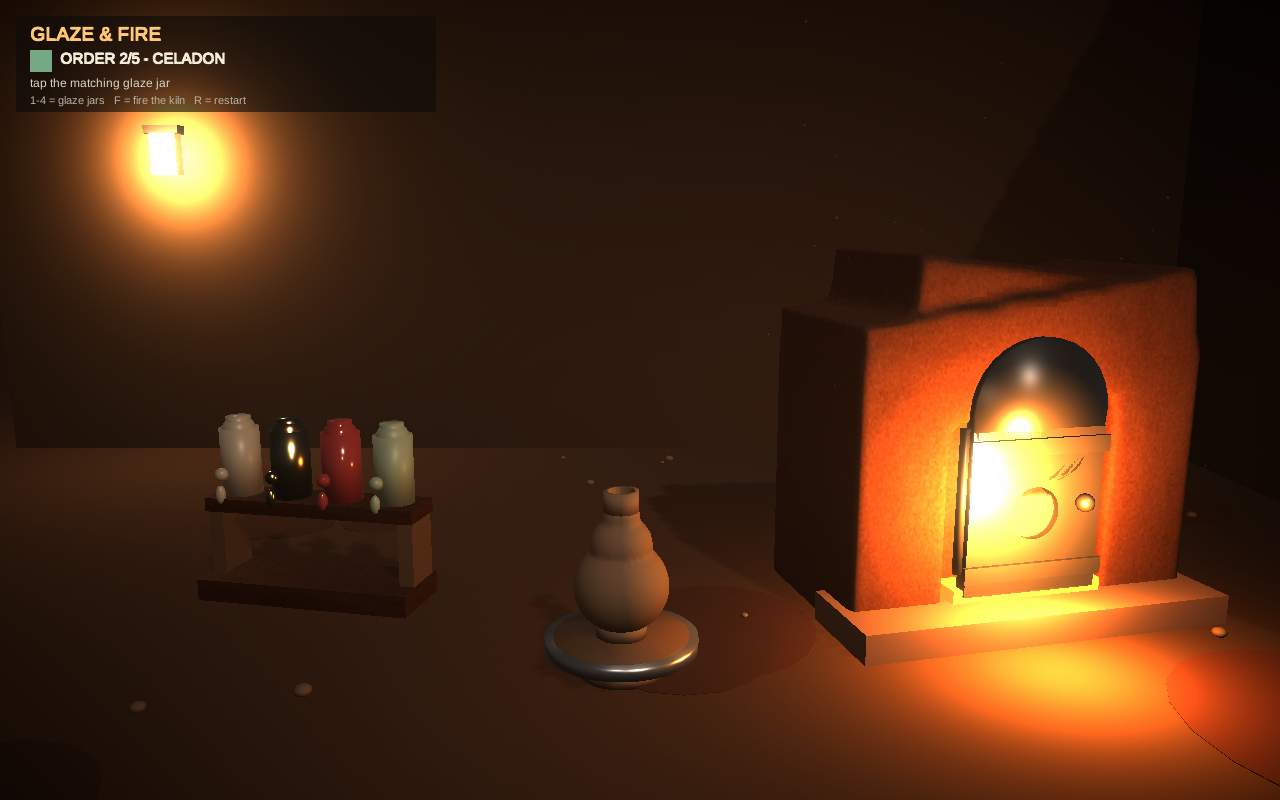
A pottery mini-game about material truth. Five glaze orders come in; you tap the matching jar on the rack (each pick answers with a sampled kalimba note), the banding wheel spins the bisque pot while the wet coat goes on, and then the kiln takes over: its arched iron door swings outward on a real hinge rod exported as a named node from Blender — the swing direction is probe-verified at runtime so the handedness mirror can never reverse it — the pot rides inside, the door thunks shut on a taiko hit and the firebox emissive ramps up with the crackling fire ambience. When the door reopens the finish is real rendering, not a tint: gloss celadon, deep oxblood, true-metallic bronze, and an ivory crackle whose crack network is a procedural texture generated at load. Bowl and vase alternate across orders over a koto underlay, in a lantern-lit adobe studio.
Play it now
Tap once for sound - tap a glaze jar (or 1-4), then the kiln door (or F) to fire - R restarts
The concept is the contract
The piece was concepted first — an AI key-art painting — and its hero assets were then code-modeled in headless Blender and audited against that concept. The pair below is the contract and the build.
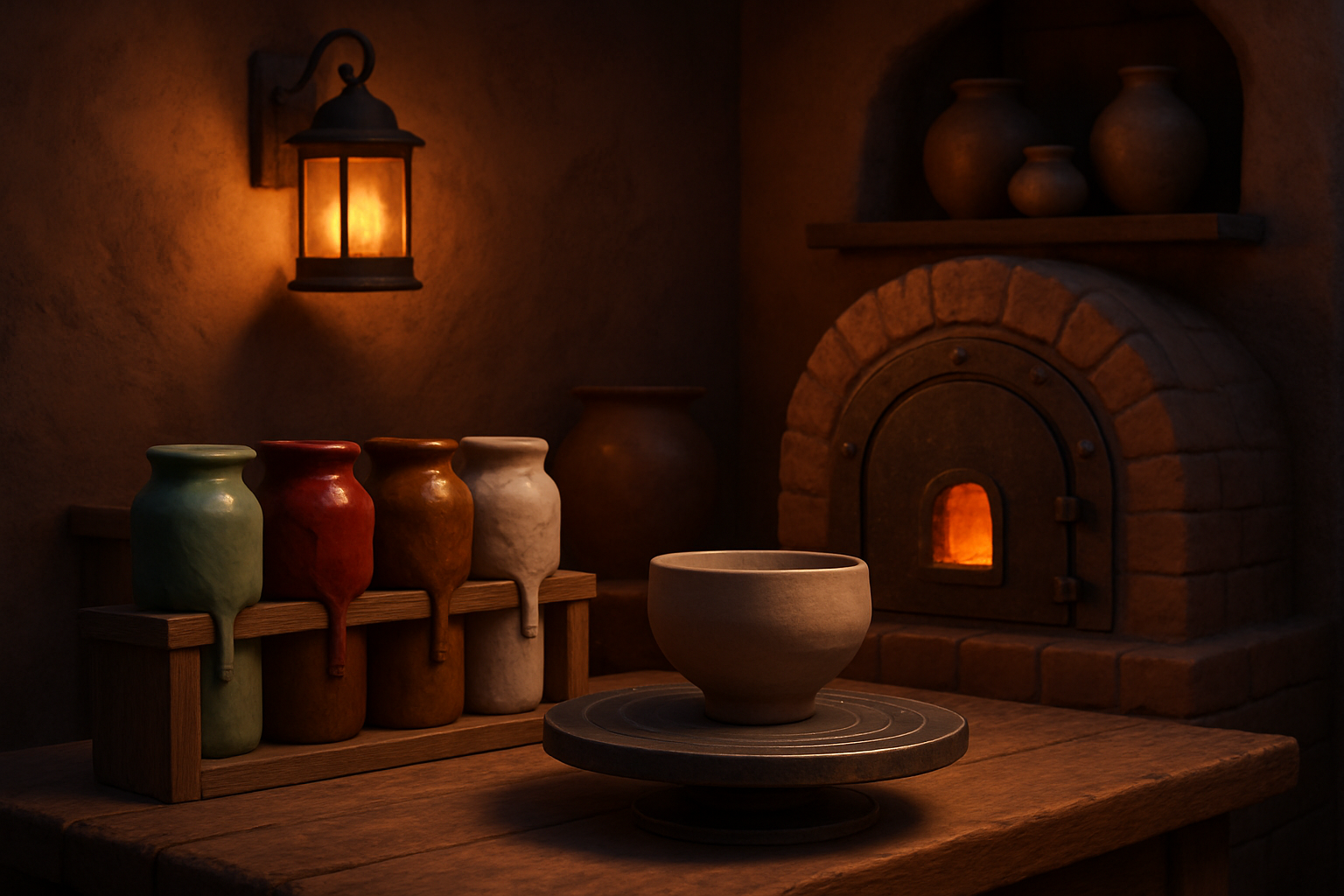
Concept prompt
A cozy pottery glazing workshop at dusk: a potter's workbench with a bisque clay tea bowl on a banding wheel, four glaze jars in a wooden stand each dripping a different finish - matte celadon green, glossy deep oxblood red, metallic bronze luster, crackled ivory white - and behind them a small brick kiln with an arched iron door glowing hot orange through its peep hole, fired pots cooling on a shelf, warm lantern light on adobe walls, artisan mood with soft shadows, high-end stylized 3D game render, no text, no watermark, no UI
Code-modeled in Blender
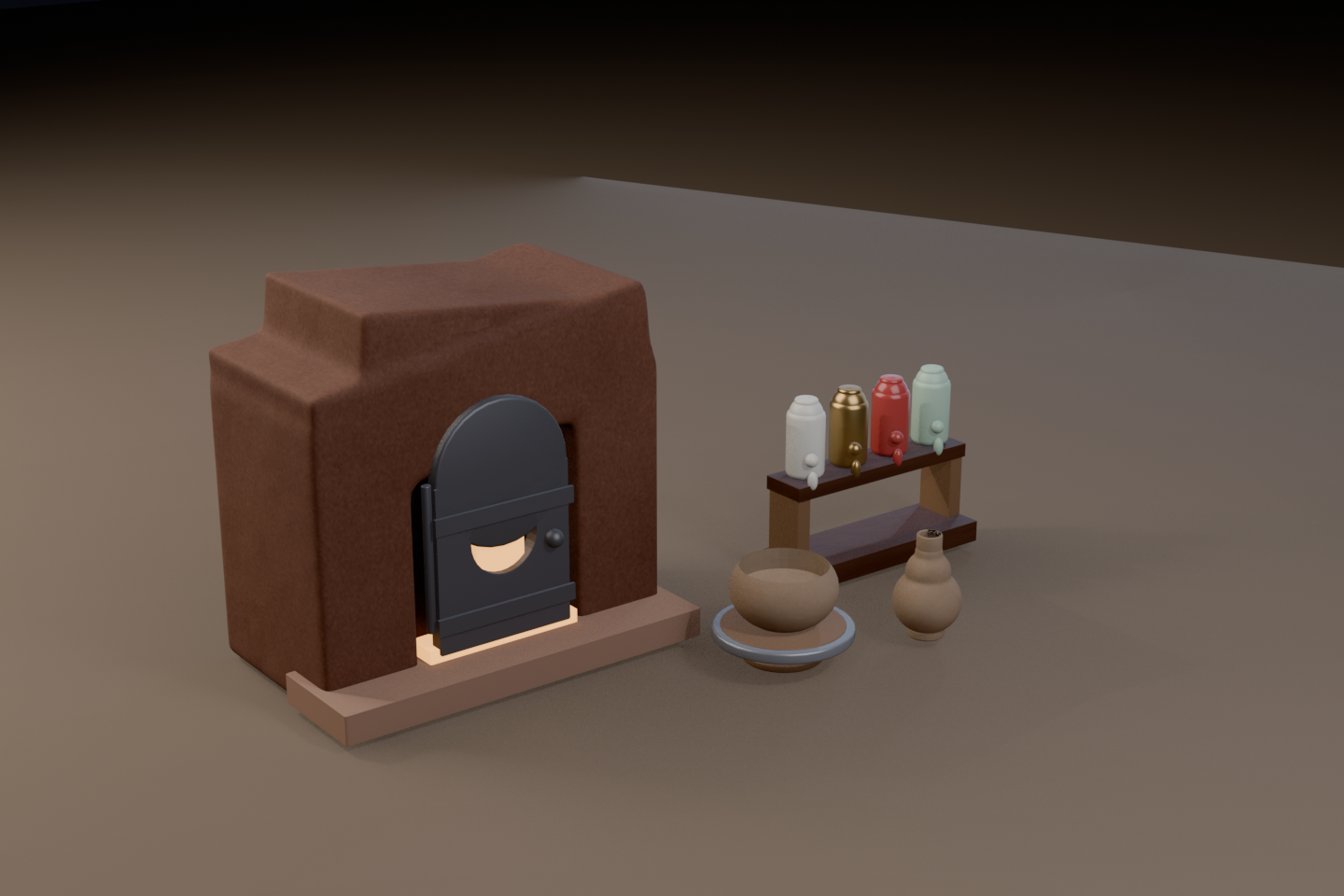
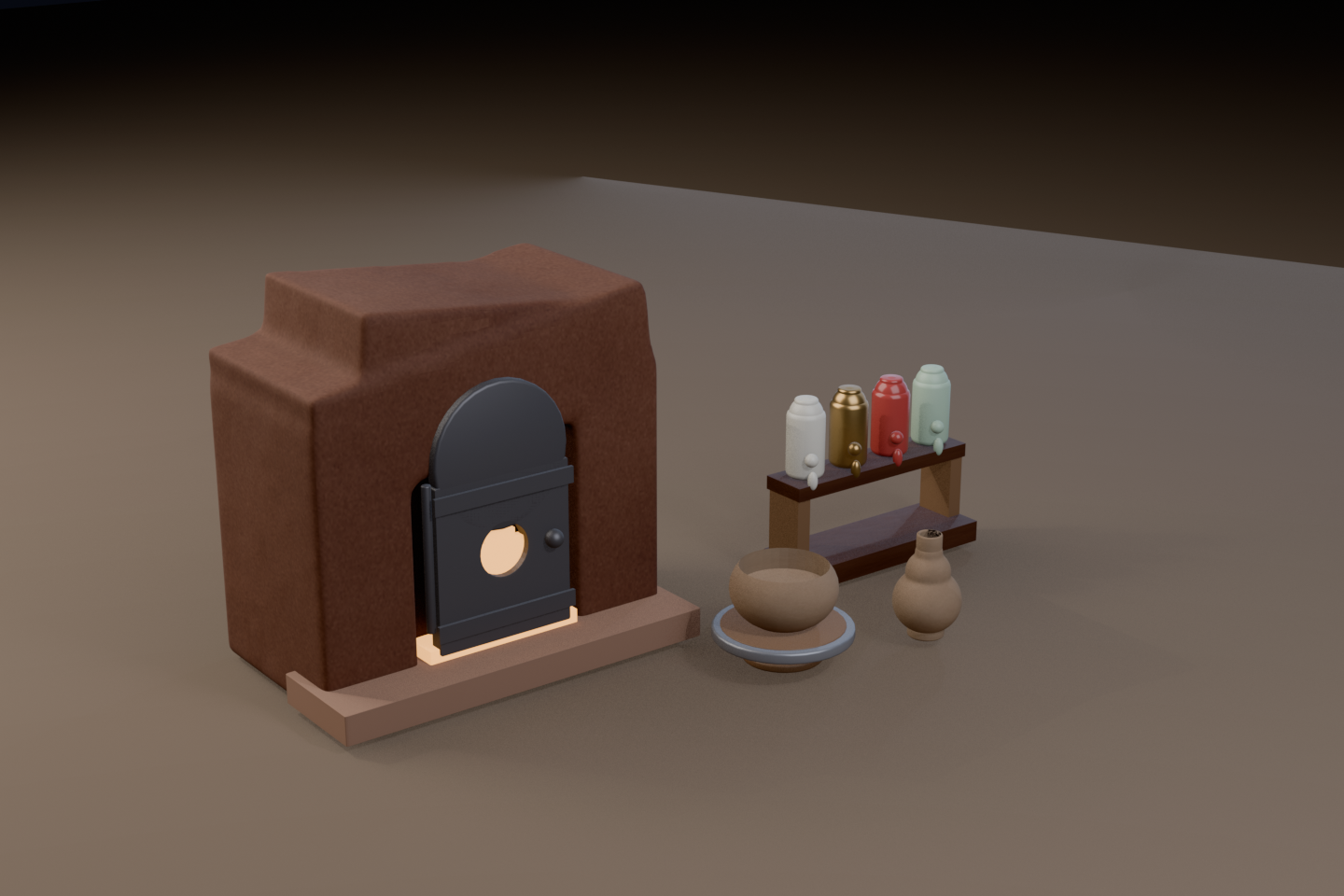
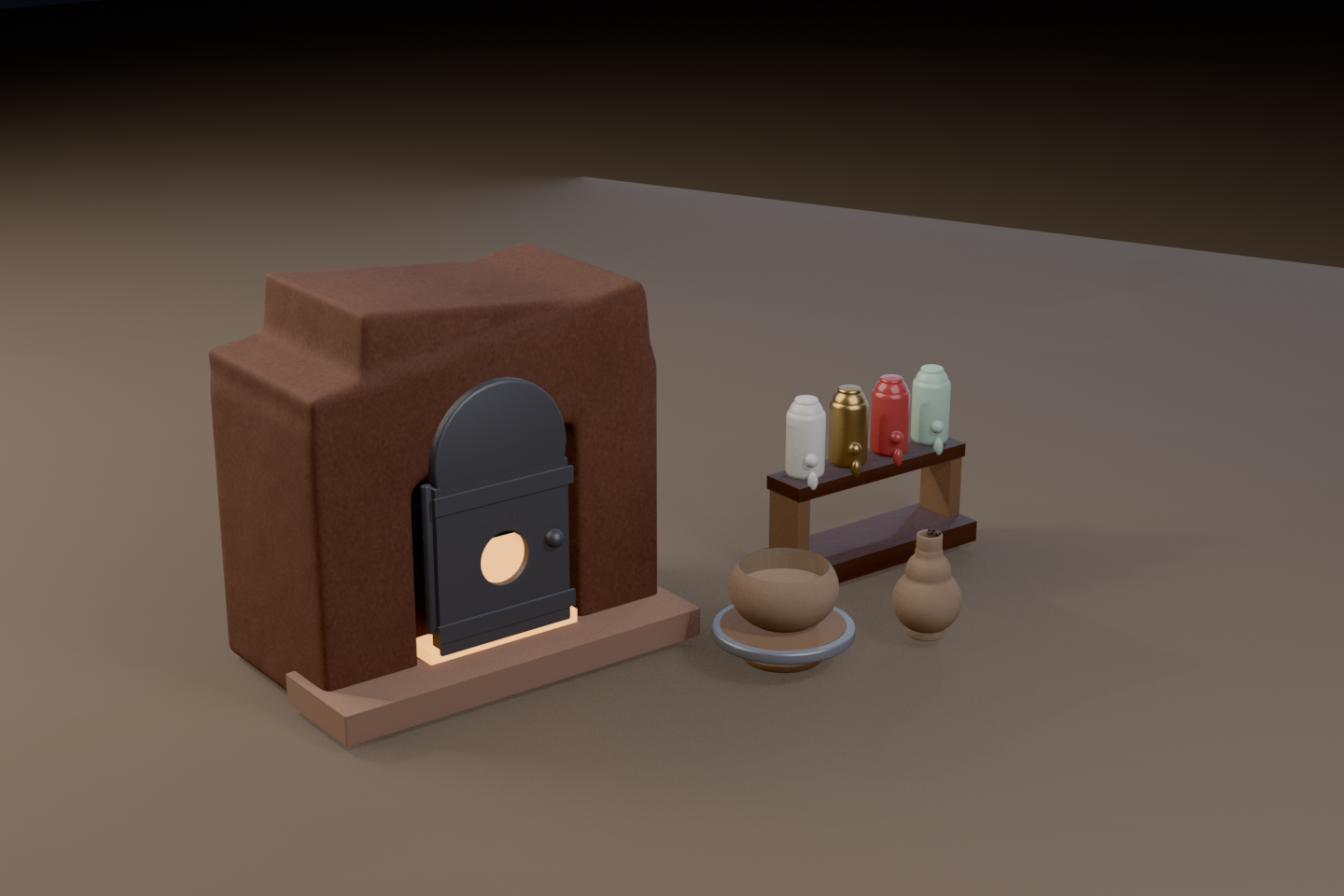
The hero assets were modelled by agents writing Blender code against the platform sculpt kit — no downloaded models anywhere — and rendered by the studio harness for audit before entering the engine scene.
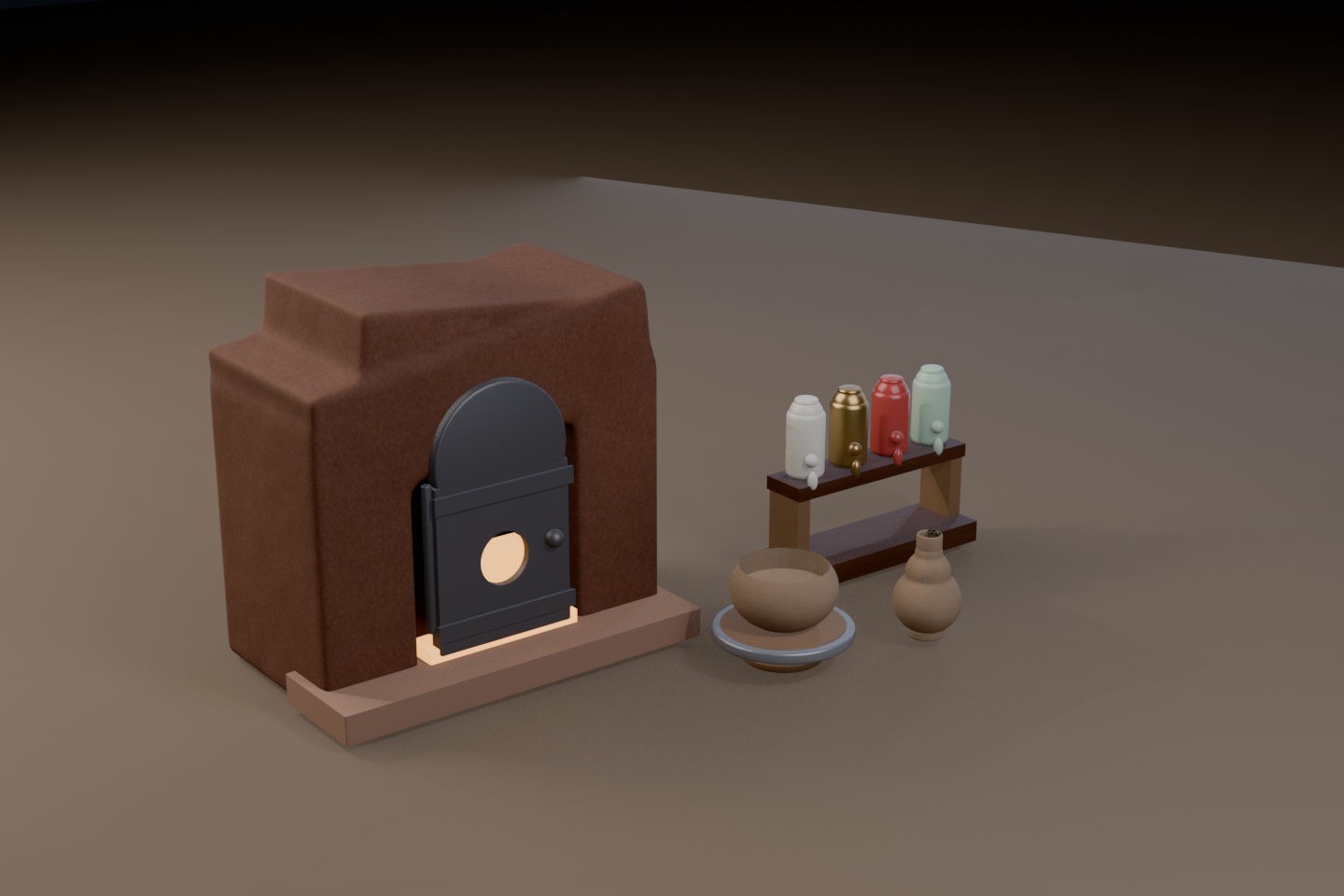
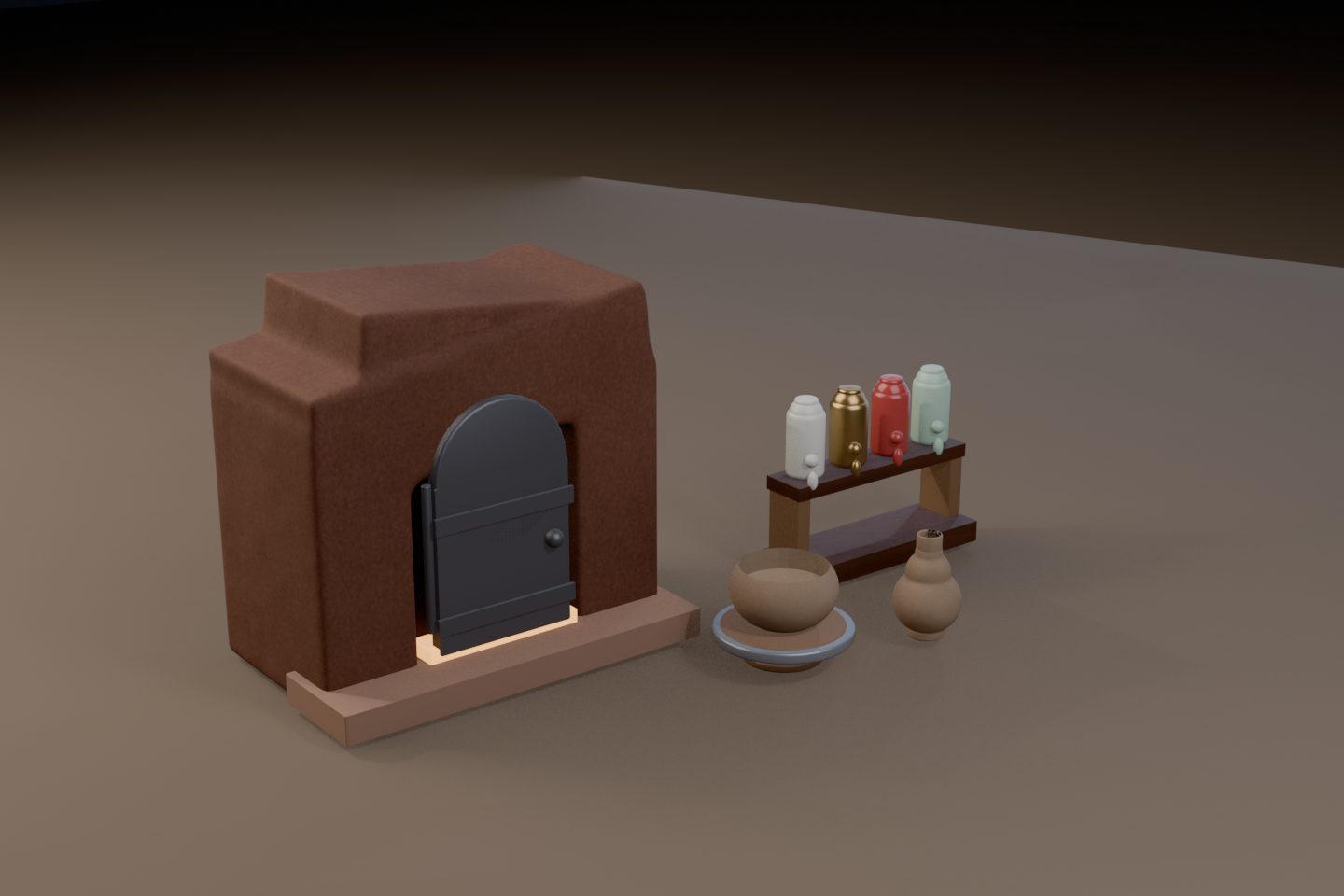
Made by AI, compiled by the real Unity 6 engine
Five code-modeled Blender exports — bowl, vase, jar rack, kiln and wheel — ship as named nodes: the door group reparents onto its hinge rod at runtime, the glaze jars carry tap colliders, and both pots are single meshes so one material swap refires the whole finish. All sound is sampled — kalimba, marimba, celesta, taiko, koto and a real fire-ambience loop — never synthesized.