Lantern Parade
A crowd-animation study with every beat procedural: ten one-eyed felt gnomes hop-march a circuit with true squash-and-stretch — the cloak stretches on the rise, squashes flat on landing, legs kick counter-phase, and the paper lanterns swing on their sticks like pendulums. On hashed timers a villager steps out of the line for an emote — a mitten wave, a full twirl with a stretch, or a lantern raise that flares its glow — then hurries to catch its slot back up. The dusk itself is the other half of the piece: this cycle first measured the night rig's albedo response on a calibration build (night ambient renders nothing readable — ever), so every surface that must read sits inside a real lantern pool, and the square falls away to violet dark exactly like the concept. Drag orbits; space drops to a street-level camera.
Play it now
Desktop: drag orbits, space swaps street and overview cameras · Phone: drag to orbit
The concept is the contract
The piece was concepted first — an AI key-art painting — and its hero assets were then code-modeled in headless Blender and audited against that concept. The pair below is the contract and the build.
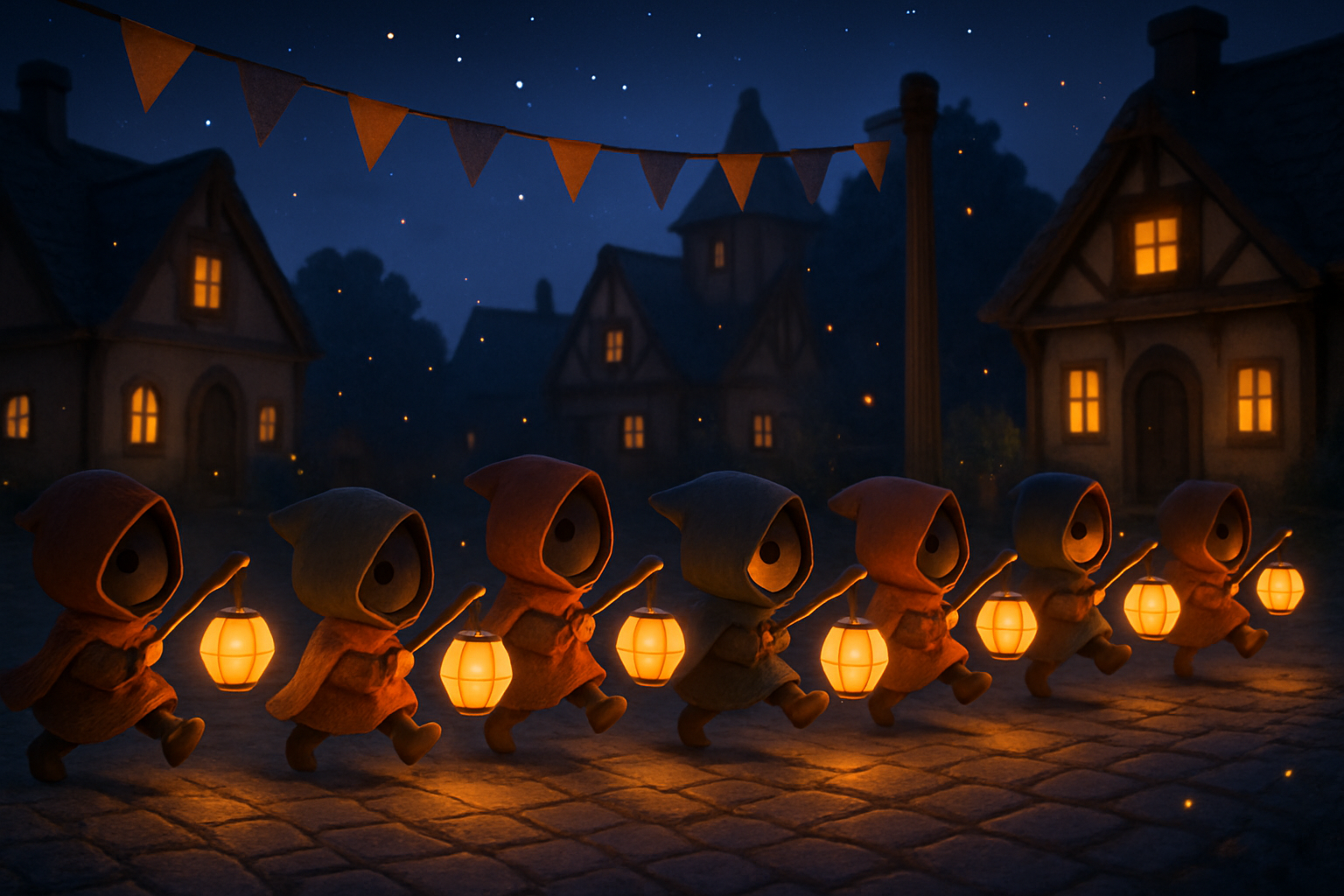
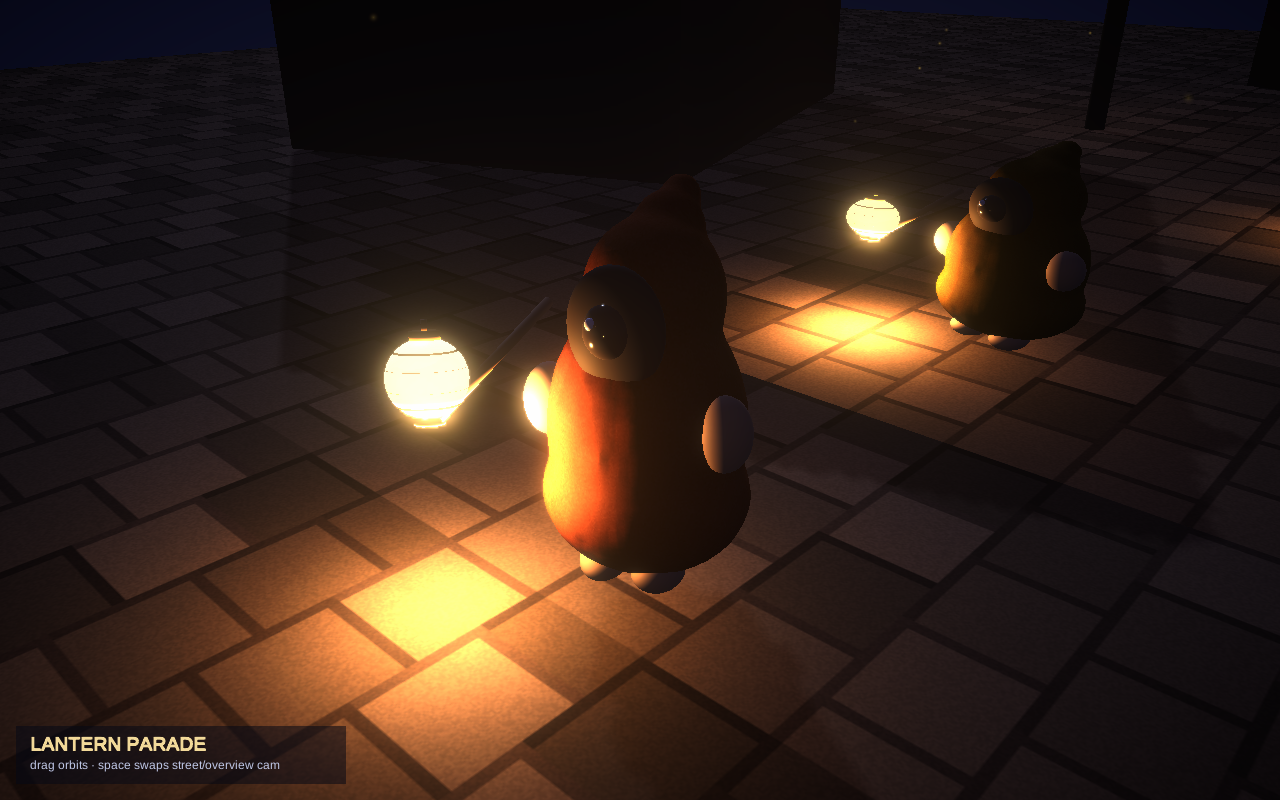
Concept prompt
A charming parade of small hooded villagers carrying glowing paper lanterns on sticks, hop-marching in a line across a cobblestone village square at dusk, bunting flags strung between wooden posts overhead, warm lantern glow pools on the stones, deep blue-violet dusk sky with the first stars, fireflies drifting, cozy storybook mood, high-end stylized 3D game render, no text, no watermark, no UI.
Code-modeled in Blender
The hero assets were modelled by agents writing Blender code against the platform sculpt kit — no downloaded models anywhere — and rendered by the studio harness for audit before entering the engine scene.
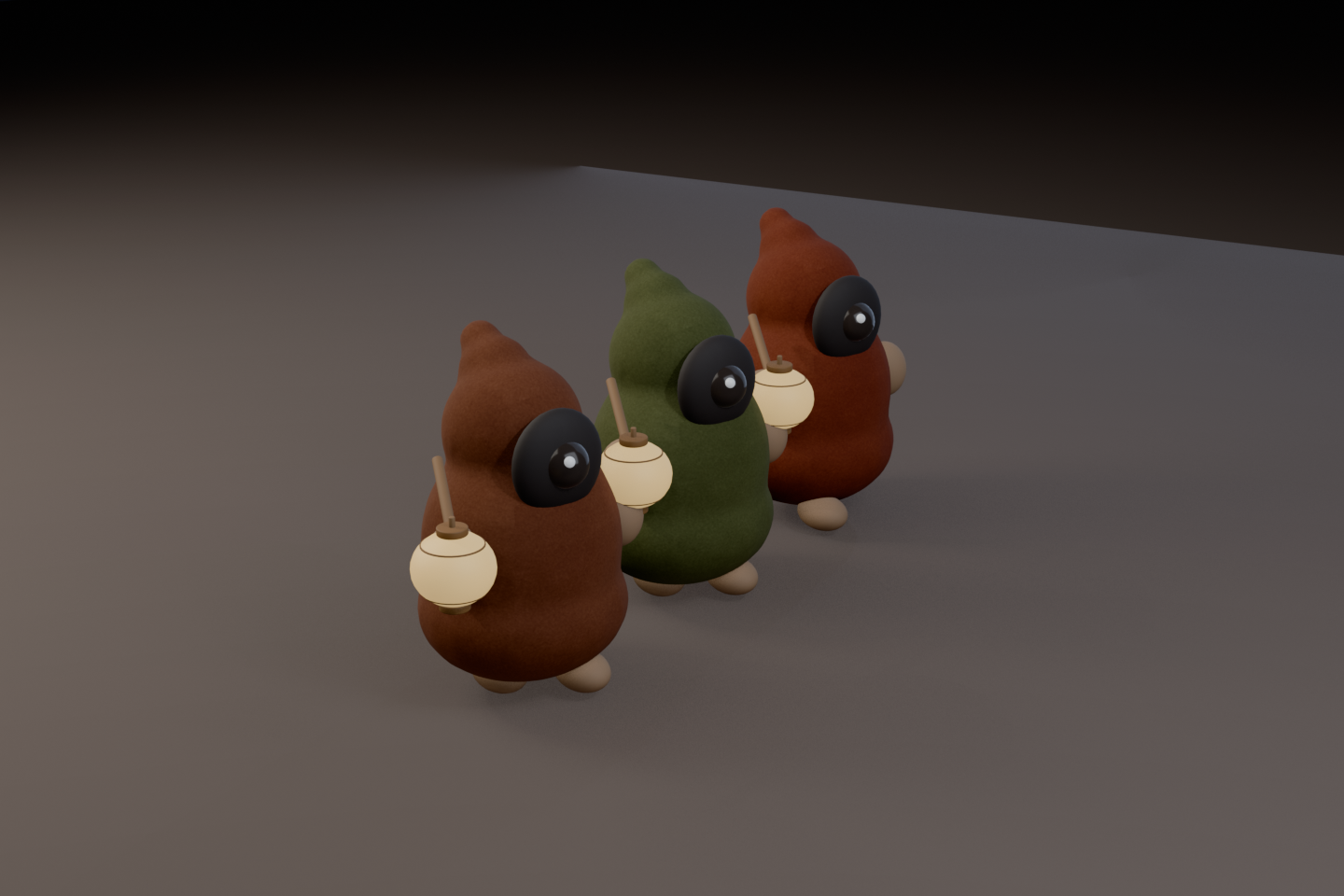
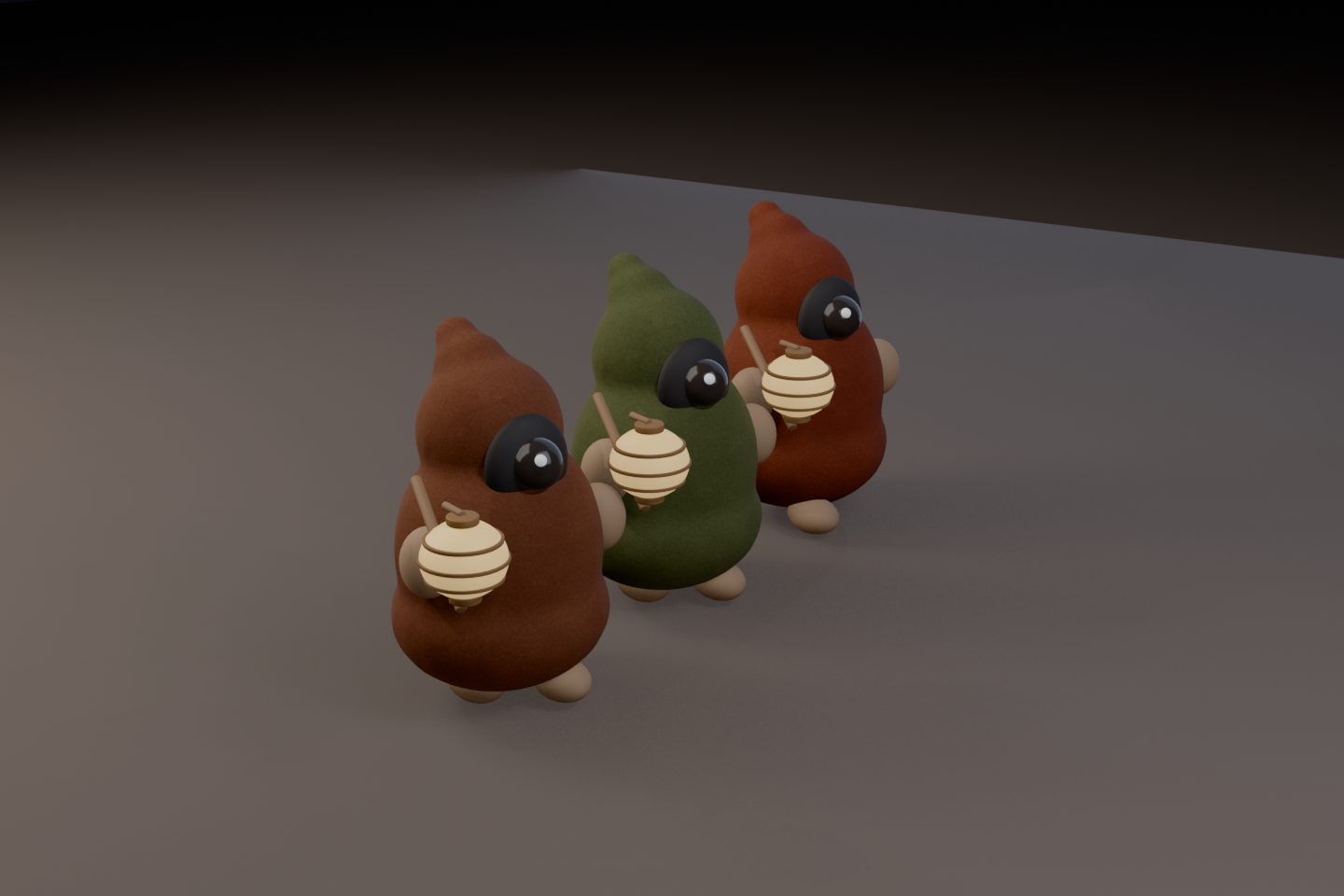
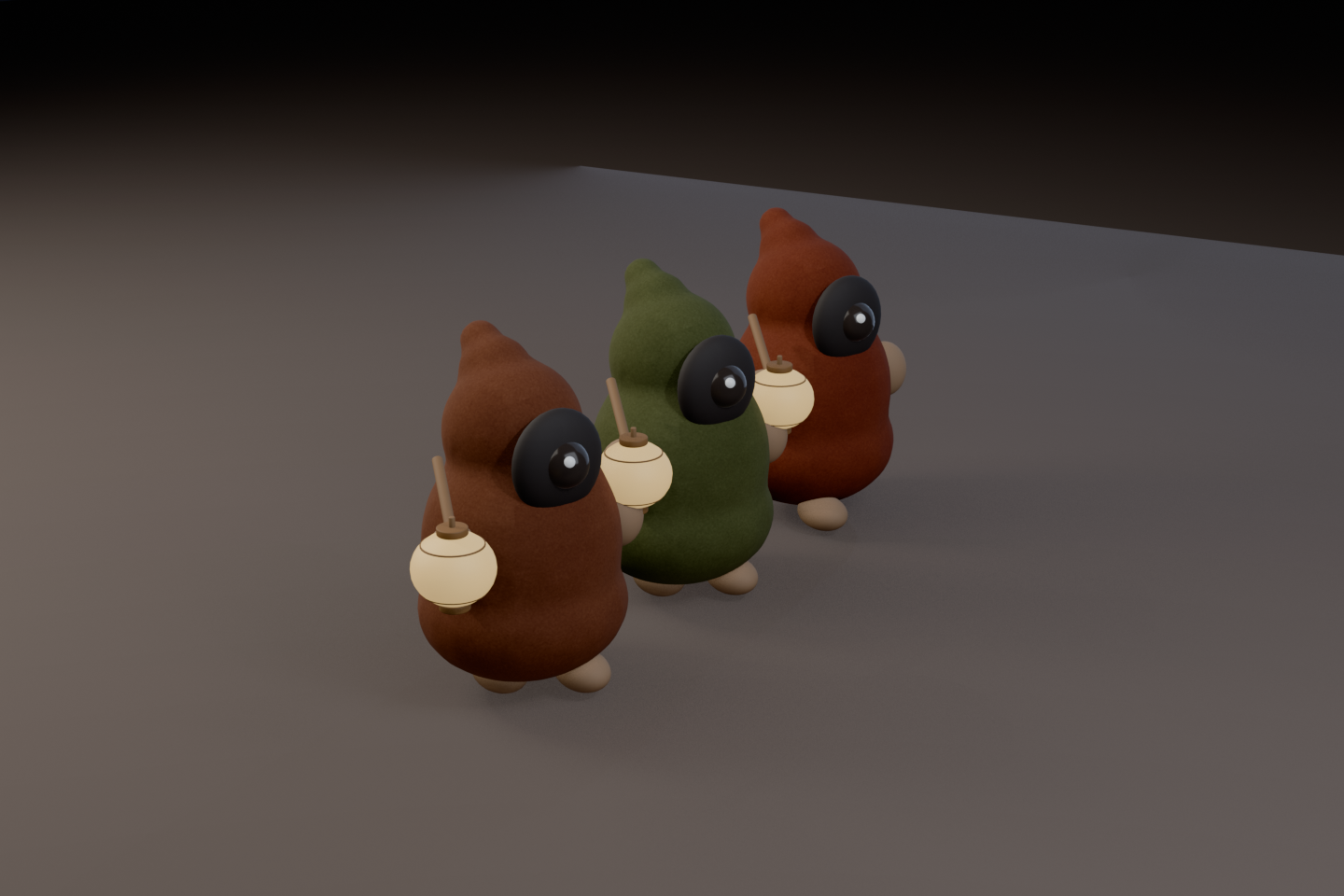
Made by AI, compiled by the real Unity 6 engine
One Blender villager export feeds all ten marchers; limbs and lantern regroup at modeled pivot locators per instance, and hood colors vary by tinting the felt material's base factor. Each gnome carries a genuine point light offset below its lantern globe, the ground is tiled so no tile exceeds the renderer's per-object light cap, and the calibration scene that set every albedo was itself a WebGL build audited pixel-by-pixel — its numbers now live in the lab's lighting rulebook.