Lion Dance
One gymnast, one bar, real swing physics: the Blender-authored gymnast hangs from the high bar on a pendulum energy model — tap at the bottom of the swing to pump, and her arc grows until she is turning full giants. Tap up high to let go: she tucks into a spin that carries the swing’s momentum, opens out on the way down, and plants a landing on the royal-blue crash mat. Release phase, spin recovery and landing spot are judged into a score the flip cards celebrate — stick a 9 and the celesta agrees. Botch the release and she tumbles, shakes it off, walks back on a real gait and remounts for the next attempt. Piano waltz, glockenspiel pumps, harp release and taiko landings — every sound a sampled instrument.
Play it now
Tap once for sound - tap/space low = pump, high = release - R resets
The concept is the contract
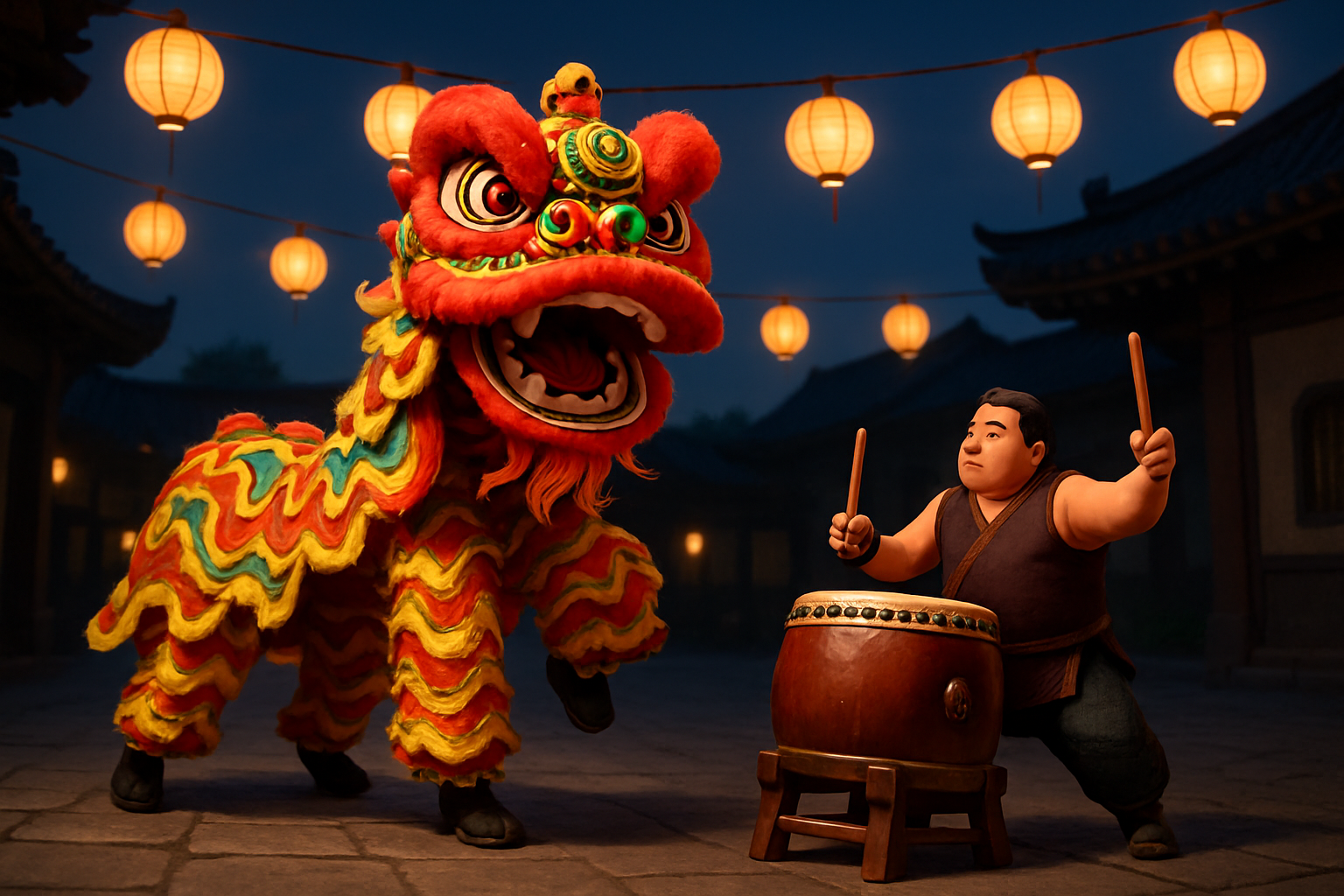
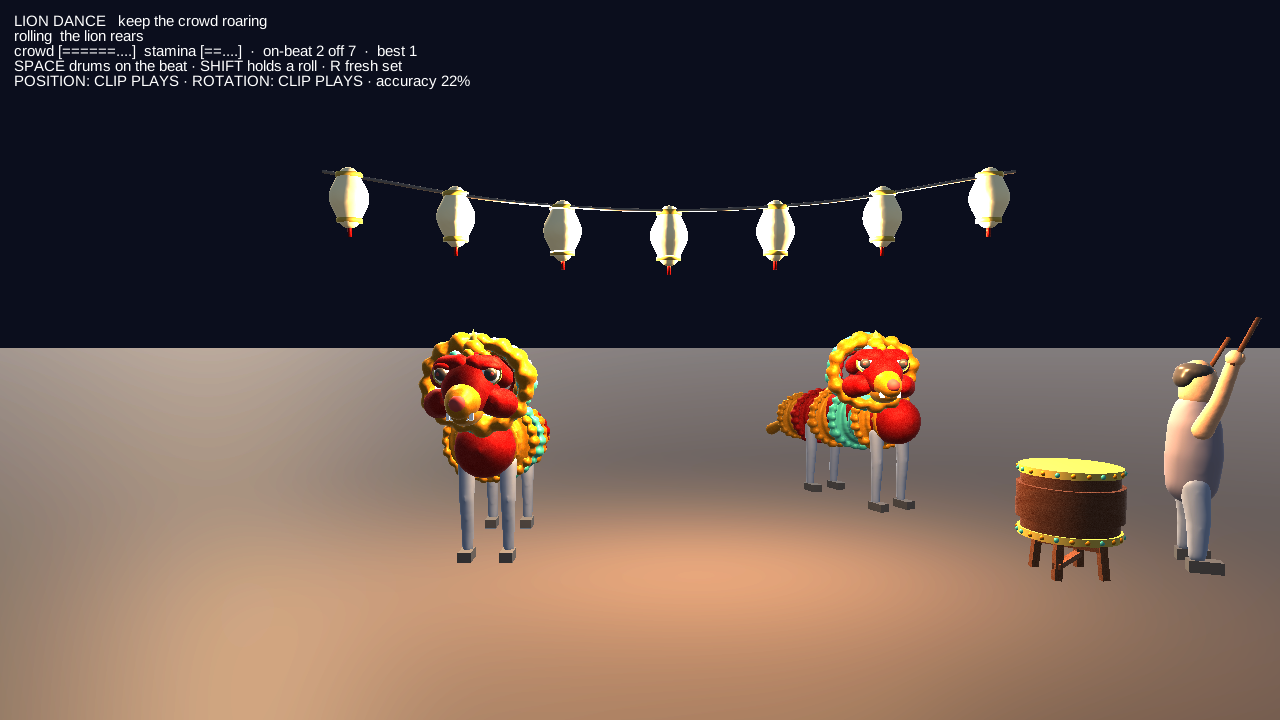
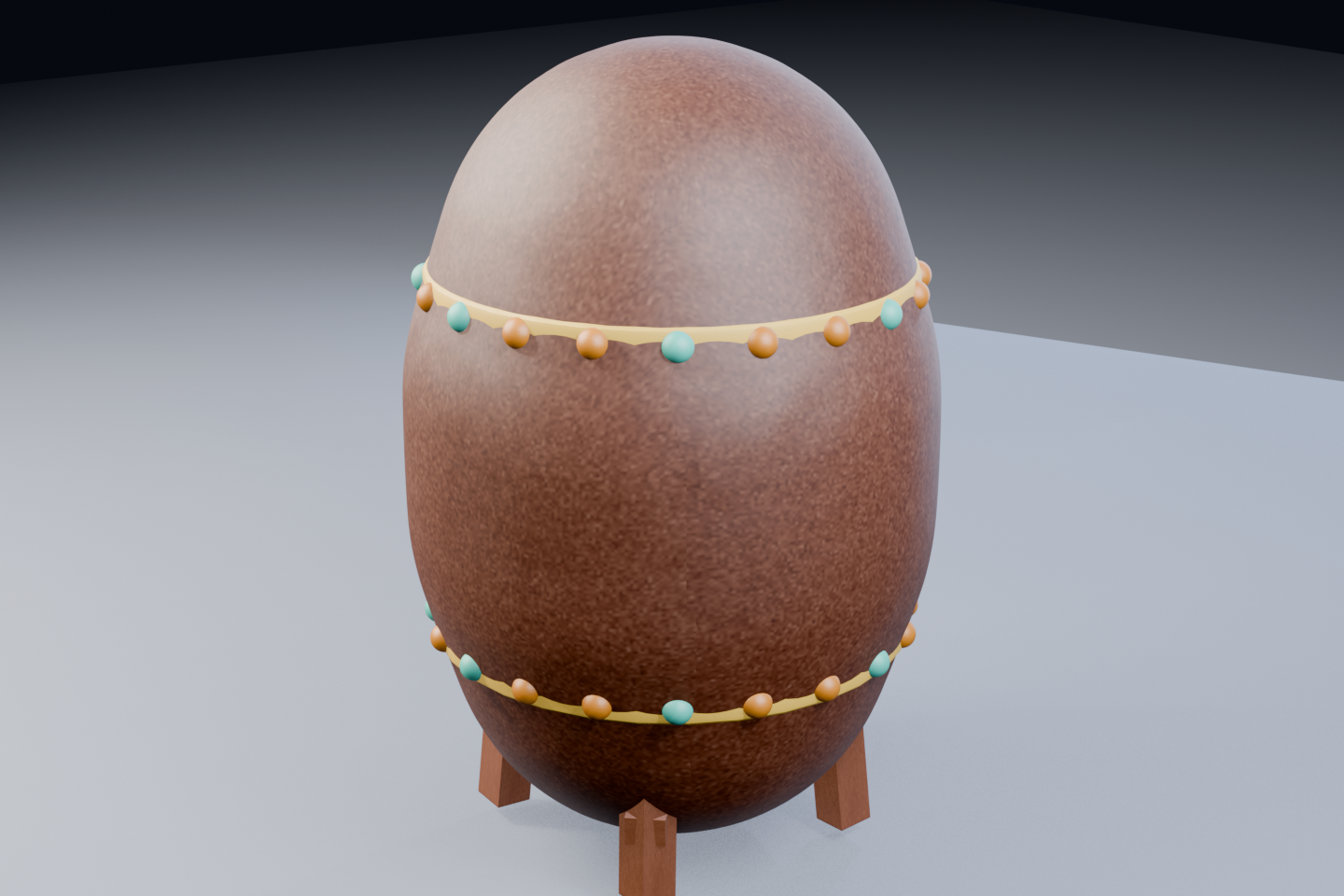
The piece was concepted first — an AI key-art painting — and its hero assets were then code-modeled in headless Blender and audited against that concept. The pair below is the contract and the build.
Concept prompt
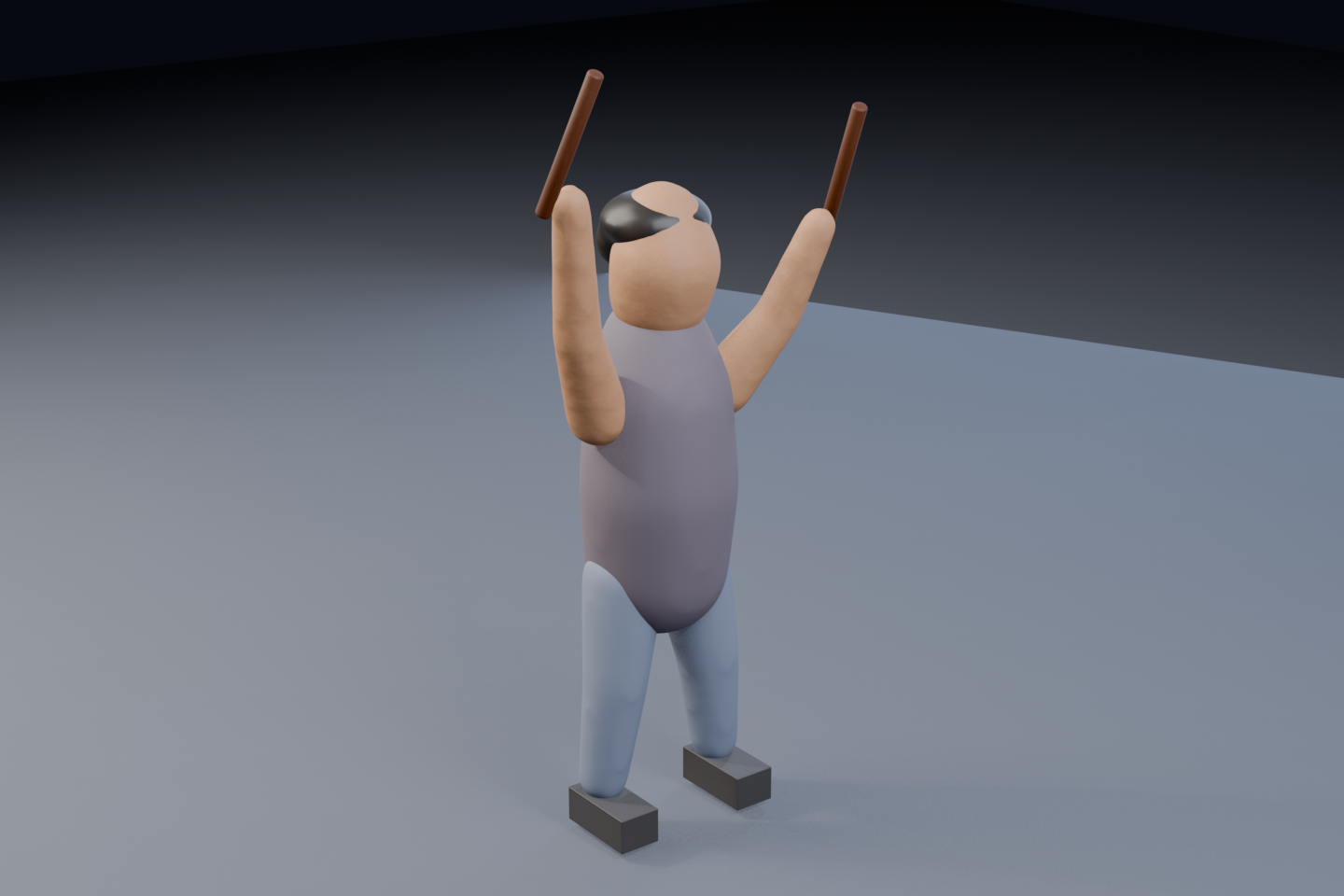
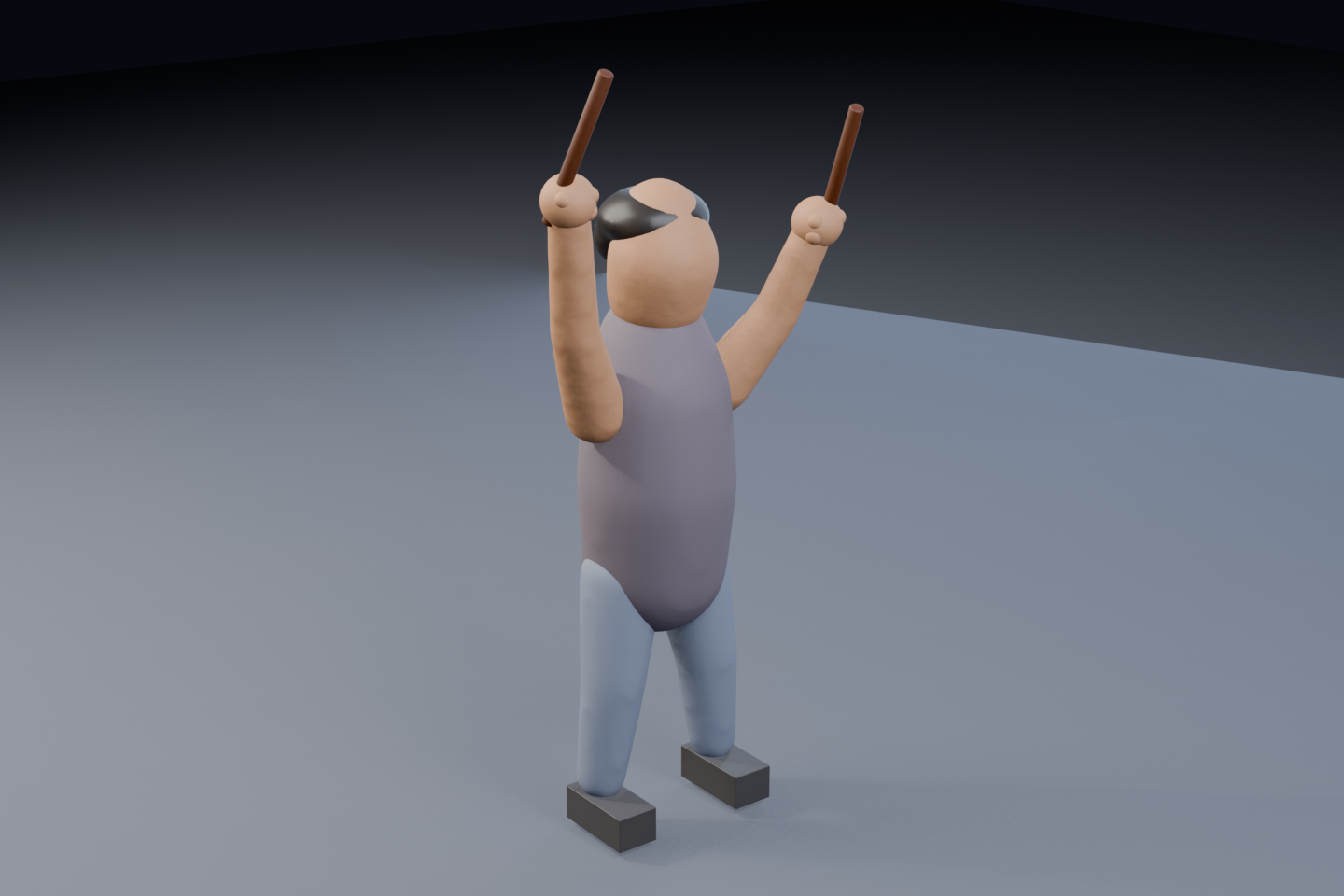
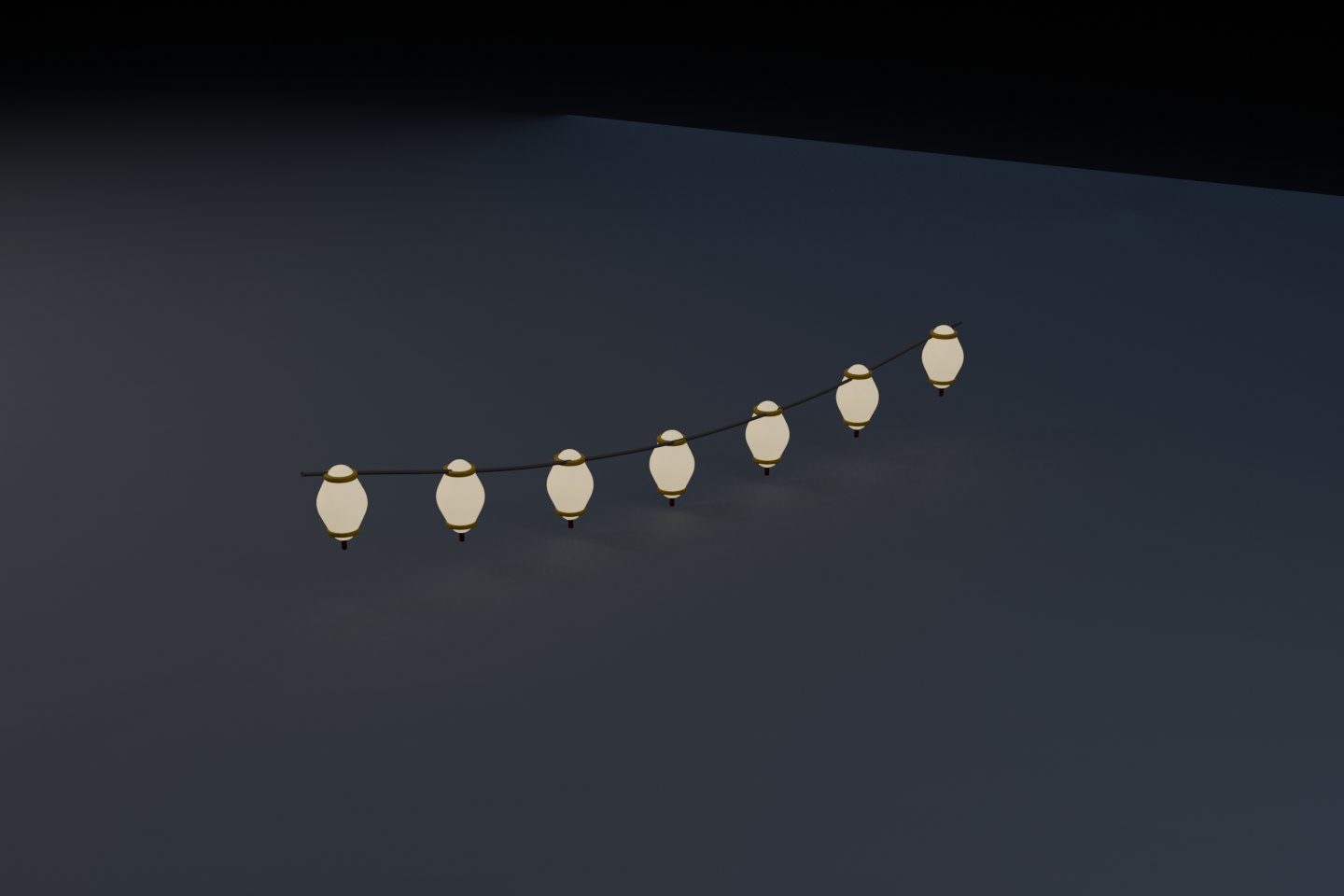
A festival lion dance at dusk in a courtyard: a vividly coloured ceremonial lion costume mid-leap, its large round head with a hinged jaw and fringed mane of crimson, gold and jade, the long patterned silk body trailing behind over two dancers' legs, beside a squat barrel drum on a wooden stand with a drummer raising both sticks; warm paper lanterns strung overhead, deep blue dusk sky, swept stone courtyard, high-end stylized 3D game render, no text, no watermark, no UI
Code-modeled in Blender
The hero assets were modelled by agents writing Blender code against the platform sculpt kit — no downloaded models anywhere — and rendered by the studio harness for audit before entering the engine scene.
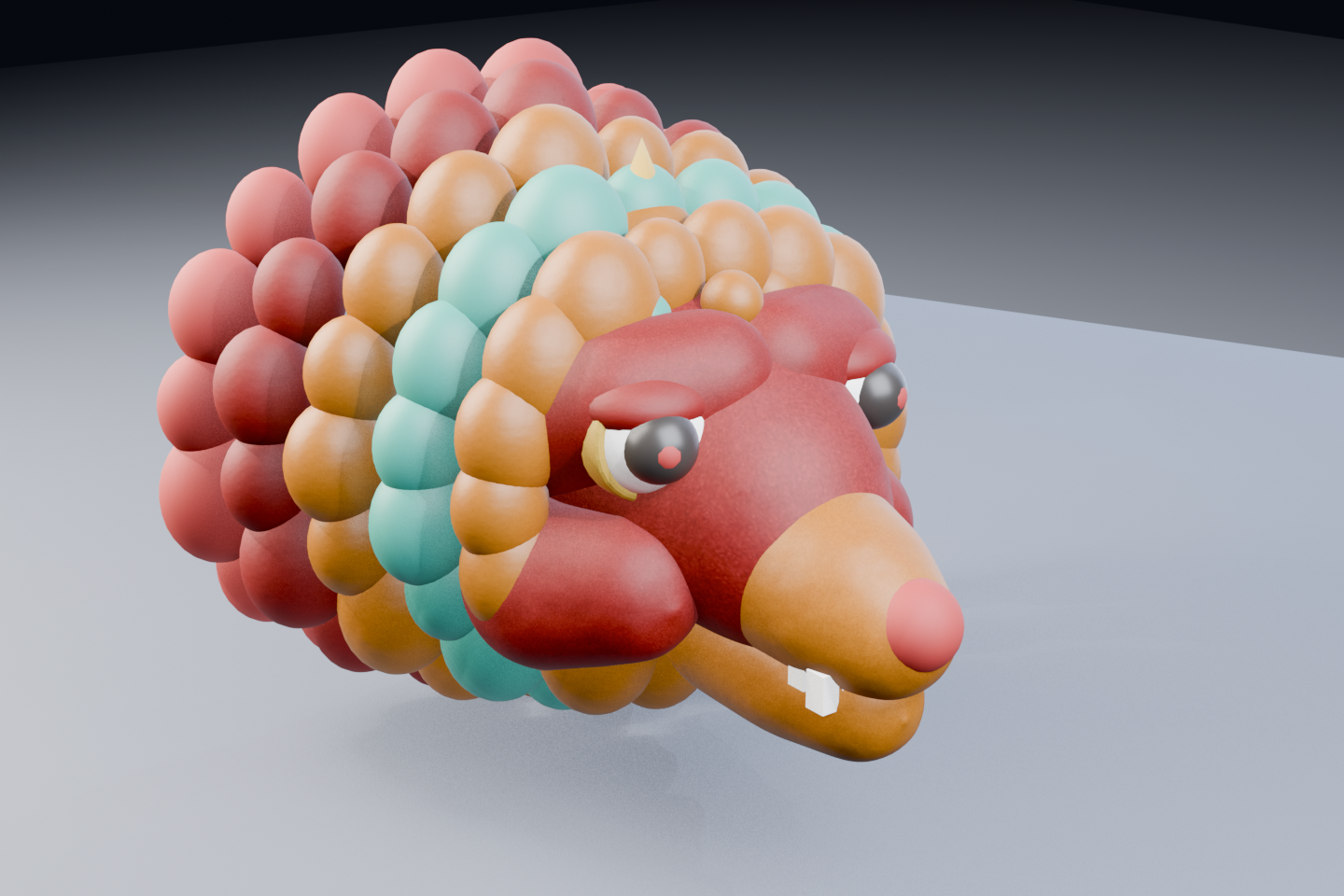
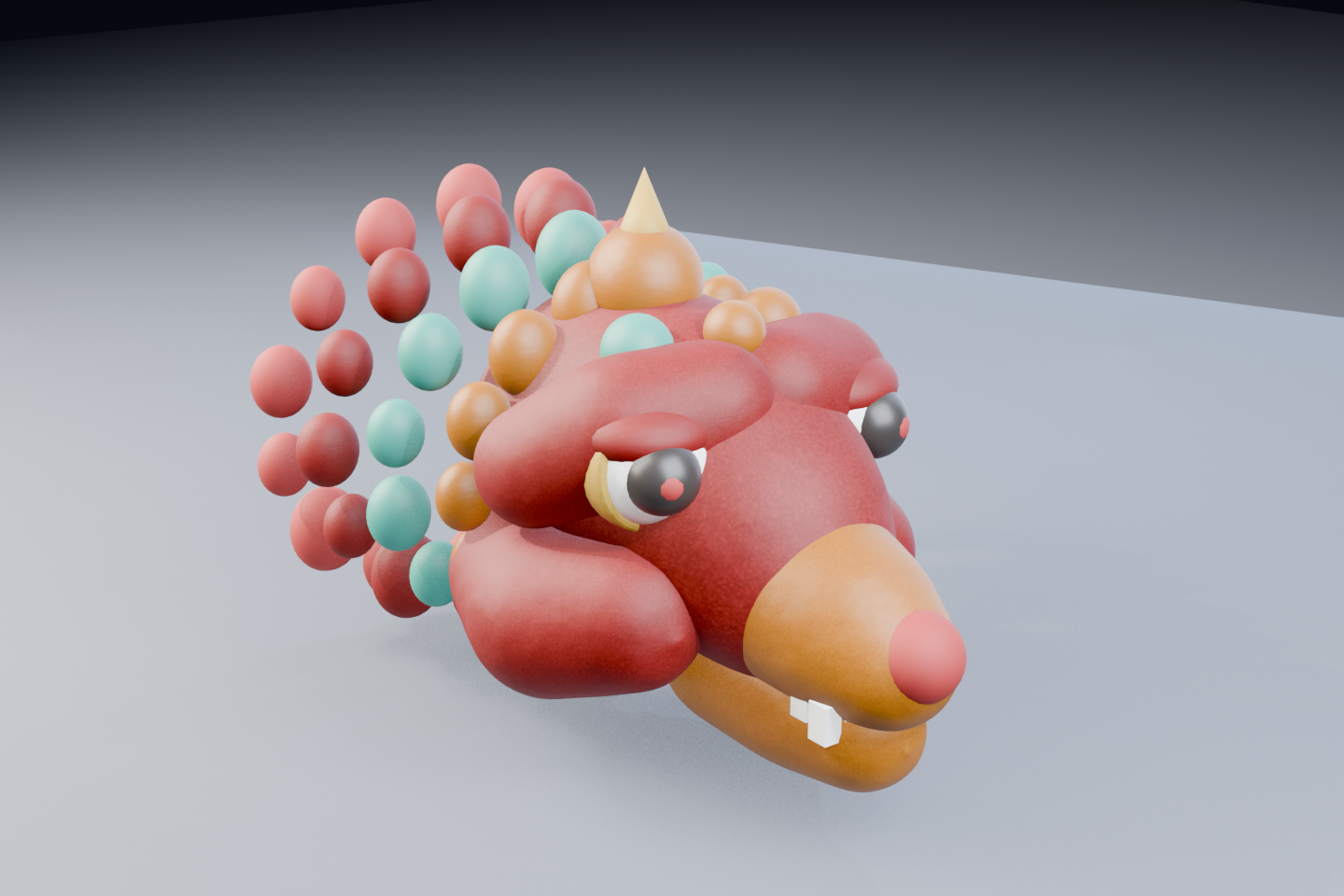
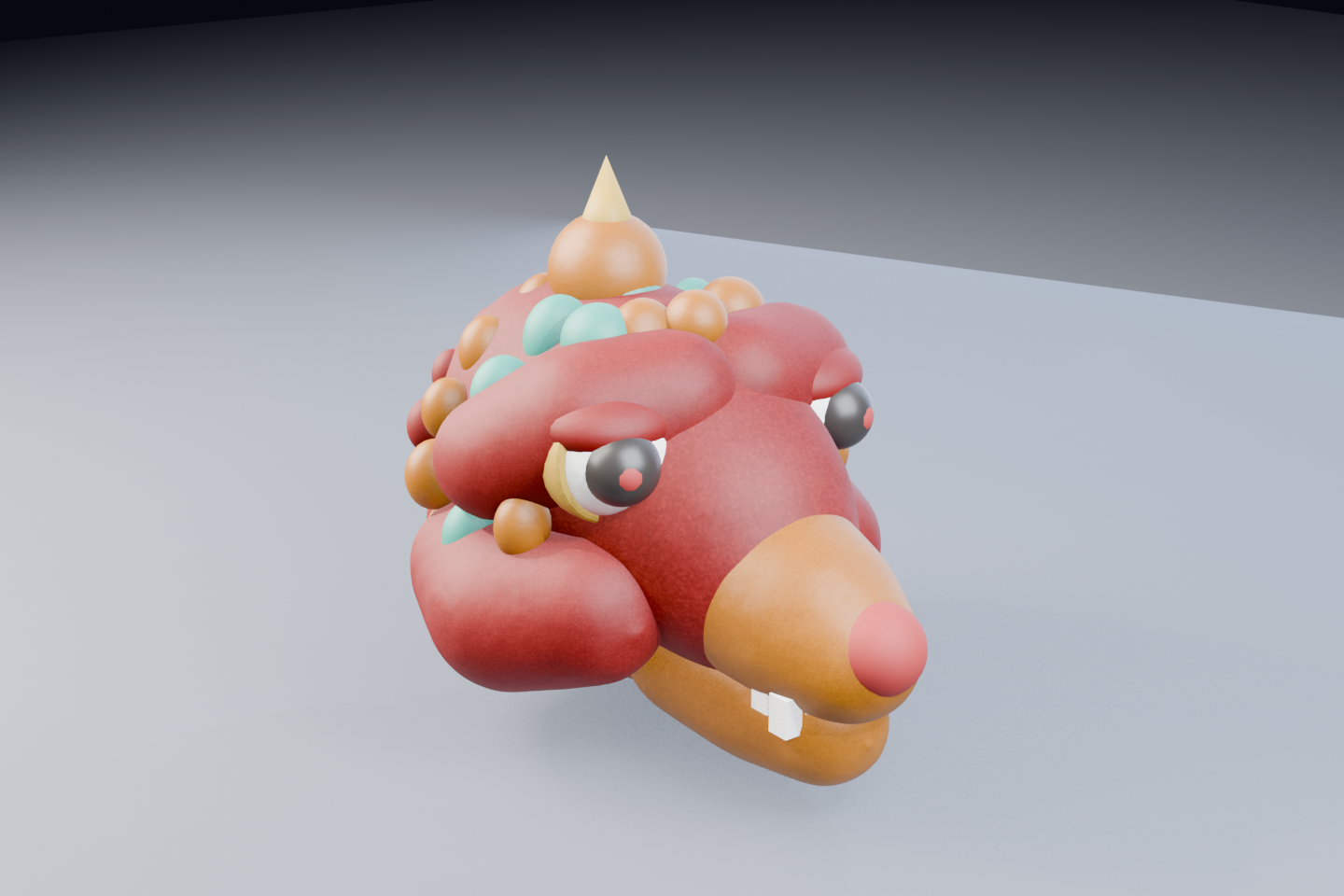
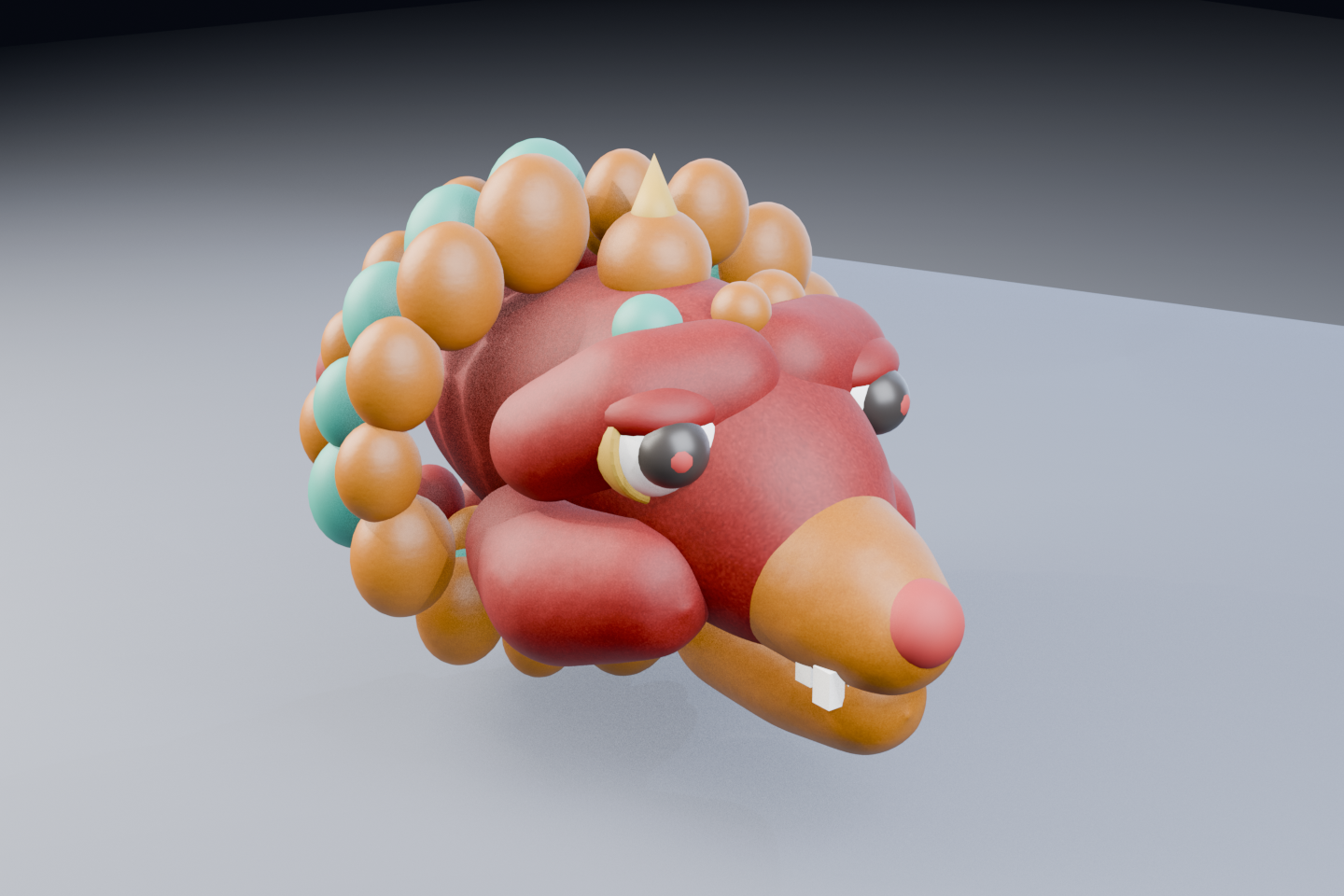
Made by AI, compiled by the real Unity 6 engine
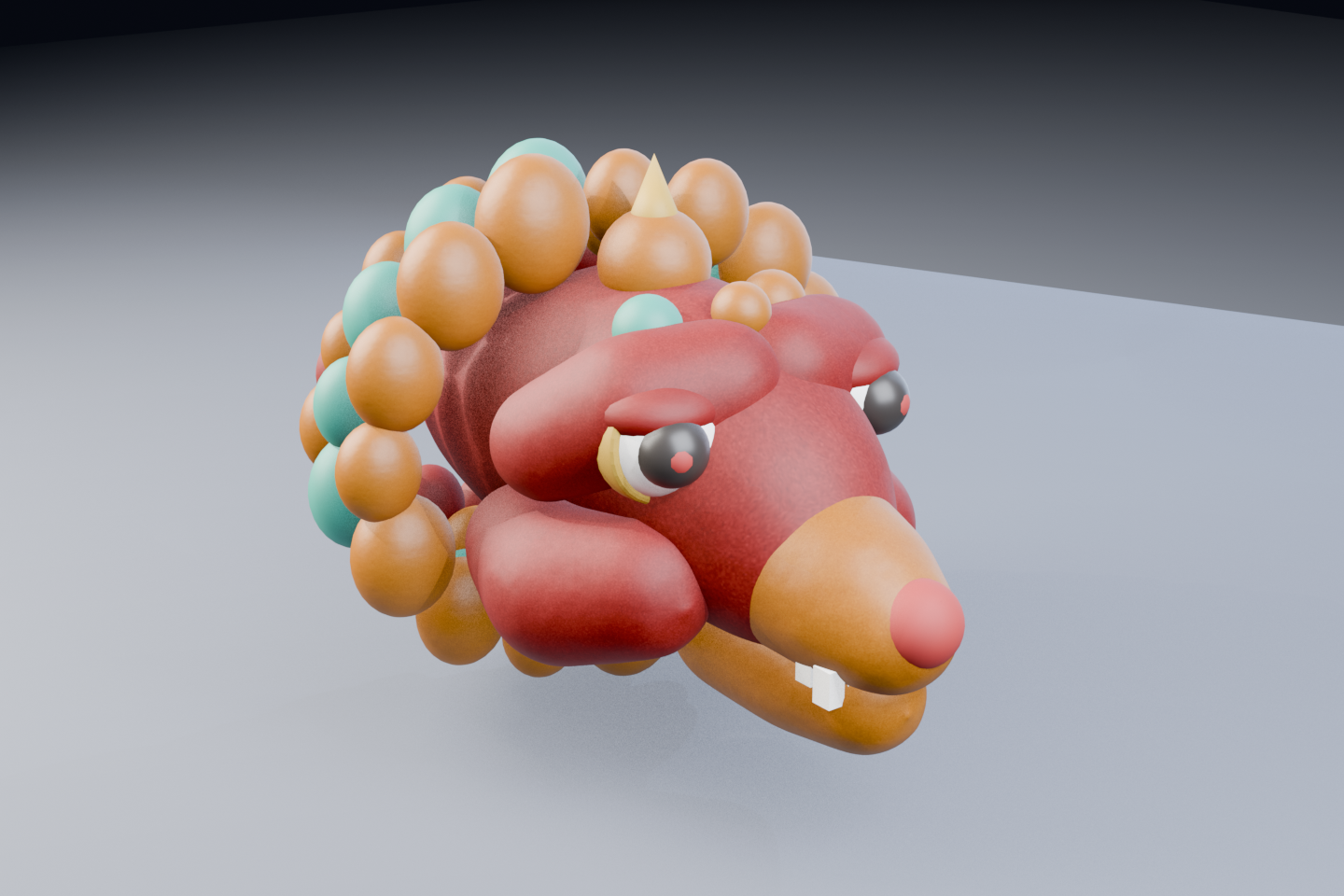
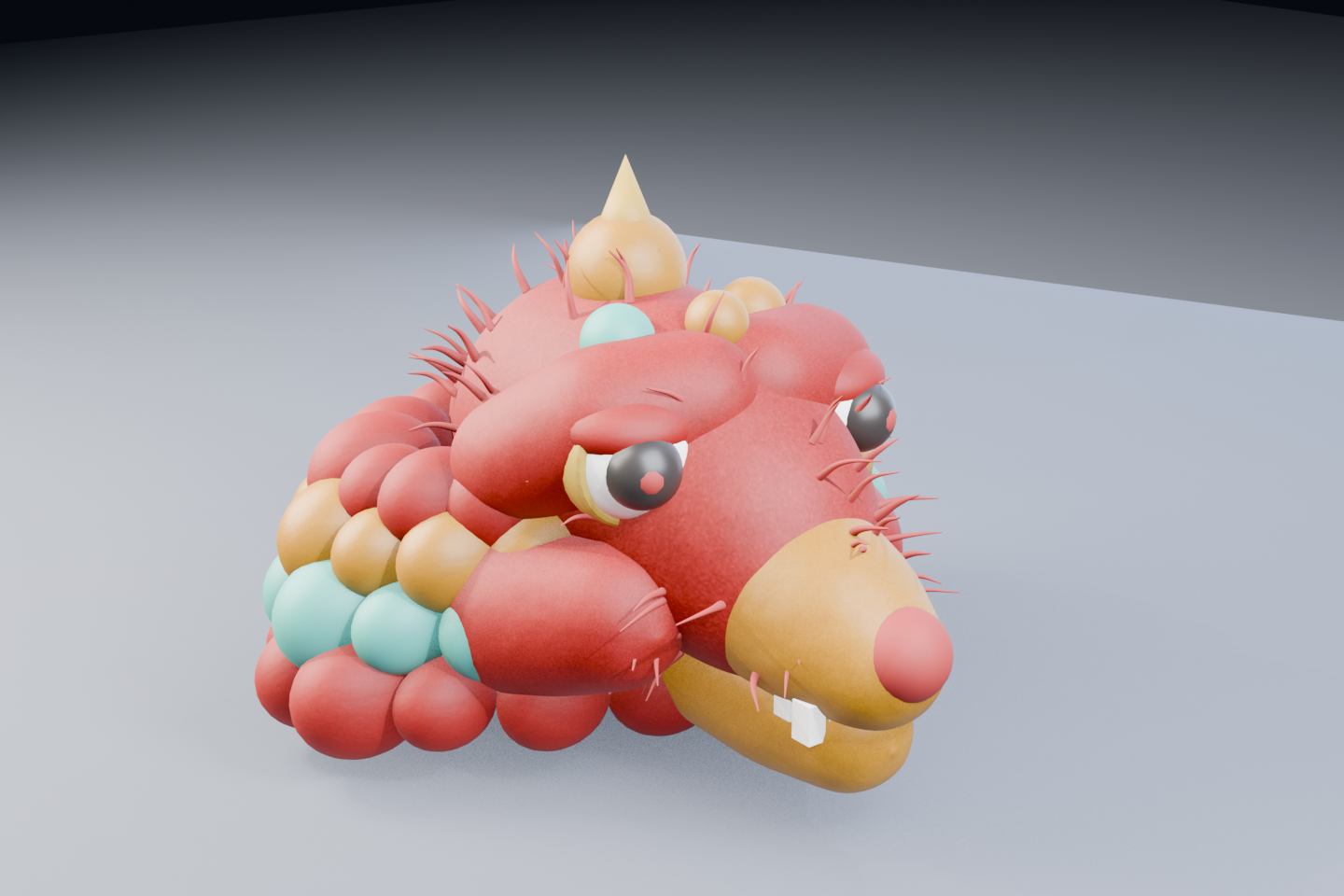
This piece is an experiment with its control group left visible. In ninety cycles this lab had never once used Unity's own animation system — every piece animated by hand in code — and two engine features tested here before, distance fog and GPU instancing, turned out to be silently stripped from a code-built WebGL build. An AnimationClip built entirely at runtime is the same shape of thing: no saved asset, nothing for the build pipeline to see and keep. So the lion's head is loaded twice. The left head is driven by the runtime clip; the right head is driven by hand with the same curve, the same period and the same amplitude. The panel reports how far each one actually travelled since boot, because a rig that never leaves its starting value is inert no matter how alive the scene looks. Both bindings pass — position and rotation alike — and the clip matches its control to three digits, which is the opposite of what fog and instancing did. The lion, drum, drummer and lanterns are code-modeled Blender exports; the head is seated on the body from its measured renderer bounds rather than by eye.