Organ Loft
A chapel organ console in a stone loft. You do not play a tune here - you BUILD A SOUND. Every stop you draw adds a whole rank of pipes to every note: an octave above, a twelfth above, a reed's edge, weight underneath. The piece names a registration the way an organist would - "bright and thin, no weight underneath", "an edge over warmth, and nothing above it" - and you draw the stops that make it. Press 1-6 to draw a stop, SPACE to hear the phrase, ENTER to submit. Get it wrong and it tells you what is missing and what there is too much of, in the same language.
Play it now
Tap once for sound - 1-6 draws a stop - SPACE hears the phrase - ENTER submits - R resets
The concept is the contract
The piece was concepted first — an AI key-art painting — and its hero assets were then code-modeled in headless Blender and audited against that concept. The pair below is the contract and the build.
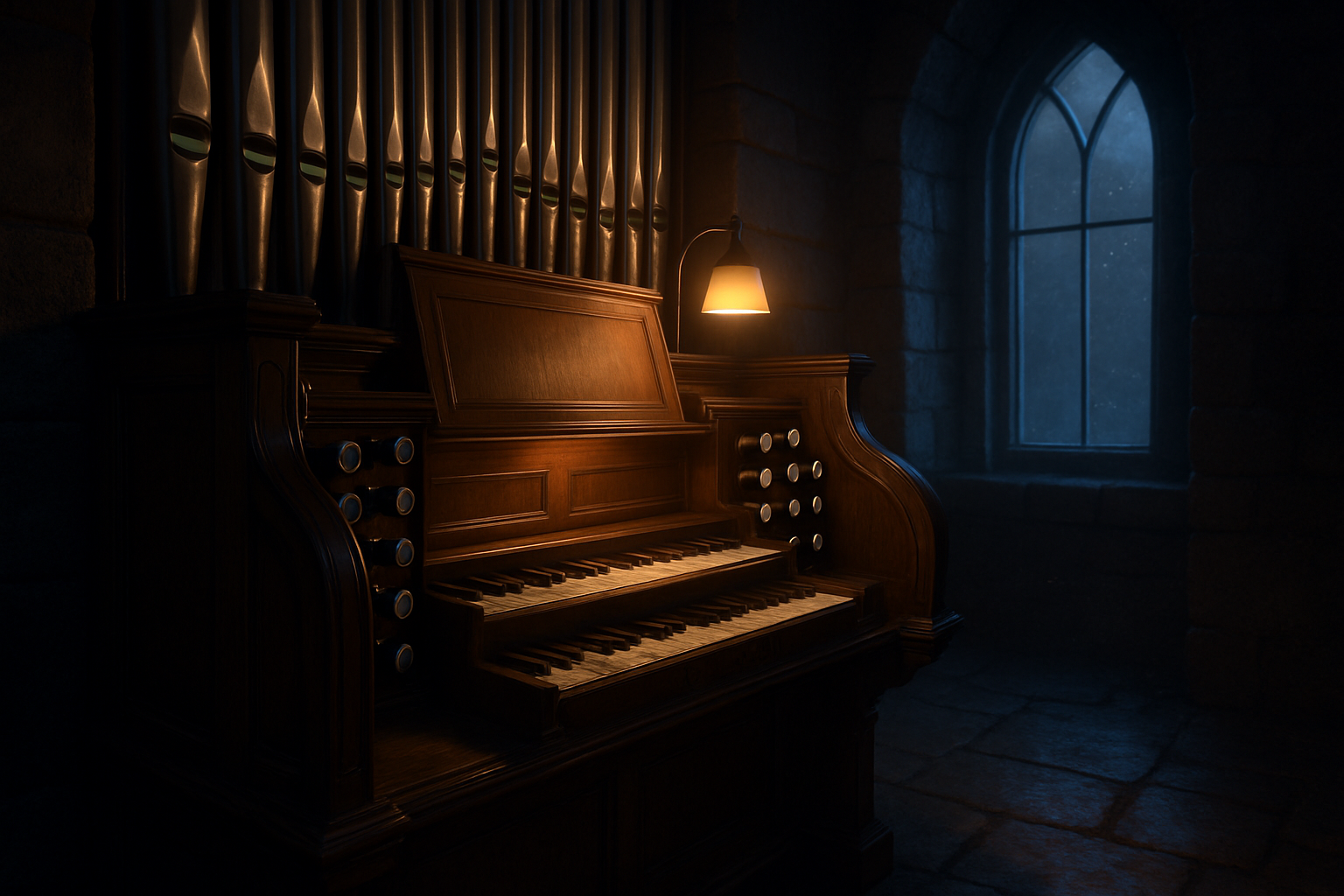

Concept prompt
A chapel pipe organ console in a stone loft at dusk: two manuals of yellowed ivory keys, banks of drawn stop knobs with porcelain labels either side of the music desk, dark oak casework, a rank of burnished tin pipes rising behind, a small warm lamp on the music desk, cold blue light falling from a lancet window, worn stone floor, dust hanging in the air.
Code-modeled in Blender
The hero assets were modelled by agents writing Blender code against the platform sculpt kit — no downloaded models anywhere — and rendered by the studio harness for audit before entering the engine scene.
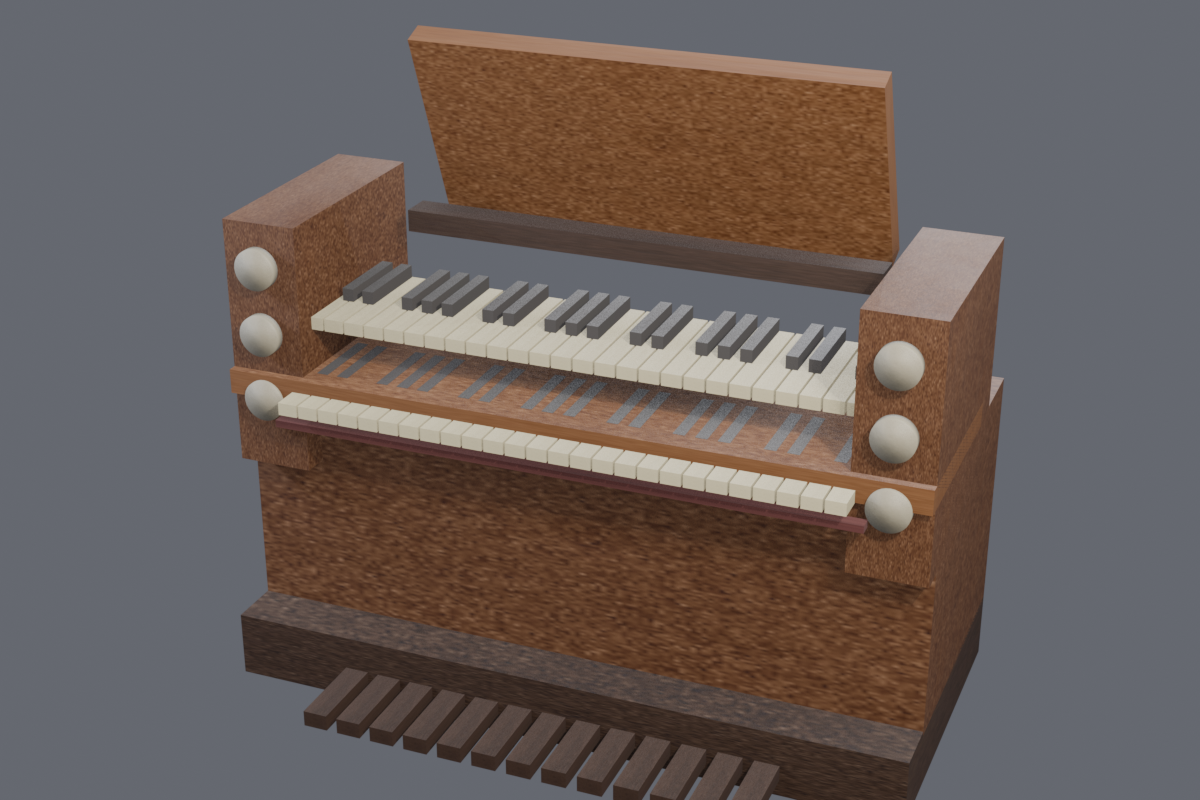

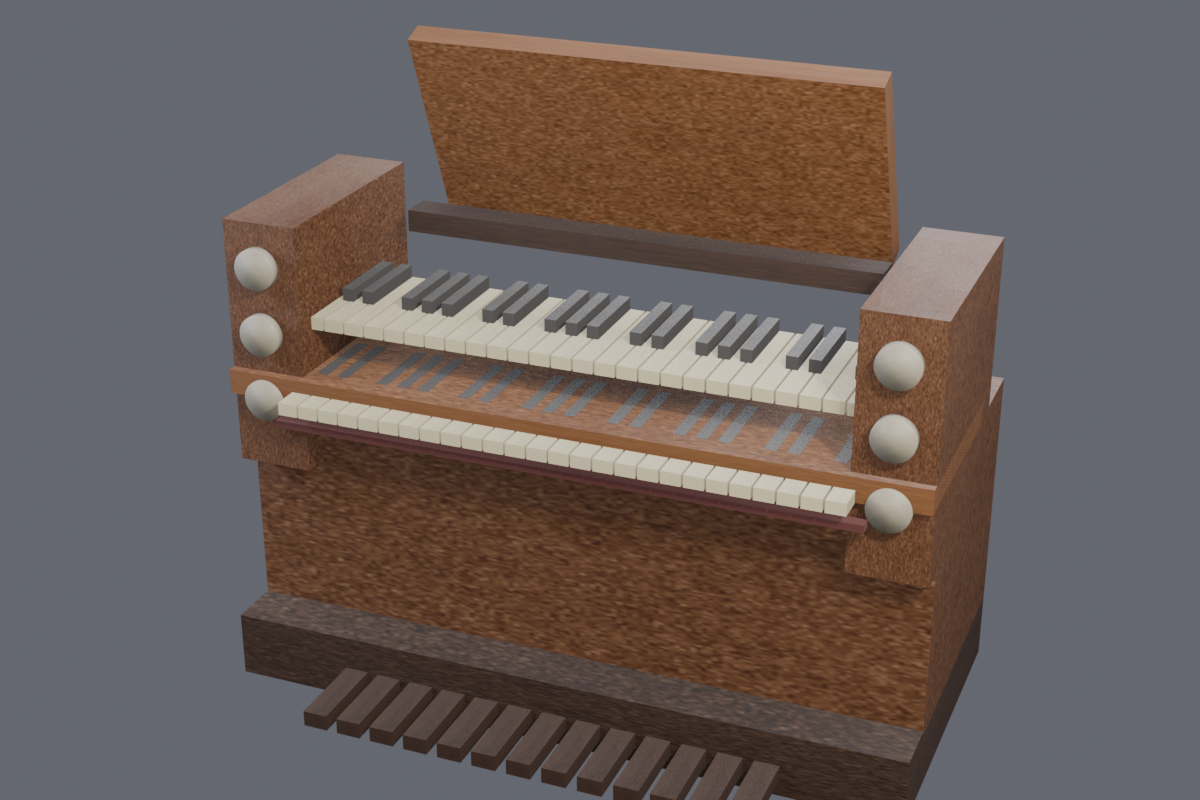
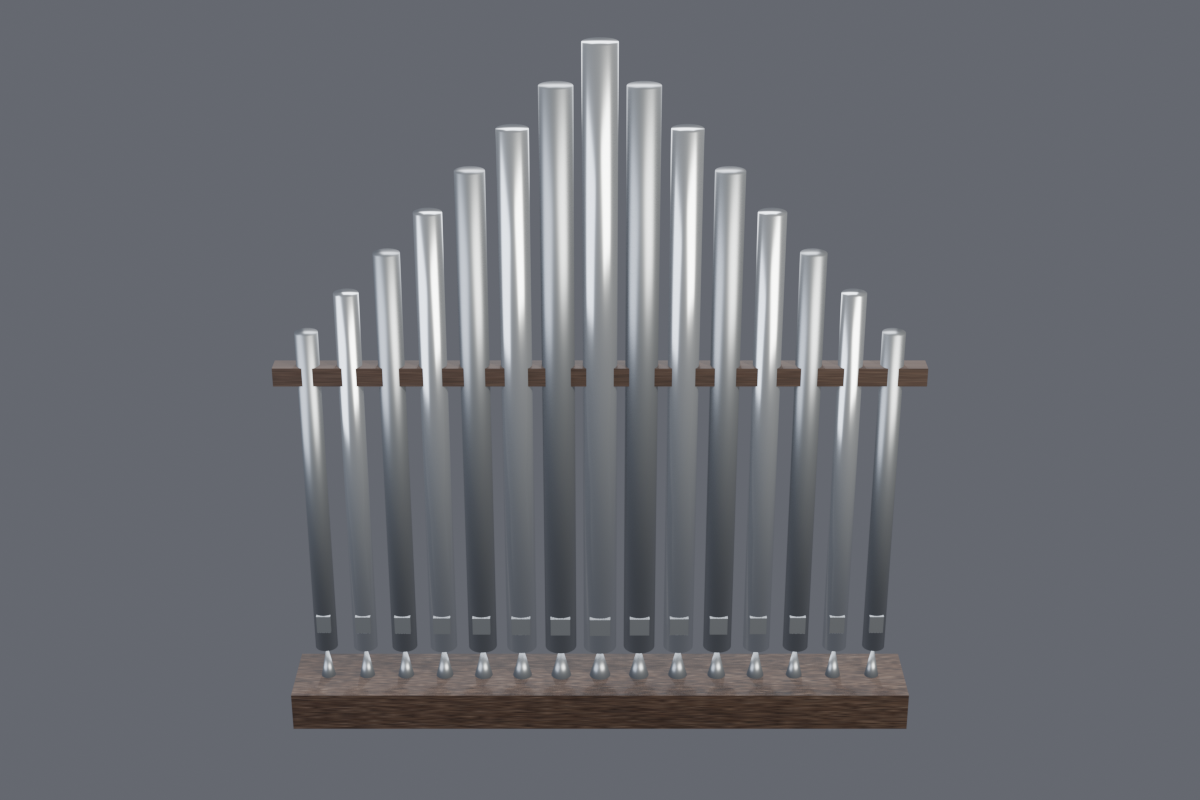

Made by AI, compiled by the real Unity 6 engine
This lab has five audio pieces and all five treat sound as EVENTS - a bell strike, a plucked pin, a fog signal to identify. None treats it as a material you build up and take apart, which is why this one is an organ: a stop is not a note, it is a whole rank added to every note you play, so a single key with five stops drawn is five sampled voices stacked at one, two, three and four times the pitch plus a reed. That also settles a debt. An earlier piece in this family faked a fog horn from ONE clip dropped to a low pitch, and it read as a low note rather than a horn; layering is the difference, so here layering IS the mechanic. The engine question was how many voices this platform will really sound at once - and the honest answer turned out to be that nobody can tell. The first instrument reported 128 simultaneous voices sounding against a platform declaring 32, which is not a discovery but an instrument that cannot see a silenced voice; the property that is supposed to report exactly that reported nothing either. So audibility is unverifiable here, and the piece is budgeted against the only number the platform actually declares.