Sonar Deck
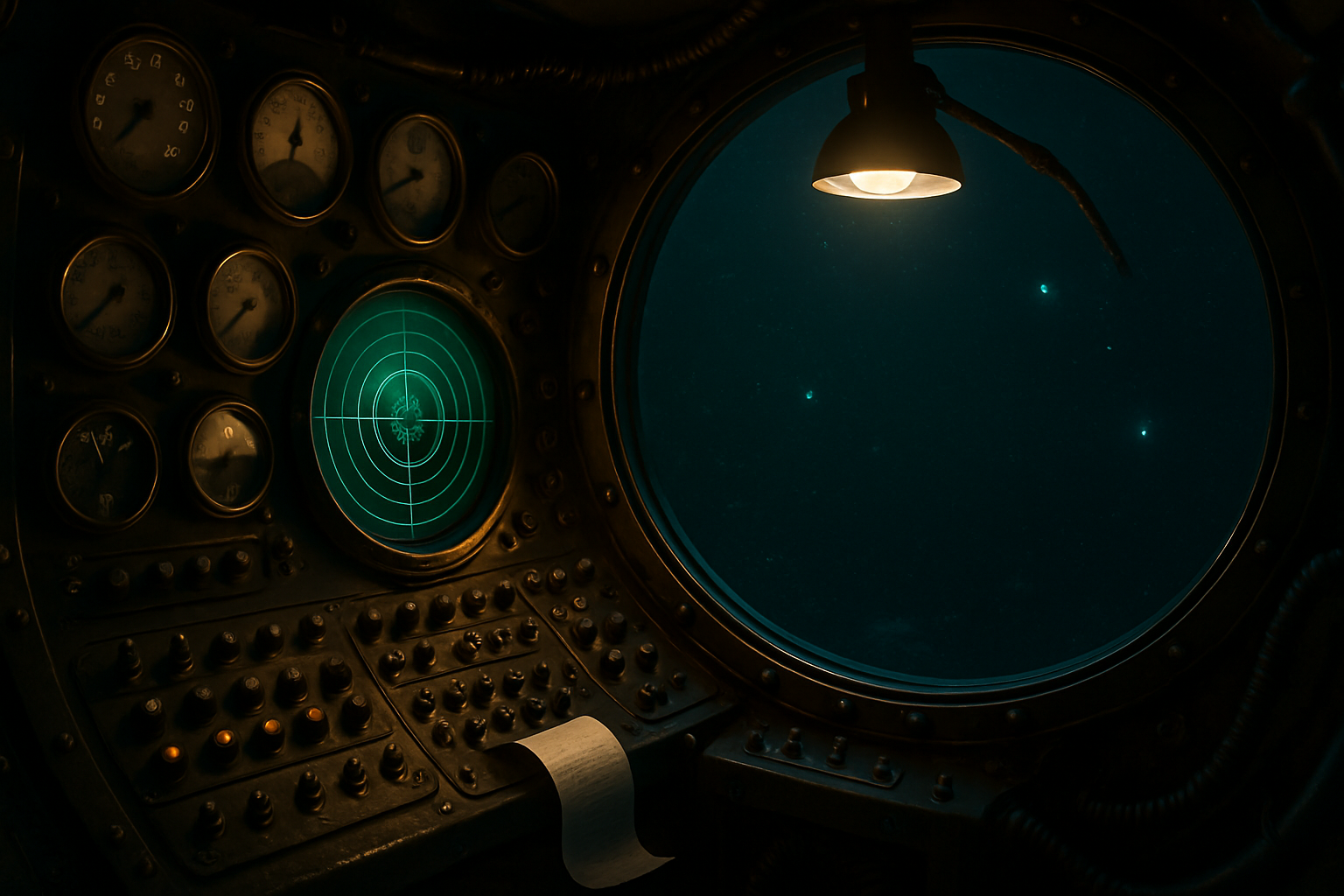
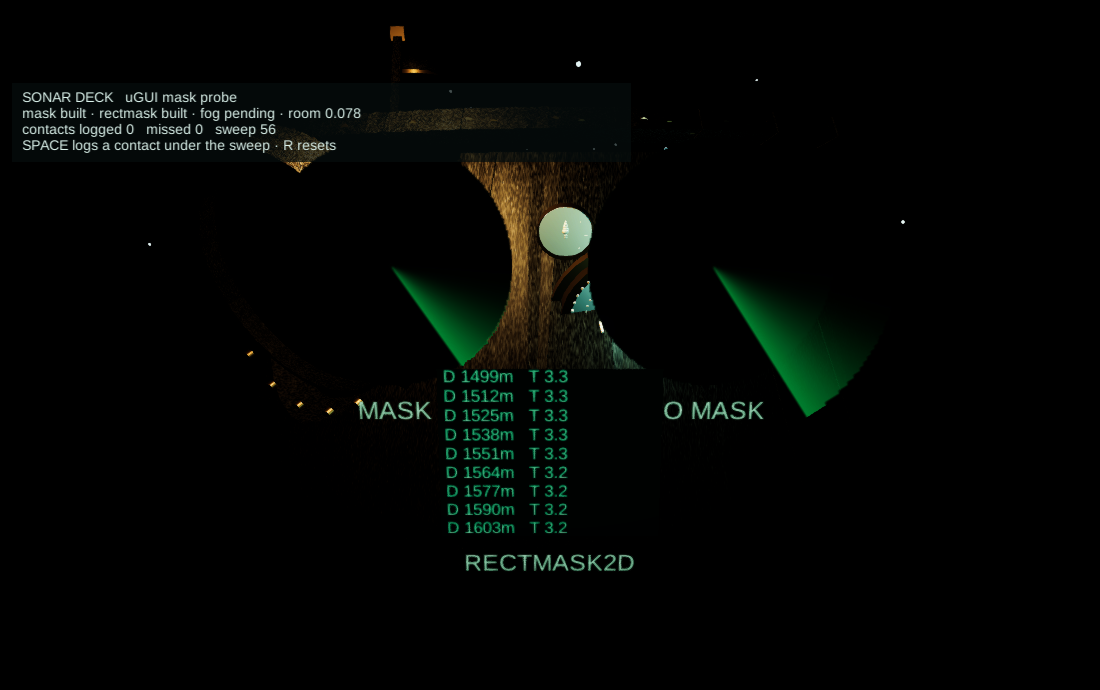
The interior of a deep-sea submersible at night, from the pilot's seat. Eight backlit gauges sit in brass bezels with needles that drift on their own pivots, a sonar sweep turns beside a scrolling depth log, switch banks and rivets run across a curved steel console, an anglepoise throws the only warm light in the room, and beyond a thick riveted porthole the water is teal-black with marine snow drifting up through it. The engine question underneath was whether uGUI MASKING — the thing every scroll view, radial gauge and minimap circle depends on — works at all in a scene built entirely from code. The piece answers it in its own frame: two identical sweeps sit side by side, one inside a circular mask and one with none.
Play it now
SPACE logs a contact when the sweep passes over it · R resets the watch
The concept is the contract
The piece was concepted first — an AI key-art painting — and its hero assets were then code-modeled in headless Blender and audited against that concept. The pair below is the contract and the build.
Concept prompt
The interior of a deep-sea submersible at night, seen from the pilot's seat: a curved steel instrument console wrapping around the viewport, crowded with round backlit gauges and dials in brass bezels, a circular green sonar scope glowing at the centre with concentric range rings, rows of labelled toggle switches and rubber-capped buttons, a paper depth-log spooling out of a slot, coiled cables and exposed rivets, a small anglepoise lamp throwing warm light across the panel; beyond the thick round viewport the water is deep teal-black with drifting motes of marine snow and a few distant bioluminescent glows, cold instrument green and warm amber against near-black steel and deep ocean teal, tense quiet mood, high-end stylized 3D game render, no text, no watermark, no UI
Code-modeled in Blender
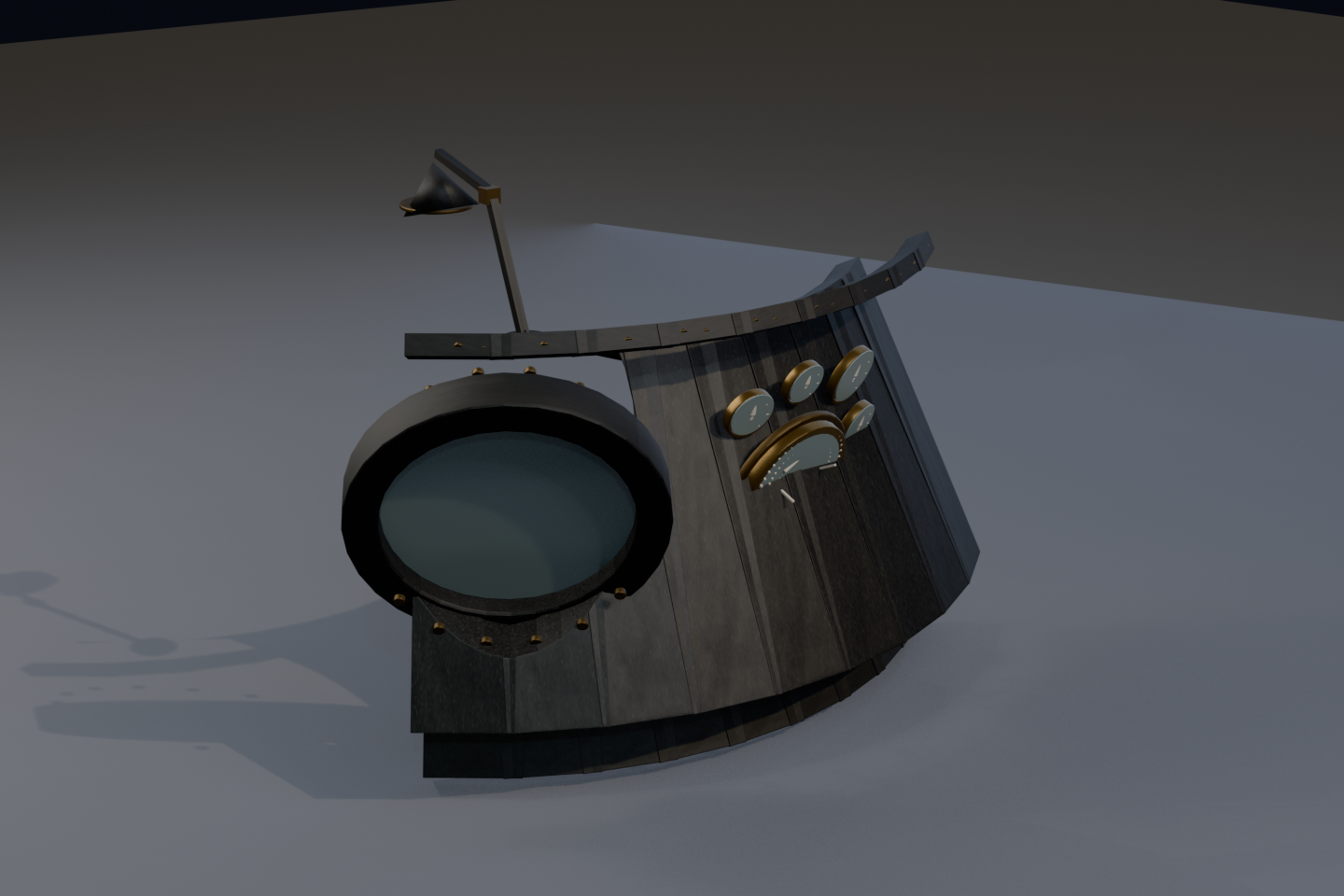
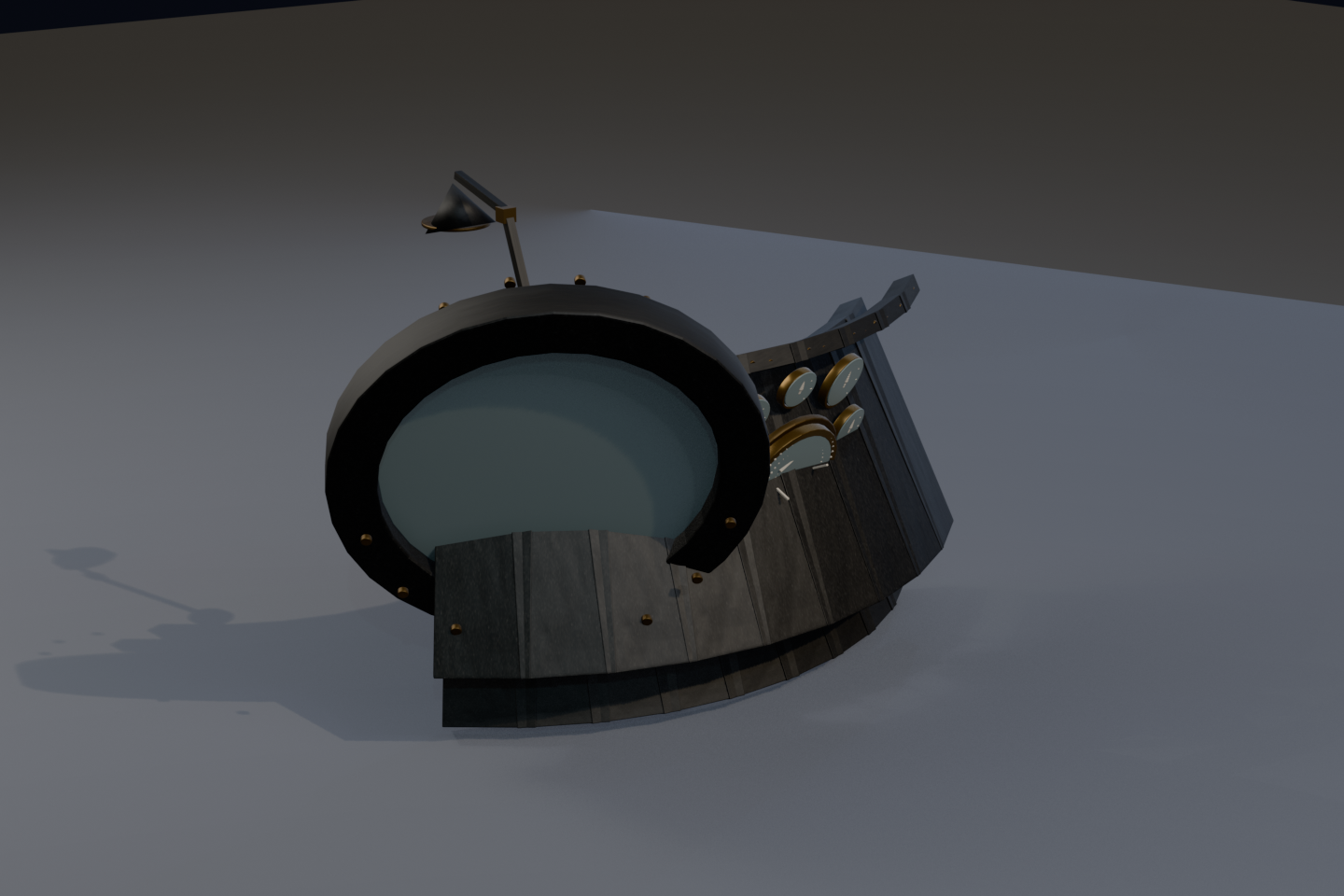
The hero assets were modelled by agents writing Blender code against the platform sculpt kit — no downloaded models anywhere — and rendered by the studio harness for audit before entering the engine scene.
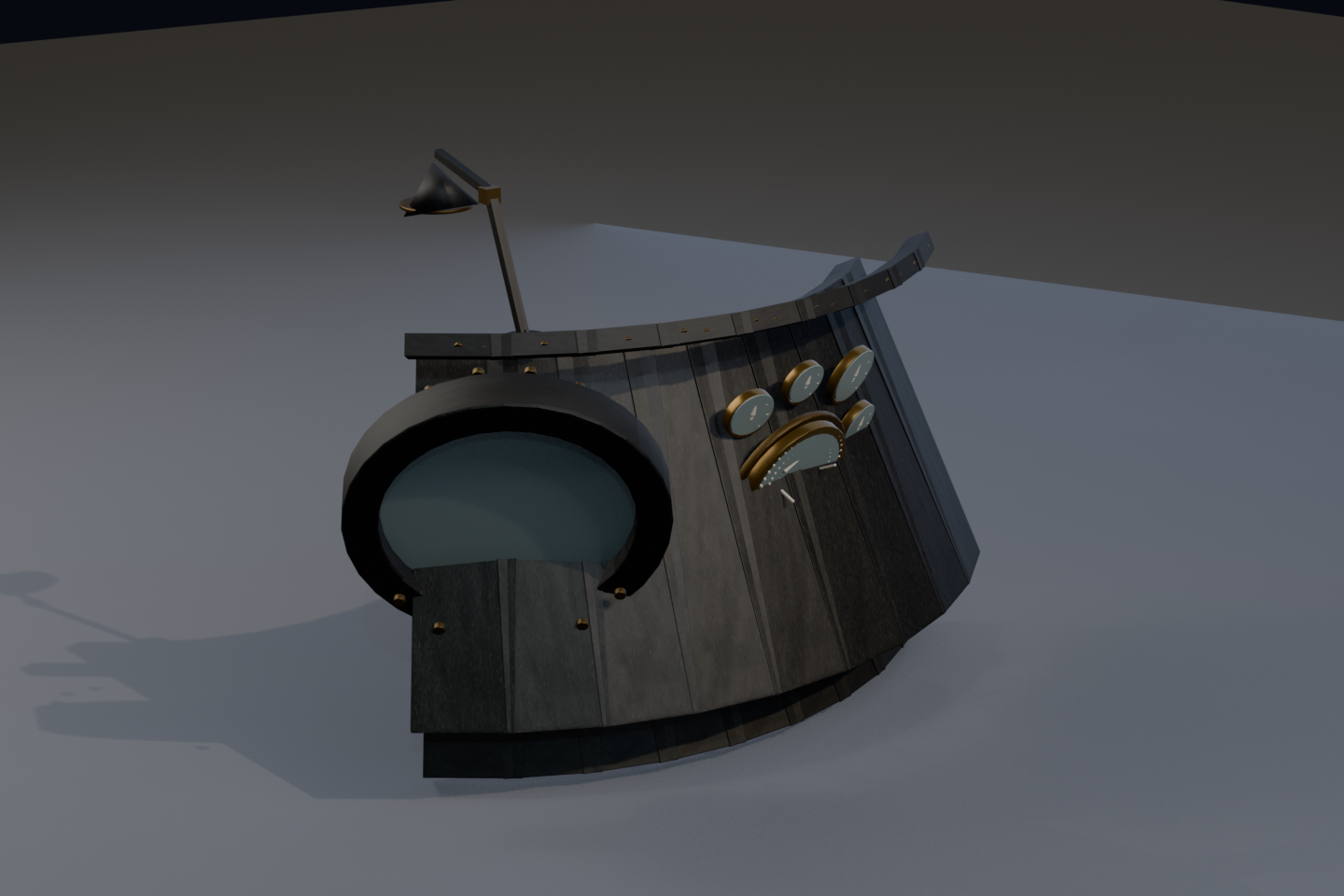
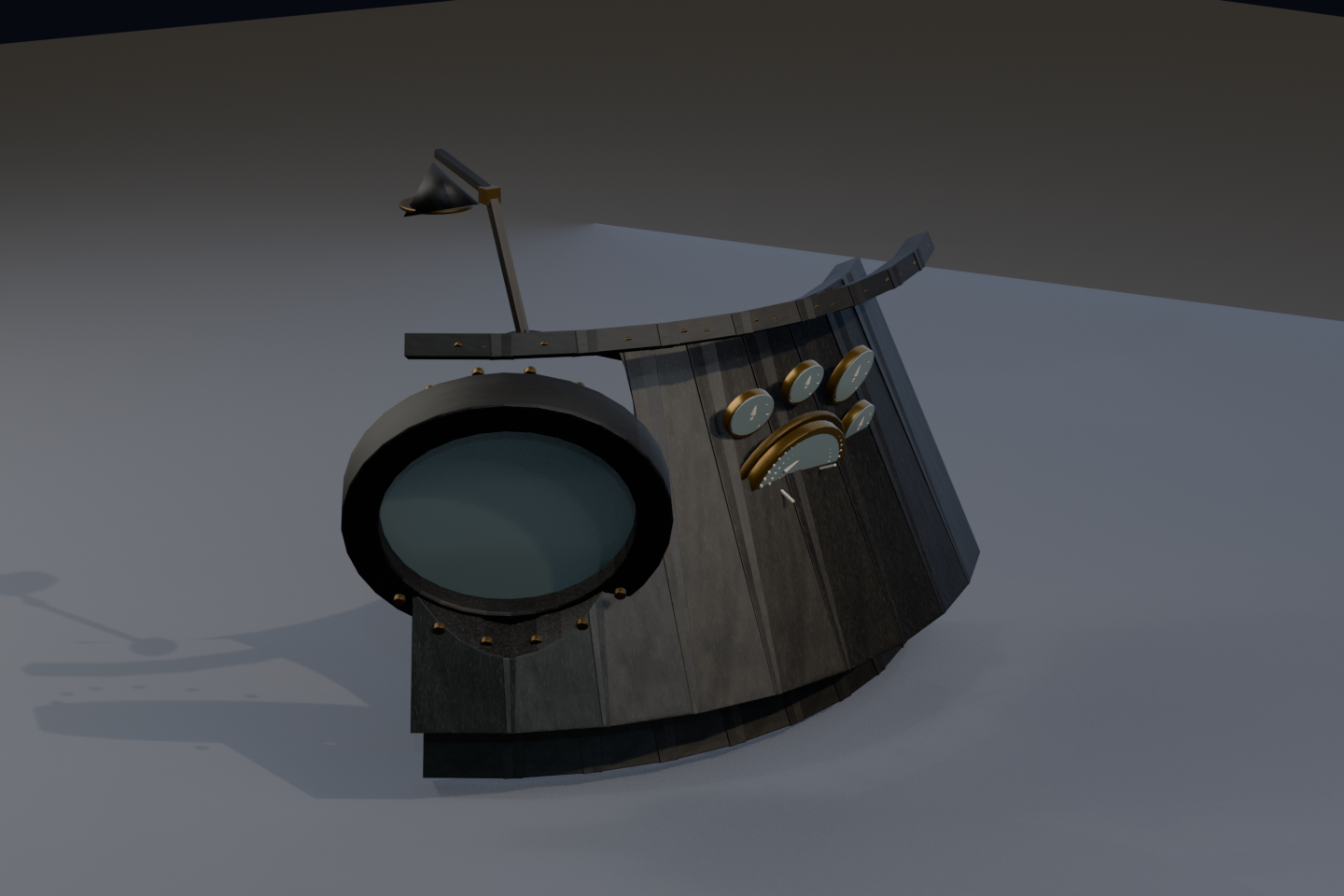
Made by AI, compiled by the real Unity 6 engine
Four code-modeled Blender exports build the console — the curved panel with its cut porthole aperture, the gauge cluster, the sonar scope and the loose props — and the engine wires eleven named pivots out of them so every needle turns on its own hinge. The probe was uGUI masking, which this lab had never measured: the proven-safe list of code-built interface parts covers screen-space and world-space canvases but not the stencil path that masks ride, and five earlier cycles found exactly that kind of feature silently doing nothing. So the test was built to be readable rather than clever: one sweep wedge drawn half again wider than its holder, rendered twice side by side — once inside a circular mask, once with no mask at all. They come out identical, both spilling past the circle, which means the mask clipped nothing; the unmasked copy is what proves the content, sprite and canvas were all fine. The honest cost is on the record too: seven engine rounds, and most of the lost ones were the measuring apparatus rather than the engine — a camera placed inside the console, lights aimed at nothing, and a fog check pointed at a black wall. Logging the loaded models' actual bounds and placing everything from those numbers is what ended it. All sound is sampled - never synthesized.