Stained Light
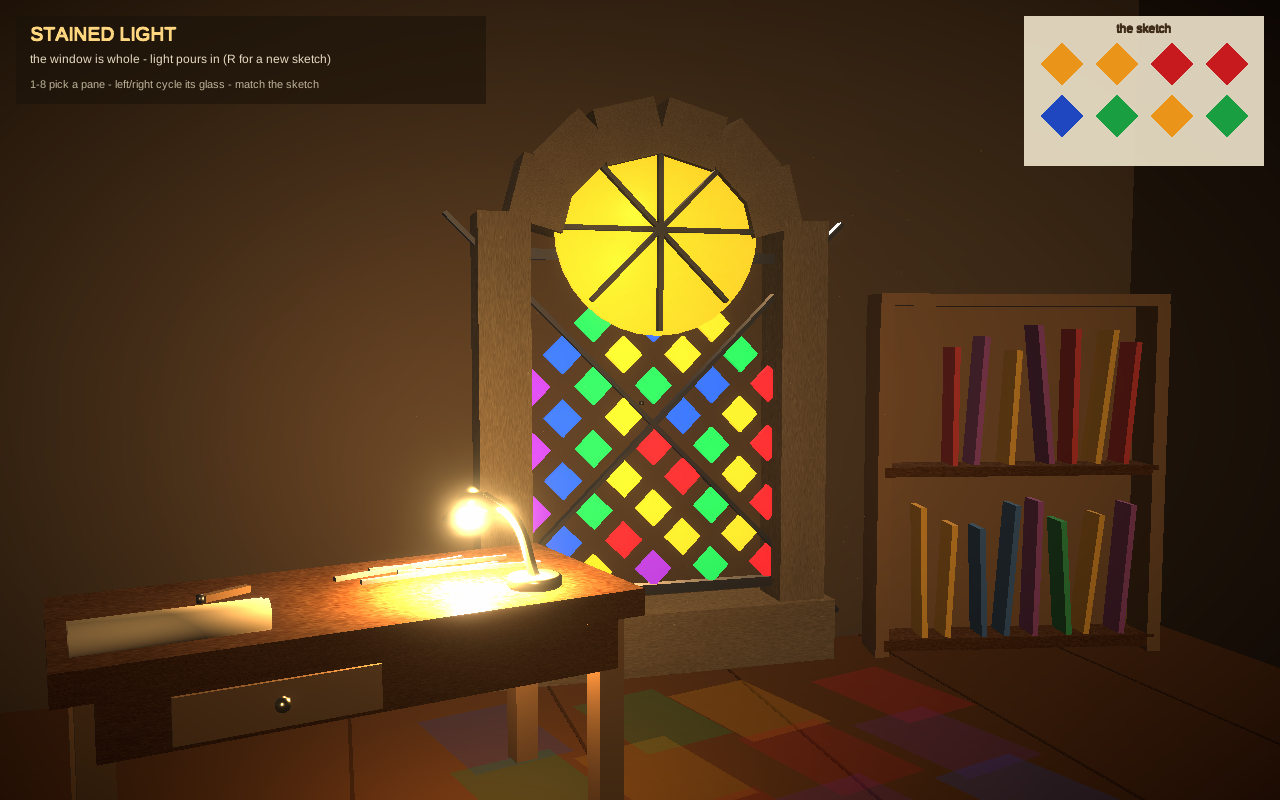
A stained-glass artisan's workshop in the last hour of sun: a grand arched window stands against the wall, its diamond lead lattice glowing ruby, amber, emerald, sapphire and violet around a golden rose lunette, while colored light pools drift across the worn floorboards. Eight cells sit empty. Pick a pane with the number keys, cycle its glass with the arrows, and match the paper sketch pinned in the corner; when the last pane clicks into place the low sun swells through the whole window and the room floods with color. A brass lamp warms the workbench of lead cames and rolled patterns, a rack of glass sheets leans by the wall, and dust motes hang in the beams. Vibraphone and harp carry the hush; every sound is a sampled instrument.
Play it now
Tap once for sound - 1-8 pick a pane - left/right cycle its glass - R for a new sketch
The concept is the contract
The piece was concepted first — an AI key-art painting — and its hero assets were then code-modeled in headless Blender and audited against that concept. The pair below is the contract and the build.
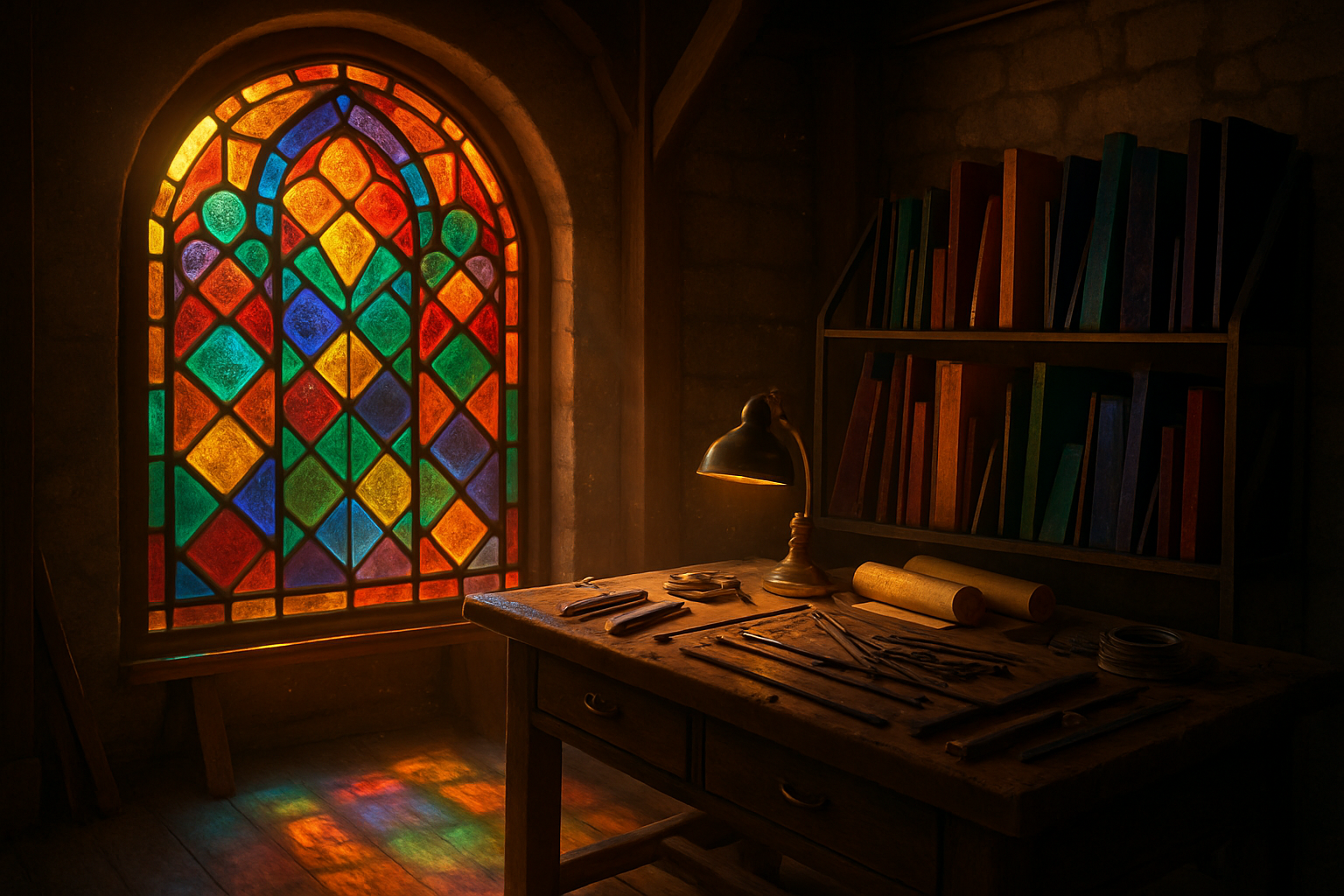
Concept prompt
A cozy stained-glass artisan workshop at late afternoon: a grand arched stained-glass window panel standing on a heavy wooden easel, its leaded cells glowing in ruby red, amber gold, emerald green, sapphire blue and violet as low sun streams through, casting soft colored light pools across worn wooden floorboards, a workbench with lead came strips and glass cutting tools, a rack of colored glass sheets by the stone wall, a small brass lamp and rolled paper patterns, dust motes drifting in the colored beams, warm hushed craftsman mood, high-end stylized 3D game render, no text, no watermark, no UI
Code-modeled in Blender
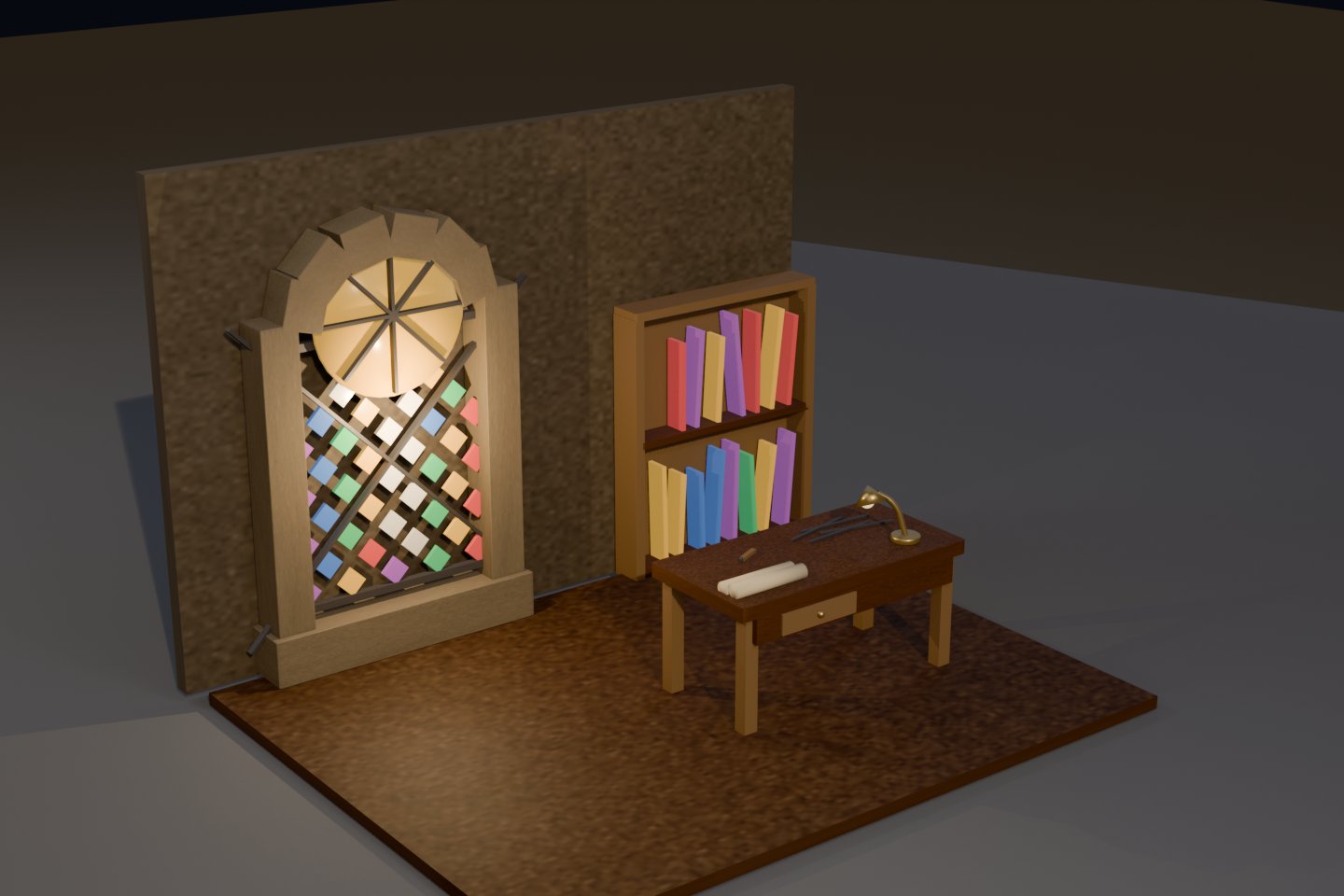
The hero assets were modelled by agents writing Blender code against the platform sculpt kit — no downloaded models anywhere — and rendered by the studio harness for audit before entering the engine scene.
Made by AI, compiled by the real Unity 6 engine
Three code-modeled Blender exports — the arched window with its seated stone arch, amber rose lunette and diamond lead lattice of 41 named cells, the workbench with flush drawer and brass lamp, and the glass-sheet rack — ship as named nodes. Every pane in the scene is a runtime clone of just TWO seeded material variants (one transparent, one emissive): five hue glasses, five hue glows and the clear blank all derive from them, and the eight empty cells re-material live as you glaze them. All sound is sampled — vibraphone, harp, pizzicato, glockenspiel, celesta and tubular bell — never synthesized.