String Theater
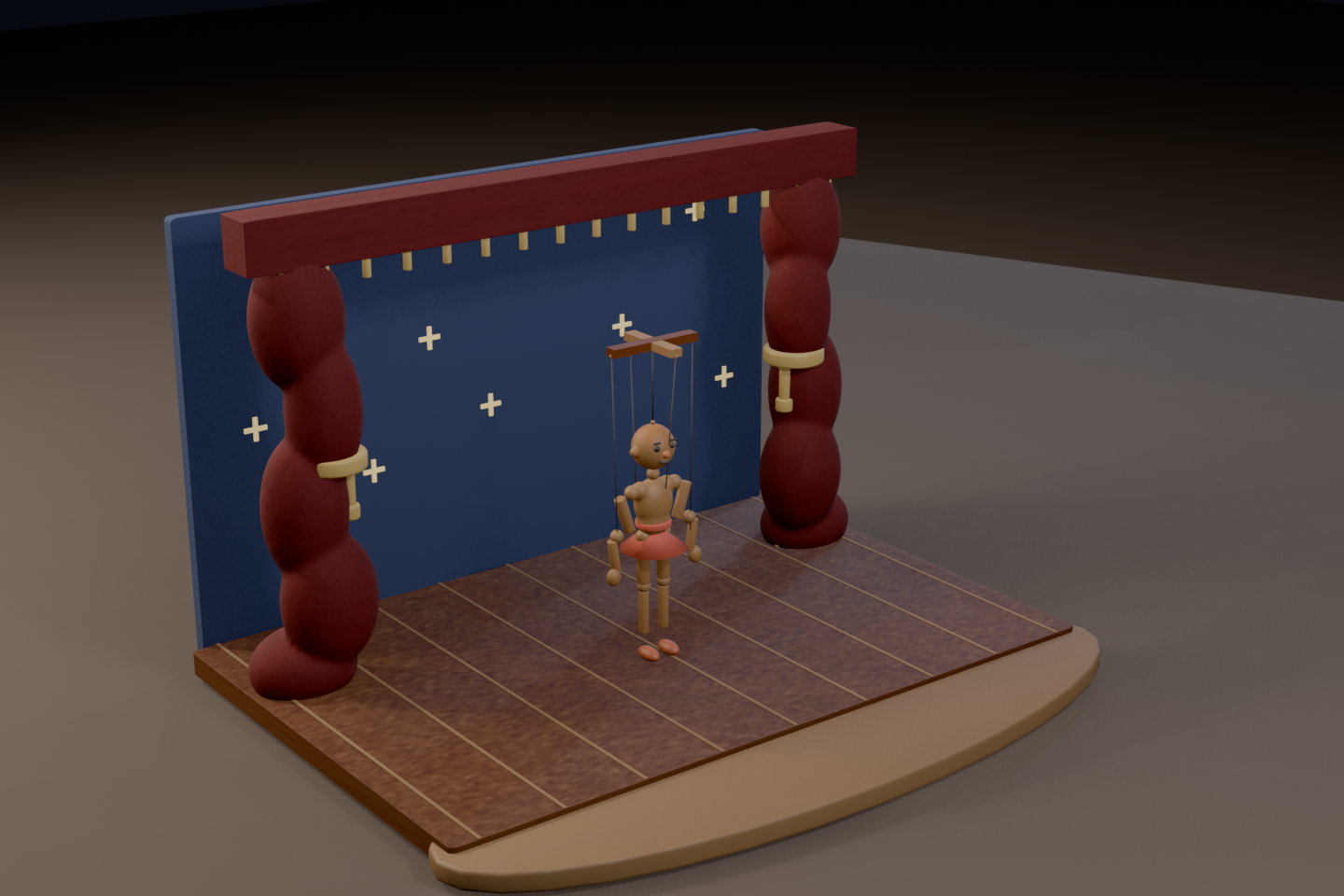
Marionette animation done the honest way: the wooden control crossbar is the cause and everything else is effect. It bobs and tilts in time with the music, and the puppet's ten pivot groups follow their strings with spring lag — arms rise as their side of the bar lifts, knees kick on the downbeats, the head and torso sway a half-step behind. Five strings are re-drawn every frame from the bar tips to anchor nodes on the head, hands and knees, so the support chain is always visibly true; the string lengths are telemetered each loop to prove nothing stretches. Two dances ship — a harpsichord-and-pizzicato waltz and a fiddle-and-banjo jig — with woodblock shoe taps landing on the boards, and a tap dips the bar into a full bow with a celesta flourish. Footlights shimmer along the curved apron under the velvet curtains and painted-star backdrop.
Play it now
Tap once for sound - 1 waltz, 2 jig - tap again to bow
The concept is the contract
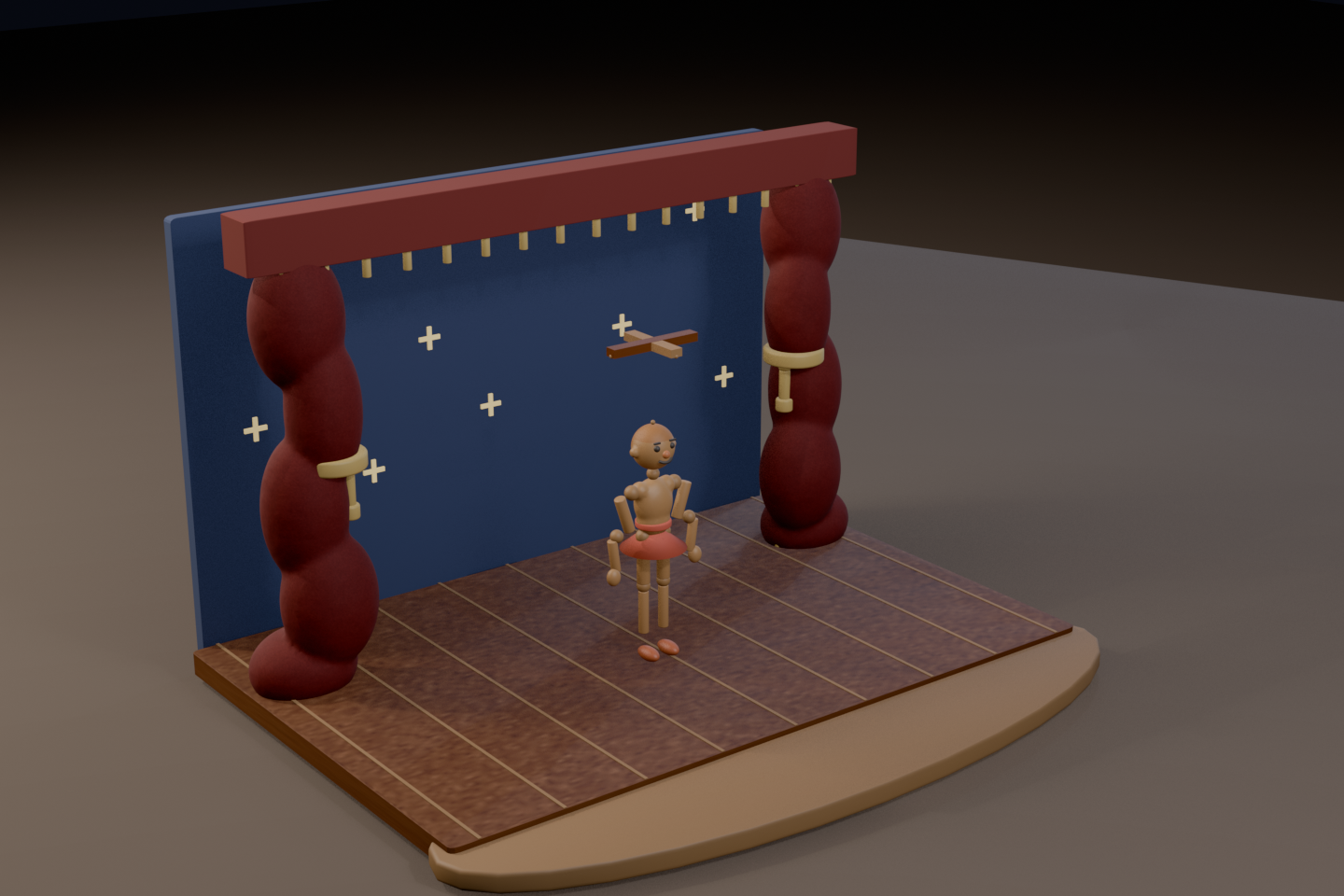
The piece was concepted first — an AI key-art painting — and its hero assets were then code-modeled in headless Blender and audited against that concept. The pair below is the contract and the build.
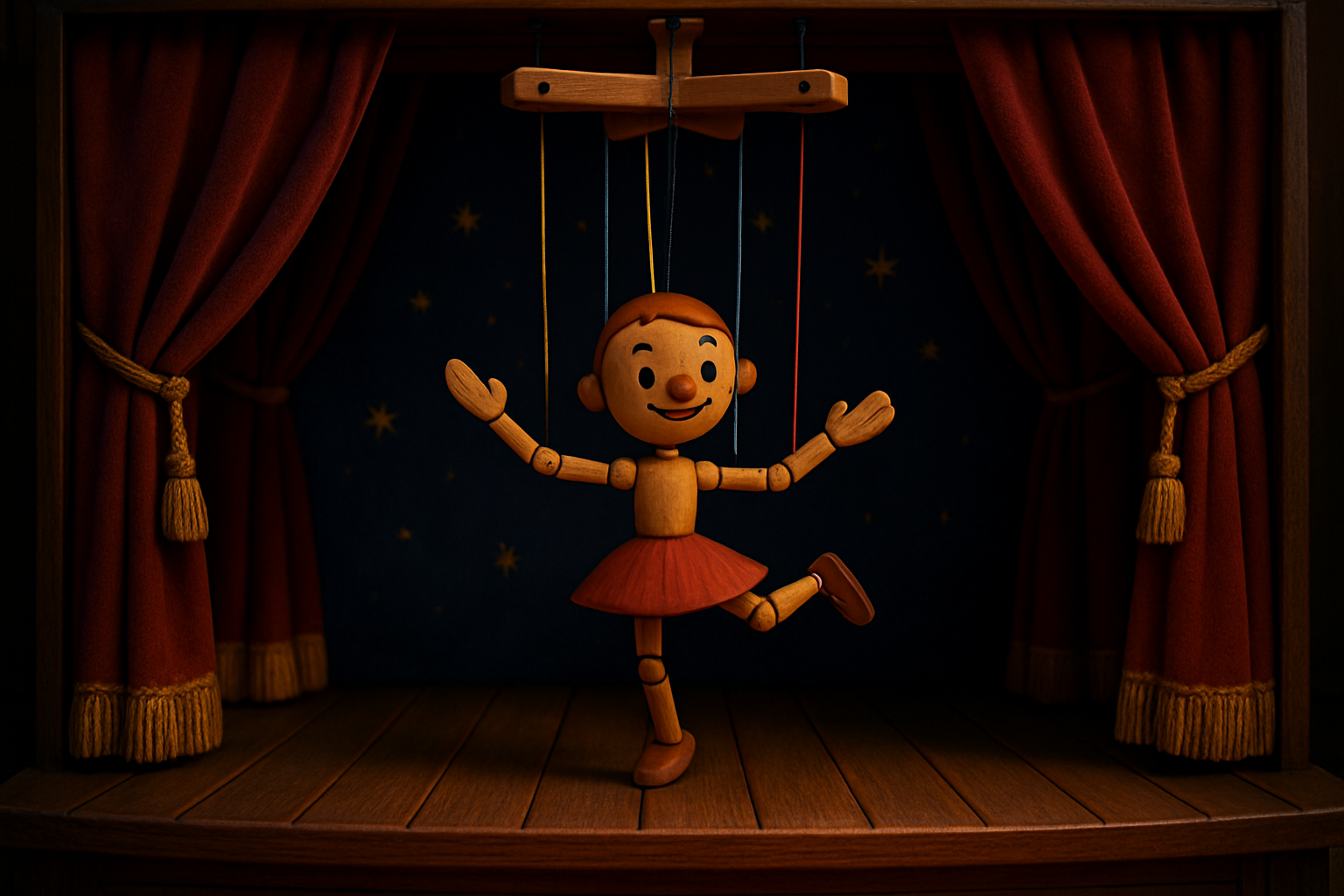
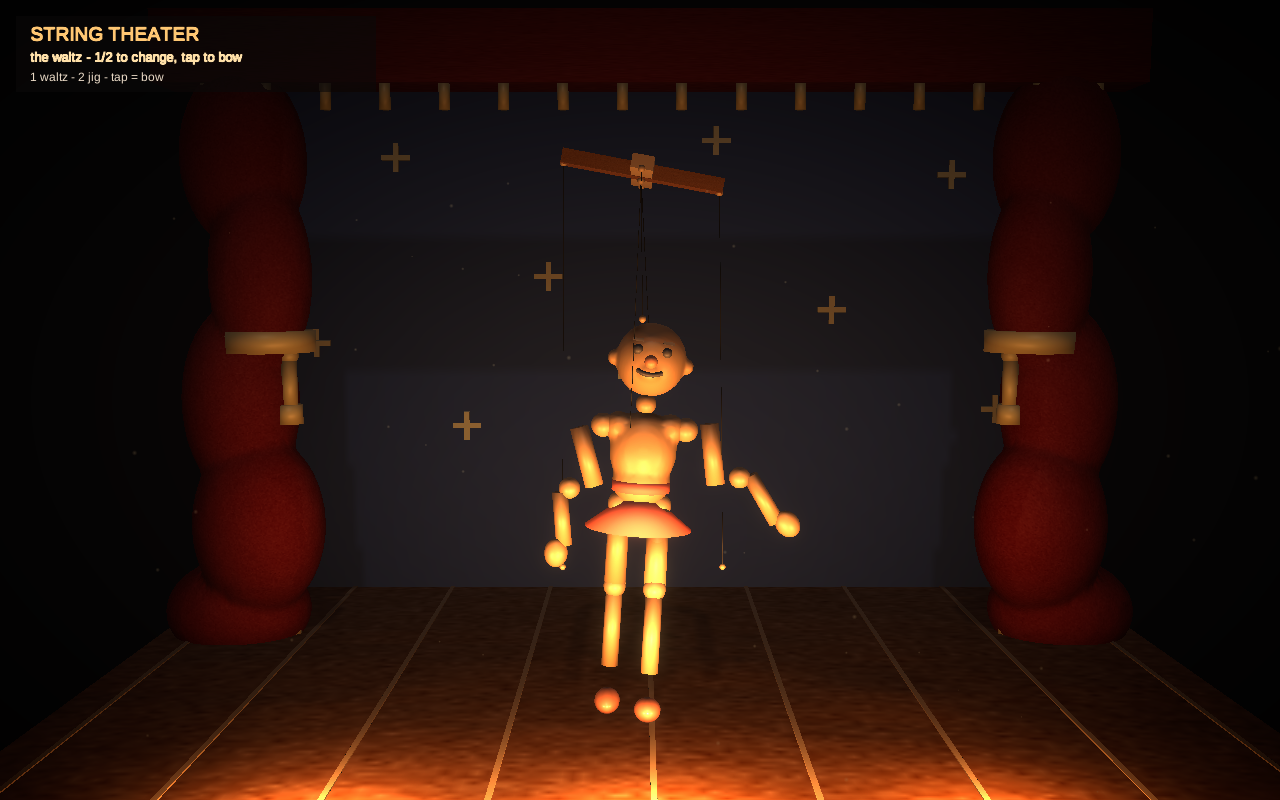
Concept prompt
A small marionette theater stage at showtime: a cheerful wooden puppet dancer with jointed limbs and a painted face hanging from bright strings under a wooden control crossbar, deep red velvet curtains drawn to the sides with gold fringe and tassels, warm footlight glow from the stage front, dark blue backdrop with painted stars, polished wooden stage boards, intimate theatrical mood, high-end stylized 3D game render, no text, no watermark, no UI
Code-modeled in Blender
The hero assets were modelled by agents writing Blender code against the platform sculpt kit — no downloaded models anywhere — and rendered by the studio harness for audit before entering the engine scene.
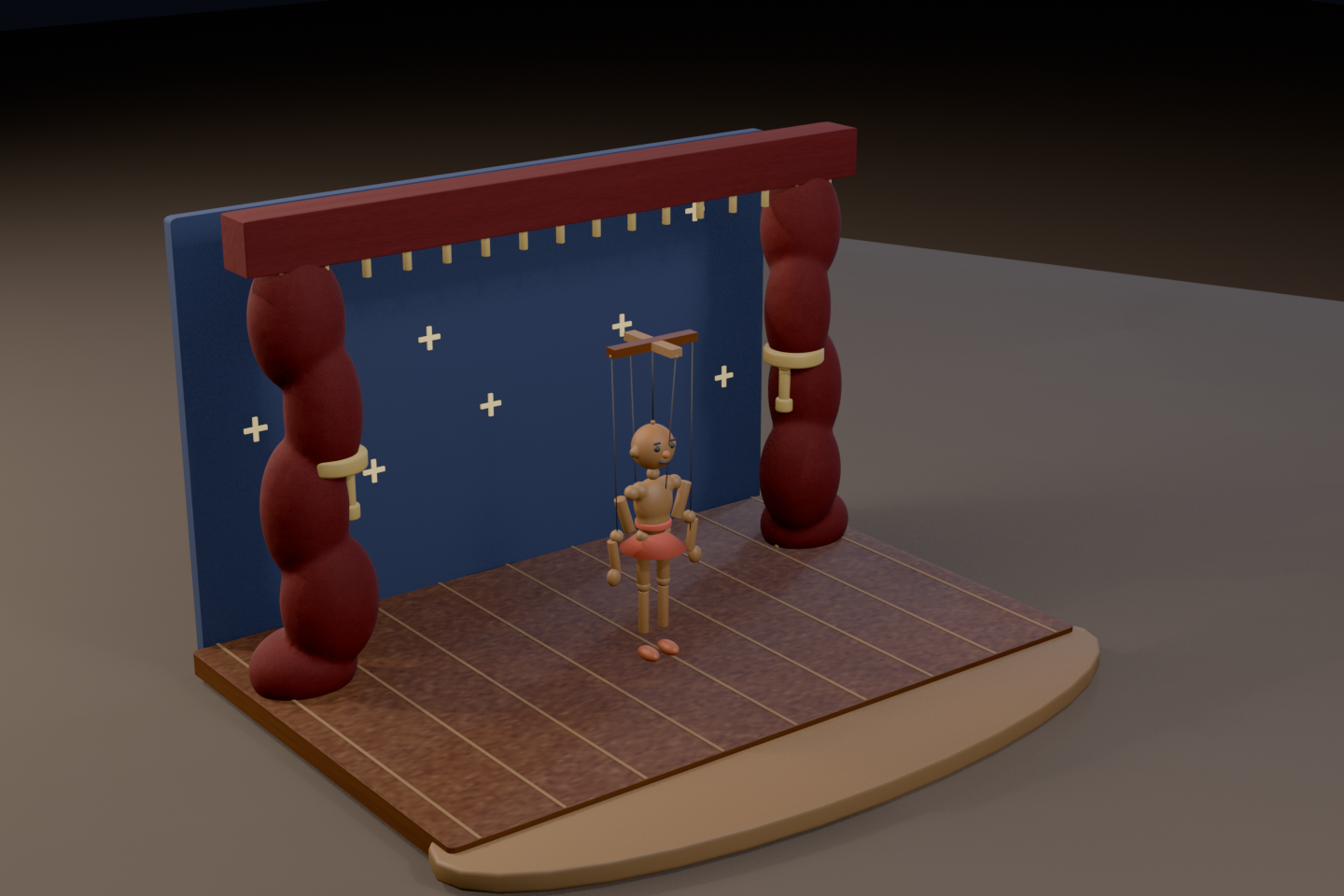
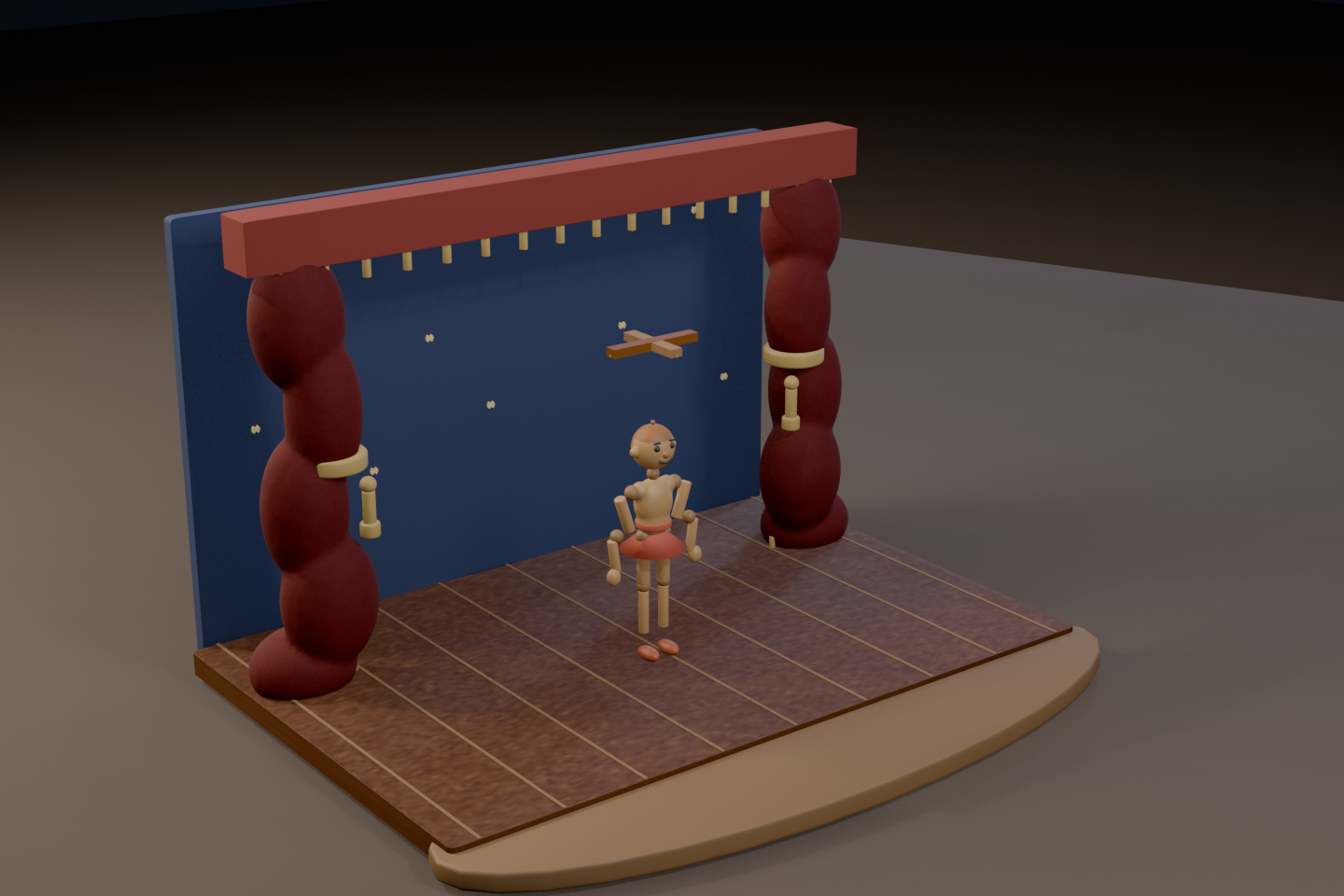
Made by AI, compiled by the real Unity 6 engine
Puppet, control bar and proscenium stage are three code-modeled Blender exports; the puppet ships its ten limb pivots and five string anchors as named nodes, and the ball joints are the concept's own design. Every note across both dances — harpsichord, pizzicato strings, fiddle, banjo, celesta, woodblocks — is a sampled instrument from the platform library, sequenced in code on the audio clock.