Tin Toybox
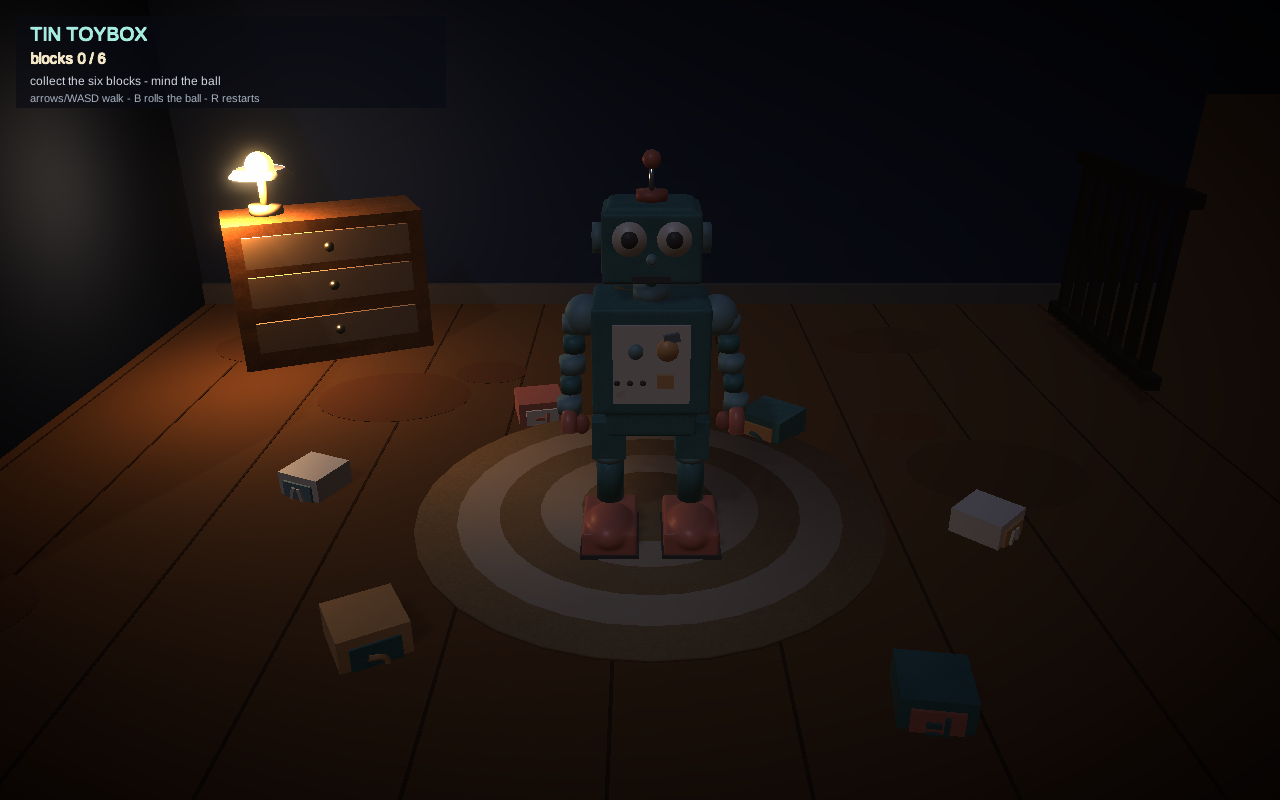
A wind-up tin robot you actually drive. The hero ships from Blender as one fused tin mass per rigid segment — chest can, dome head, red boots — with its bellows arms kept deliberately segmented (they're real accordion mechanics, not skin), and the engine swings the whole rig on the glb's own pivot locators: a stiff toy waddle with woodblock footsteps, arms counter-swinging, and the brass figure-8 key spinning down its back as the spring unwinds. It always faces where it's walking (nose-vs-velocity is asserted in telemetry), it answers input the same frame, and when the striped rubber ball bowls it over it always winds itself back upright inside two seconds. Collect the six painted alphabet blocks around the lamplit nursery to a musicbox lullaby — glockenspiel notes climb with every block.
Play it now
Tap once for sound - arrows/WASD walk - B rolls the ball - R restarts
The concept is the contract
The piece was concepted first — an AI key-art painting — and its hero assets were then code-modeled in headless Blender and audited against that concept. The pair below is the contract and the build.
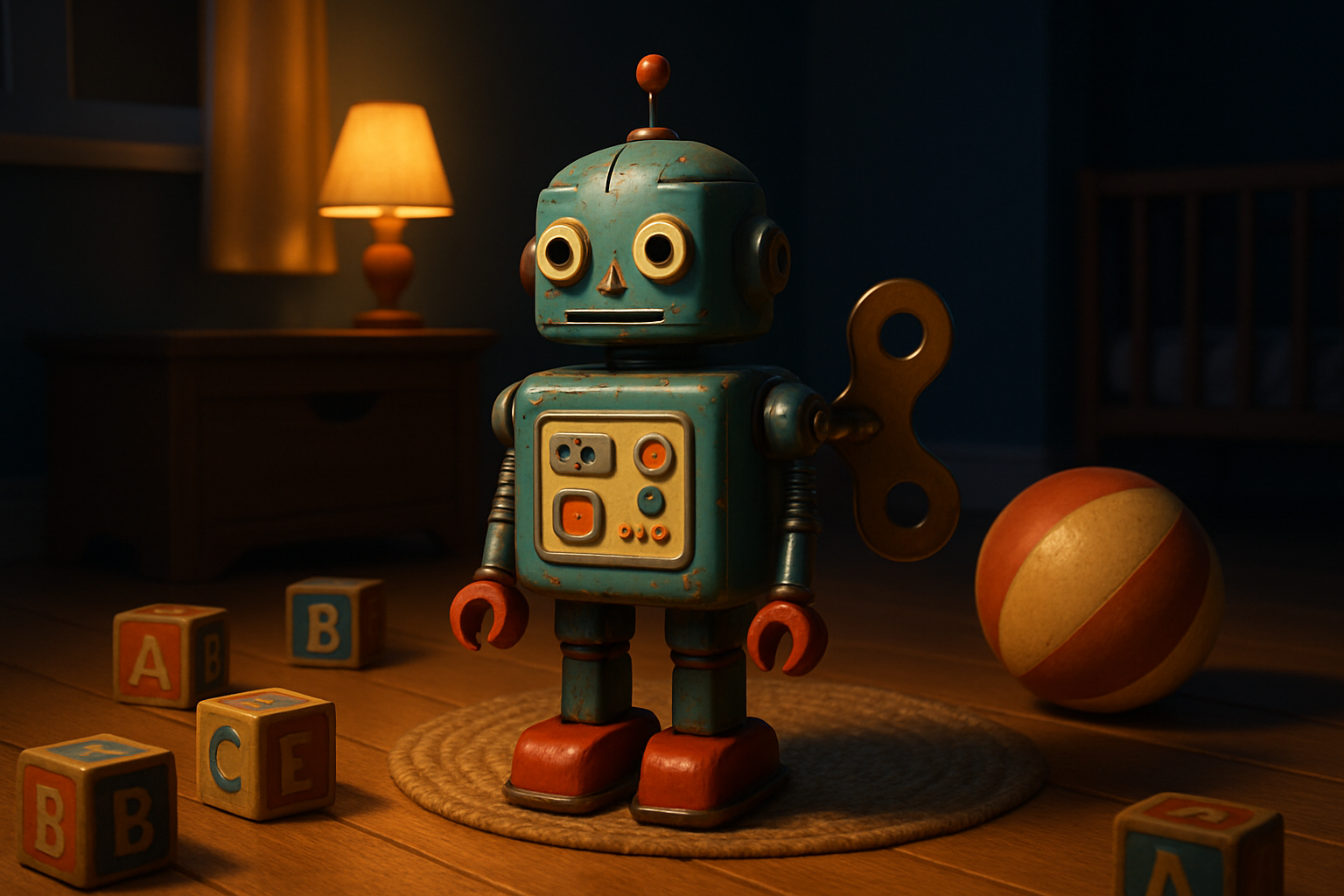
Concept prompt
A charming wind-up tin-toy robot standing in a lamplit nursery playroom at night: a small retro robot with a teal tin-can chest with painted cream panel and tiny rivets, a dome head with round friendly eyes and a little antenna, red claw hands on tube arms relaxed at its sides, boxy red feet, and a big brass wind-up key turning slowly in its back; around it warm wooden floorboards, scattered painted alphabet blocks, a red-and-cream striped rubber ball, a round woven rug, a toy chest against the wall, one warm nursery lamp pooling light from the corner, deep blue night shadows beyond, cozy bedtime mood with soft shadows, high-end stylized 3D game render, no text, no watermark, no UI
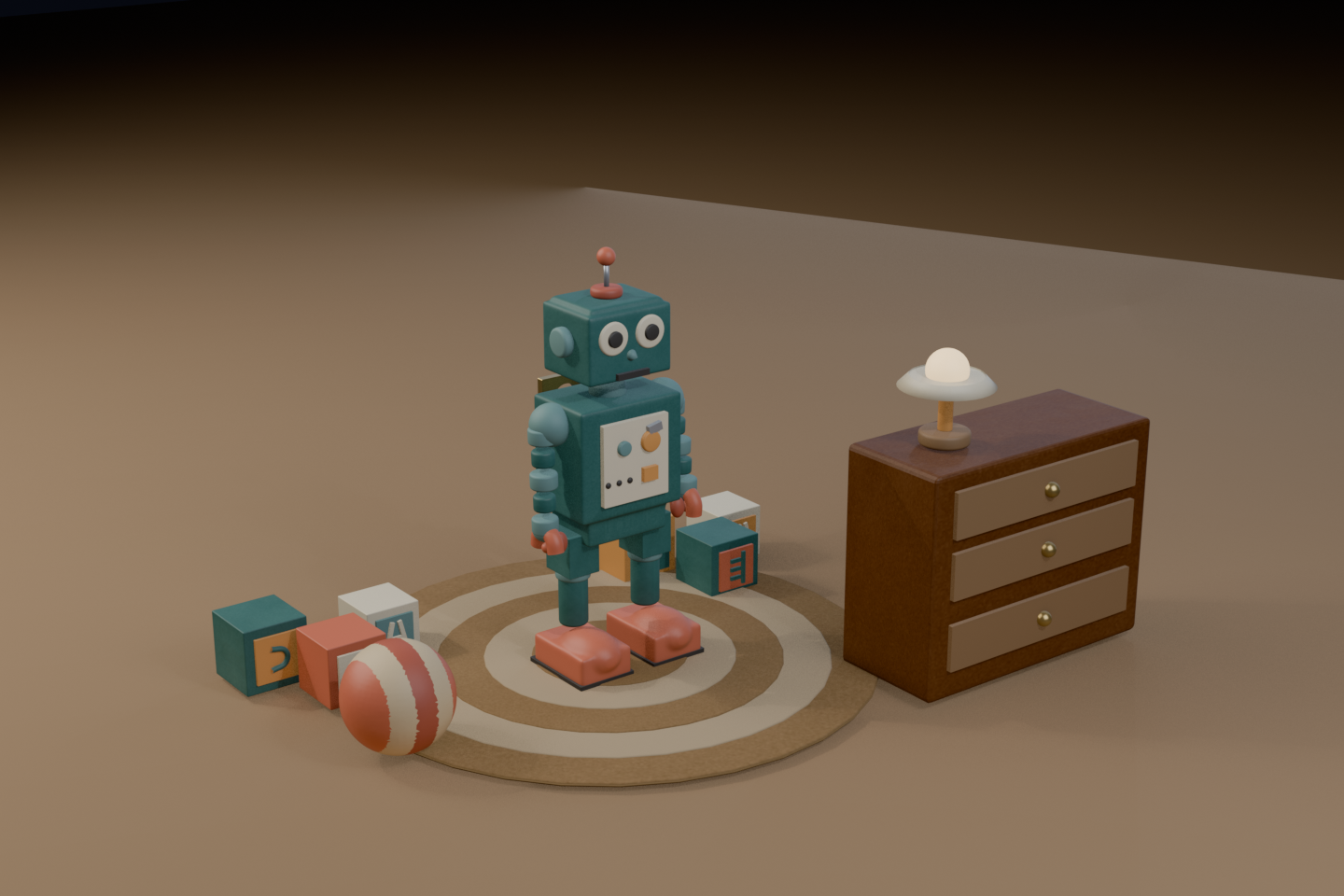
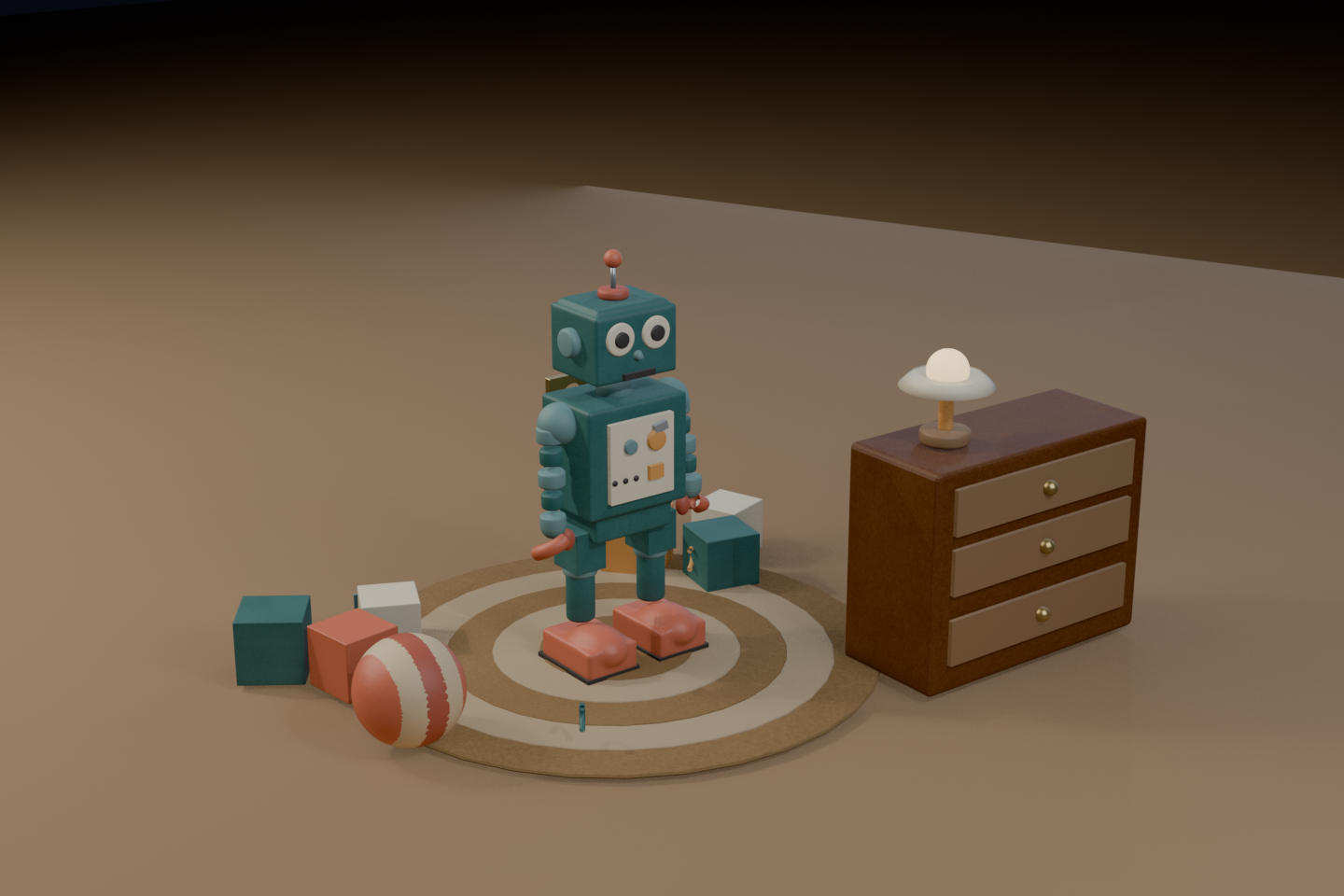
Code-modeled in Blender
The hero assets were modelled by agents writing Blender code against the platform sculpt kit — no downloaded models anywhere — and rendered by the studio harness for audit before entering the engine scene.
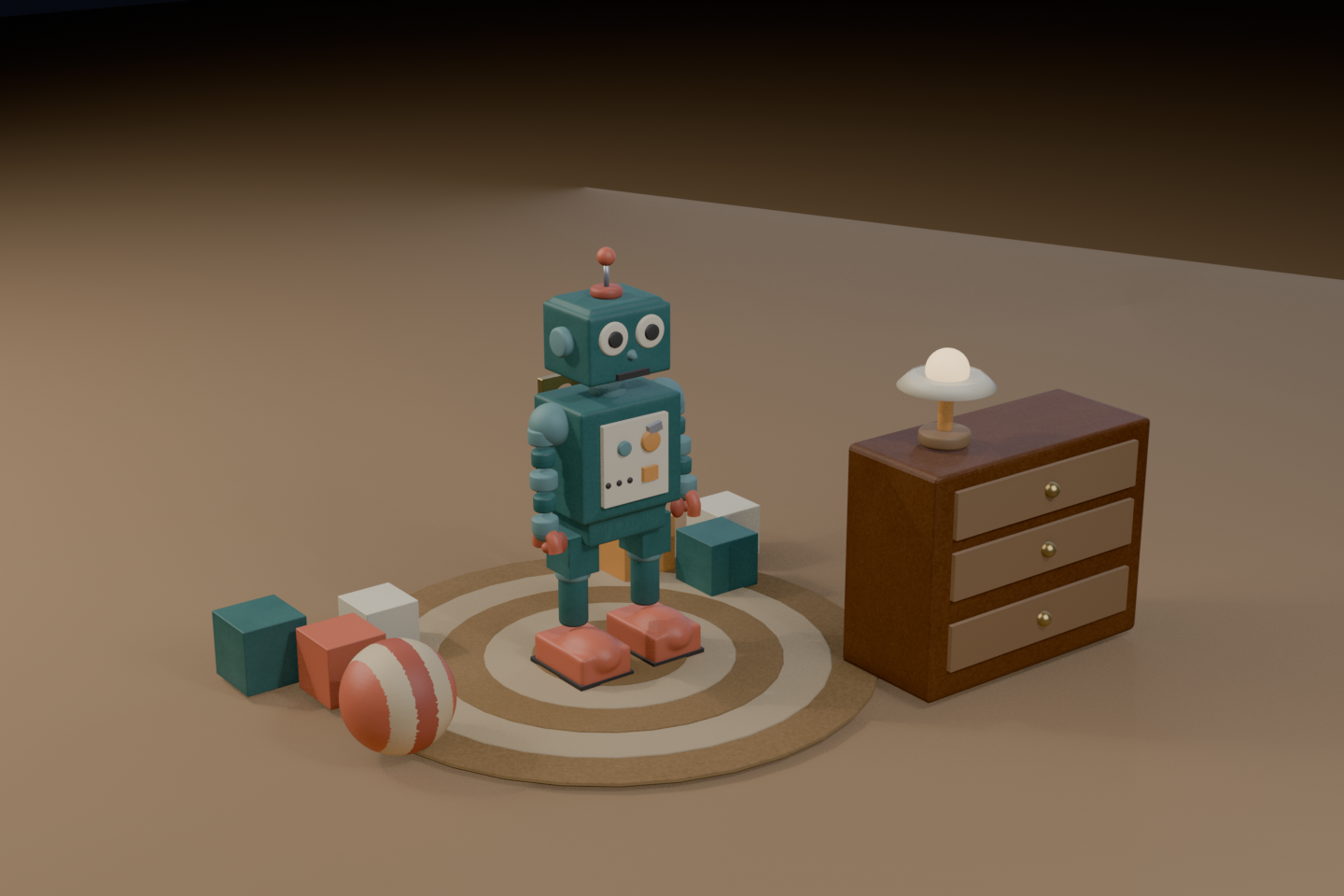
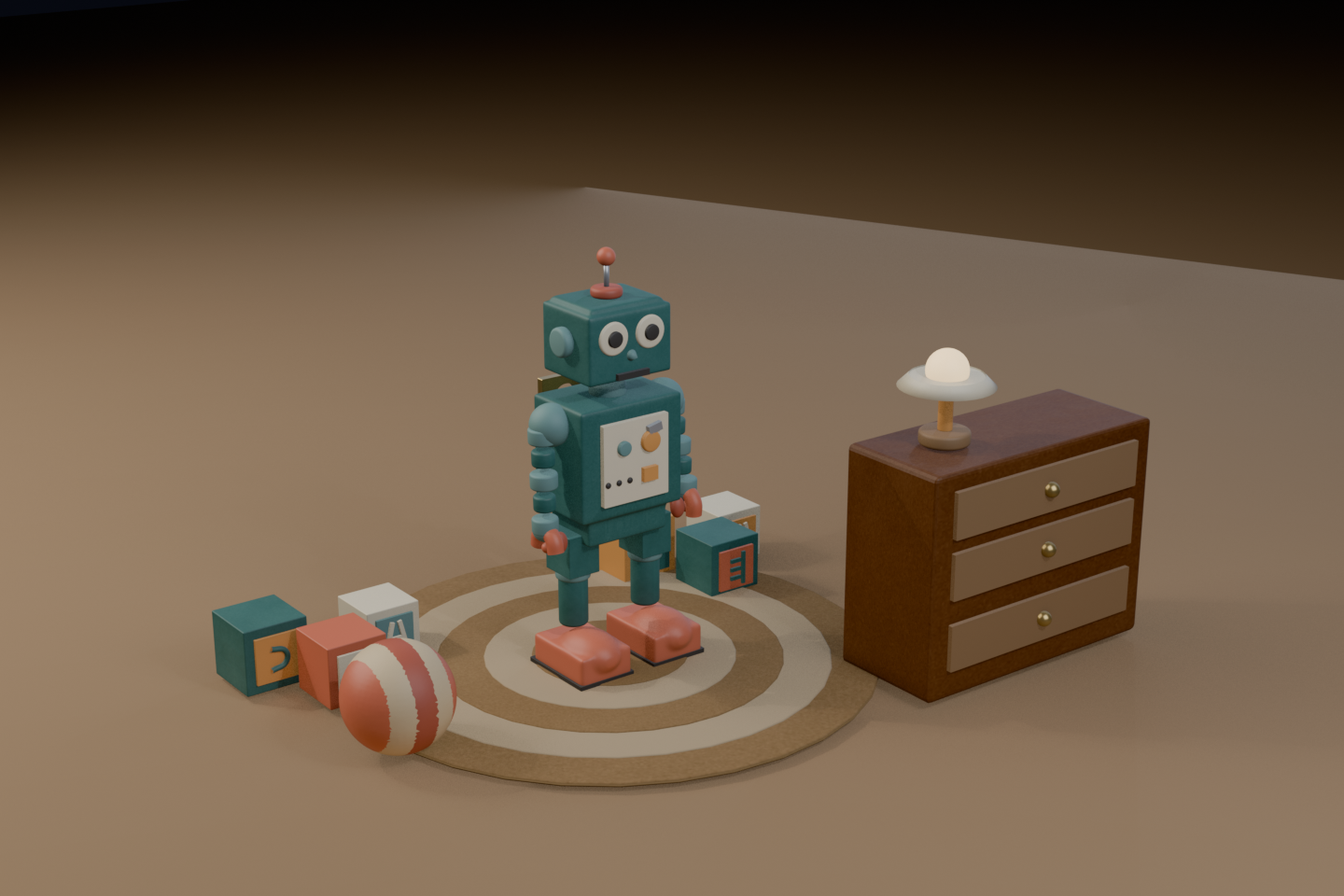
Made by AI, compiled by the real Unity 6 engine
Five code-modeled Blender exports — robot, alphabet blocks, striped ball, woven rug, dresser with its lamp — ship as named nodes. The robot's rig contract is pivot locators plus hidden probe spheres (claw and boot origins) that survive voxel fusing, so the engine can rebuild the armature at load. The ball is a real Rigidbody. All sound is sampled — musicbox, glockenspiel, woodblocks, taiko, harp, celesta — never synthesized.