Wireless Nook
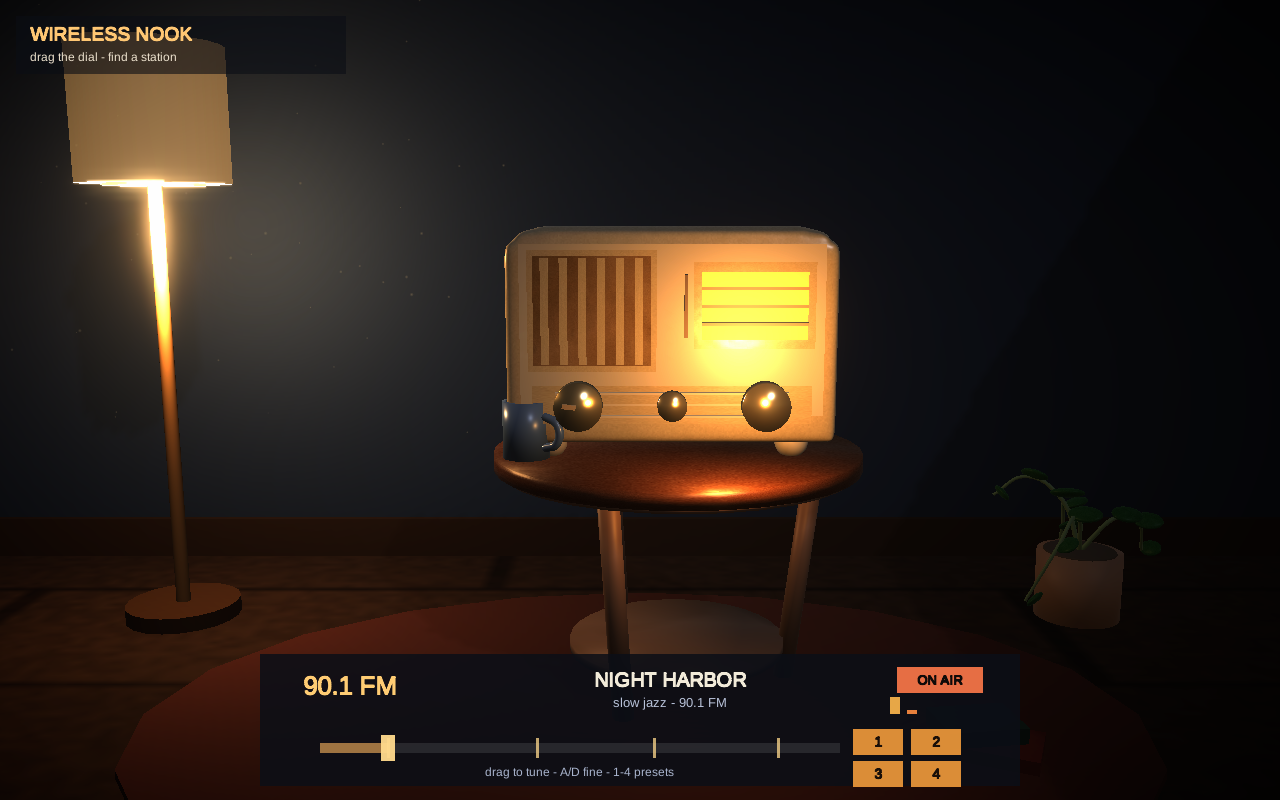
The user interface is the piece. A bottom dock carries a drag tuning bar with station tick marks, a live frequency readout, preset buttons, a station card with an ON AIR pill and a pair of bouncing VU meters — all code-built Unity uGUI, no Slider component, just rect math. Tuning is mirrored in the world: the Blender radio's dial needle slides through the glowing amber window and the brass tuning knob spins as you drag. Four stations lock on across the band, each a code-sequenced loop of sampled instruments — electric piano over upright bass, nylon guitar with claves, a celesta waltz on a bowed pad, kalimba over marimba — and between them a faint sampled air-pad fills the static. The mug steams, dust drifts through the lamp pool, and the pothos trails off its pot on the floor.
Play it now
Tap to switch on, then drag the dial - A/D fine tune - 1-4 presets
The concept is the contract
The piece was concepted first — an AI key-art painting — and its hero assets were then code-modeled in headless Blender and audited against that concept. The pair below is the contract and the build.
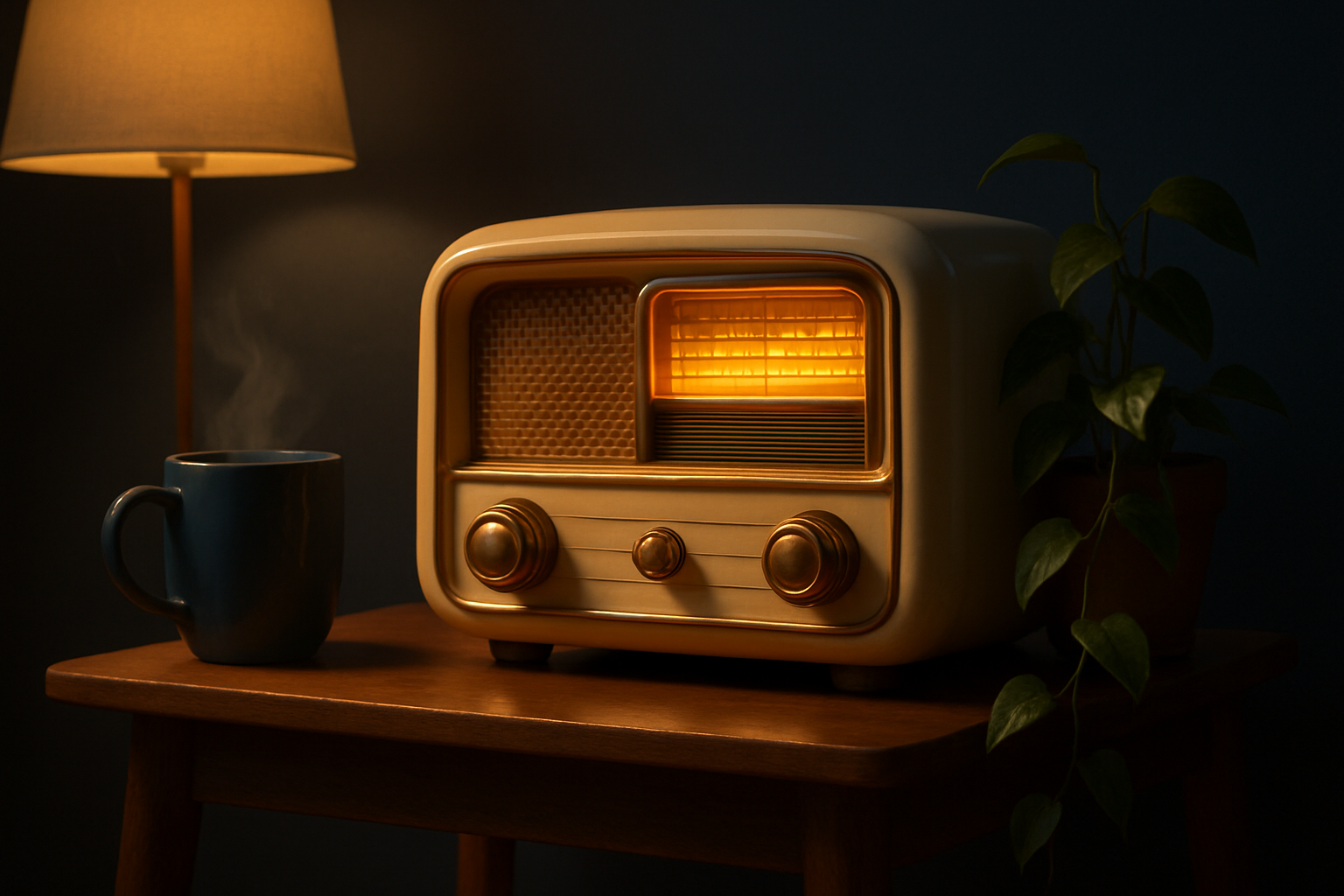
Concept prompt
A cozy late-night radio nook: a beautiful 1950s vintage tabletop radio with a warm glowing dial window, cream bakelite body with rounded corners, brass tuning knobs and a woven speaker grille, sitting on a small walnut side table beside a steaming mug and a trailing potted plant, deep navy-blue wall behind, one warm table lamp pool from the left, soft night mood with gentle shadows, high-end stylized 3D game render, no text, no watermark, no UI
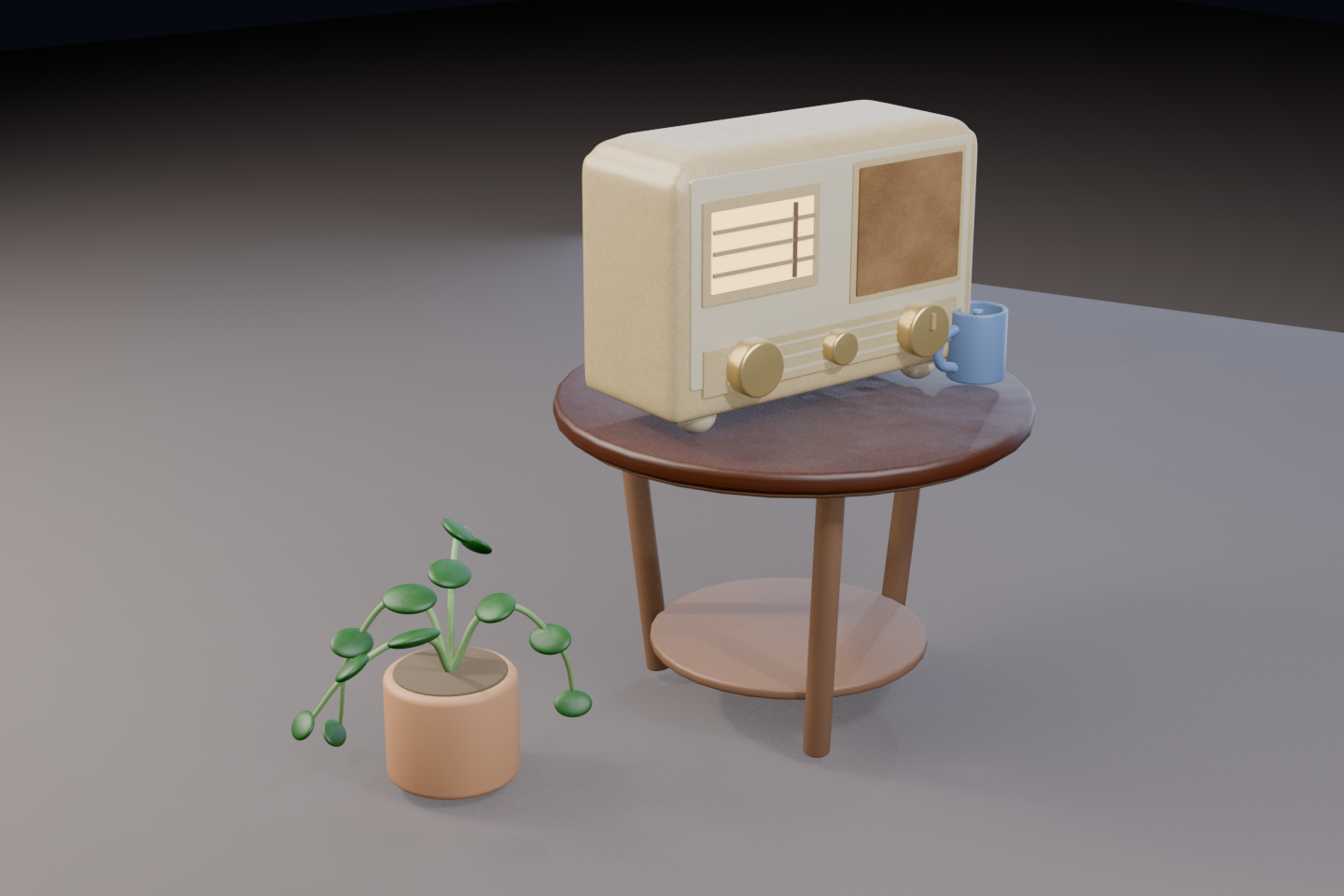
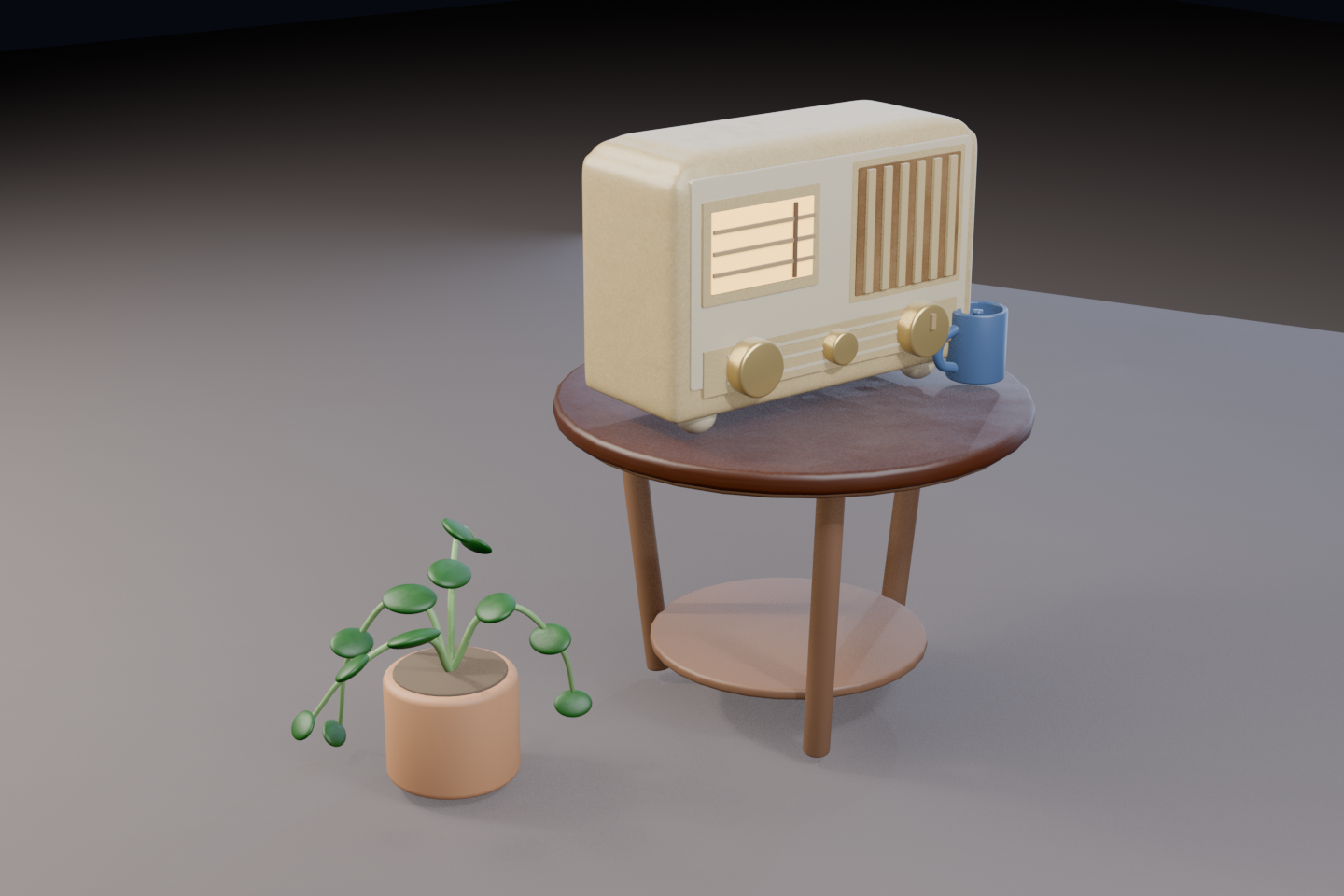
Code-modeled in Blender
The hero assets were modelled by agents writing Blender code against the platform sculpt kit — no downloaded models anywhere — and rendered by the studio harness for audit before entering the engine scene.
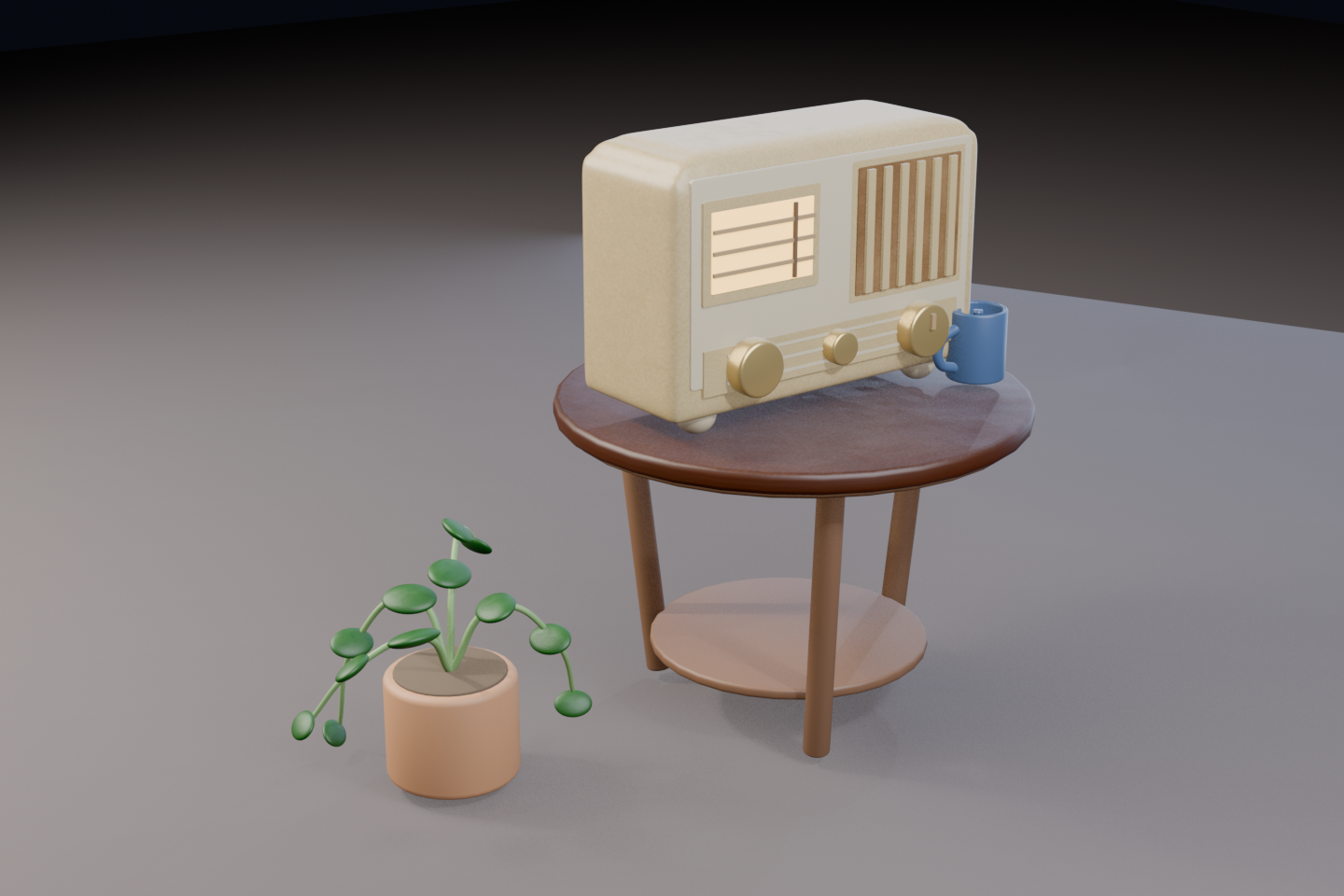
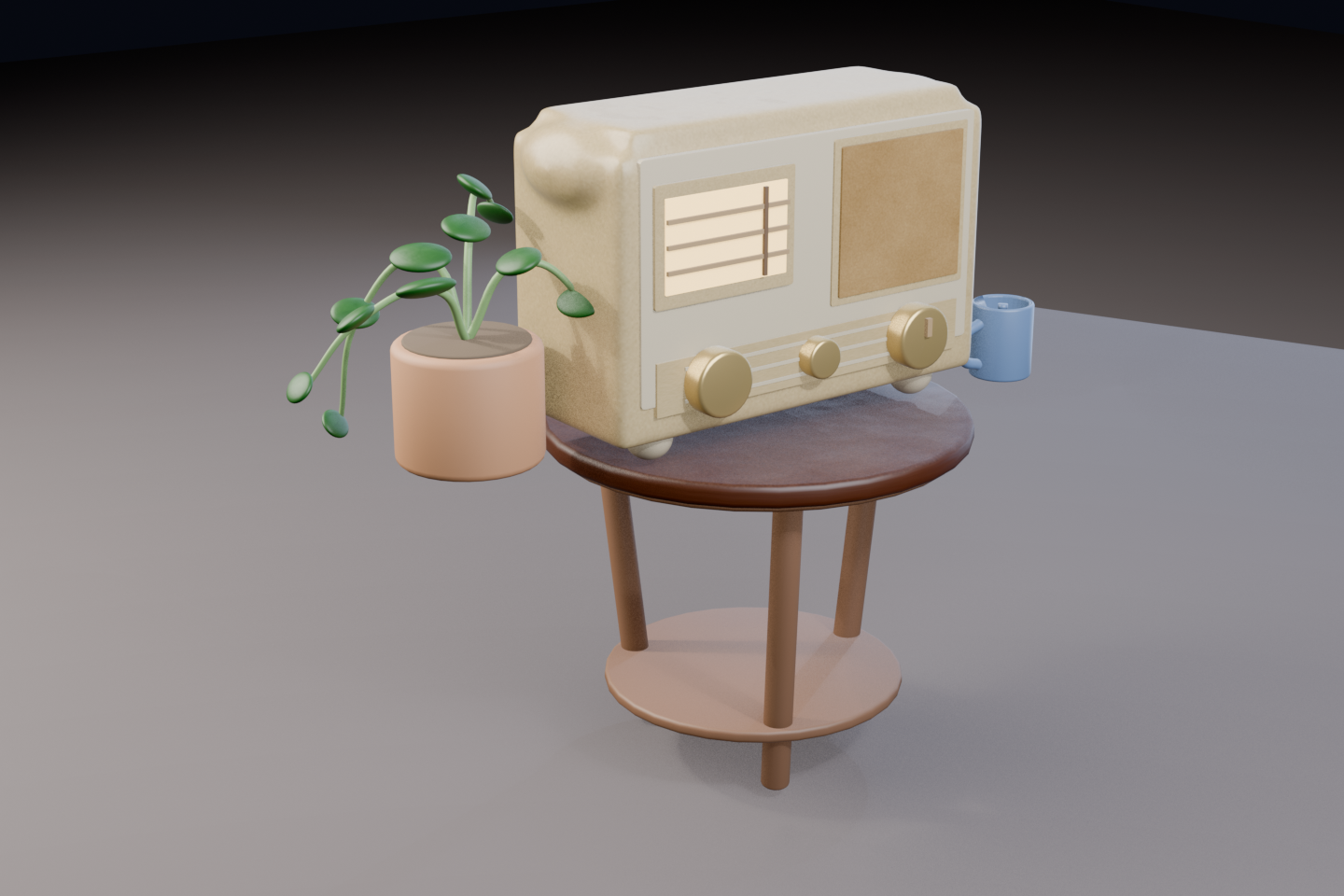
Made by AI, compiled by the real Unity 6 engine
Radio, side table, mug and pothos are four code-modeled Blender exports; the radio ships its dial glow, needle and tuning knob as named nodes so the engine can light, slide and spin them. All twenty-four notes across the four broadcasts come from the platform's sampled-instrument library, sequenced in code on the audio clock — no synthesis, no audio files beyond the samples themselves.