From concept to engine
Every panel from this asset’s gallery card — click a panel to open it full size.
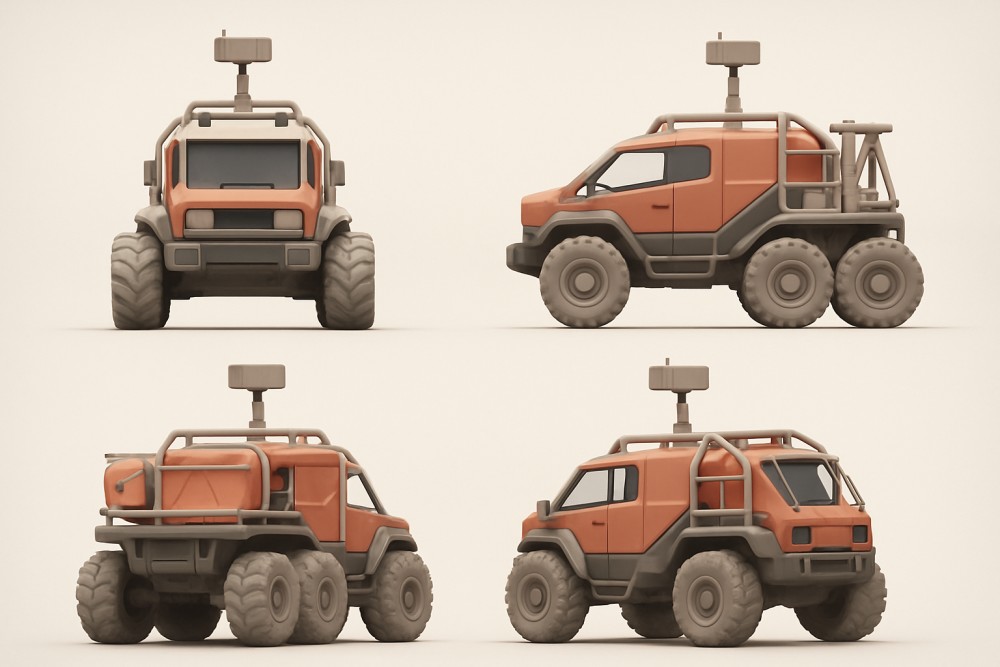
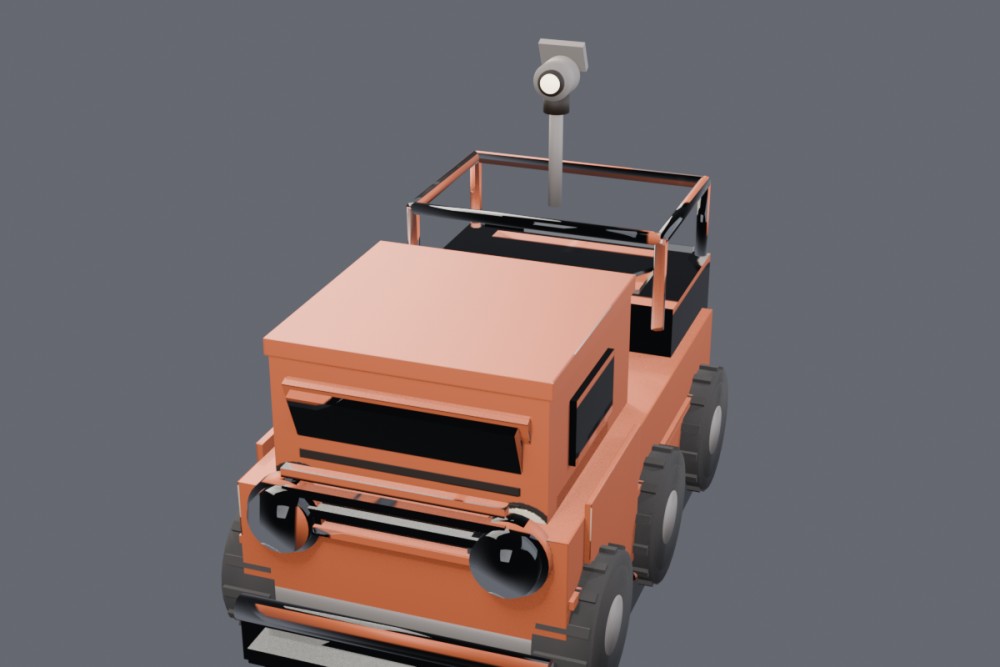
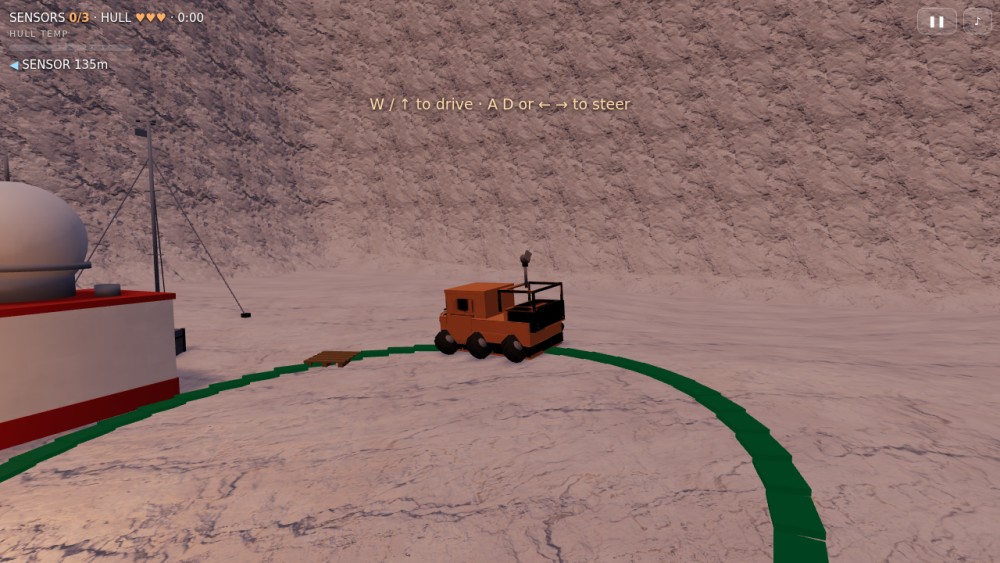
A six-wheel volcanic survey rover built in code from its turnaround sheet — cab, roll cage, sensor mast and six lugged wheels as separately named nodes — with a 19,228-triangle detail sculpt of panel seams, rivets and louvres baked down onto the 5,200-triangle hull that ships. The wheels are exported as their own nodes so a raycast vehicle controller can drive each one, and the shipped game measures their rendered tyre radius against the physics radius at boot.
rover.glb · 0.21 MB · glTF 2.0 — modeled in code, exported from headless Blender
Every panel from this asset’s gallery card — click a panel to open it full size.
Round 1 shipped a roll cage that spanned the whole vehicle and floated a head above
it, a sensor mast that read as a white mallet, and wheels whose tread blocks stood so
far proud of the carcass that they silhouetted as cogs. Round 2 pulled the cage back
onto the rear deck, slimmed the mast and sank the tread into the tyre. Round 3’s
windscreen was invisible — its orange frame had been placed at a larger forward offset
than the glass, so the frame simply covered the pane. Round 4 put the glass in front,
lifted the headlamps onto the nose, and lifted the chassis rail: it had been authored
10 cm below the tyre bottoms, which the game’s
body-clears-the-ground self-test caught as soon as the asset was wired in.
This asset was built for Ashfall Station, a three.js Lab piece and the lab’s Rapier physics pilot. It was modeled entirely in code (Blender’s Python API) by an AI agent, rendered by headless Blender, and audited against its concept before export — the pipeline every Blender Studio asset goes through.