Key art

Key art — the skiff crests a dune under full sail
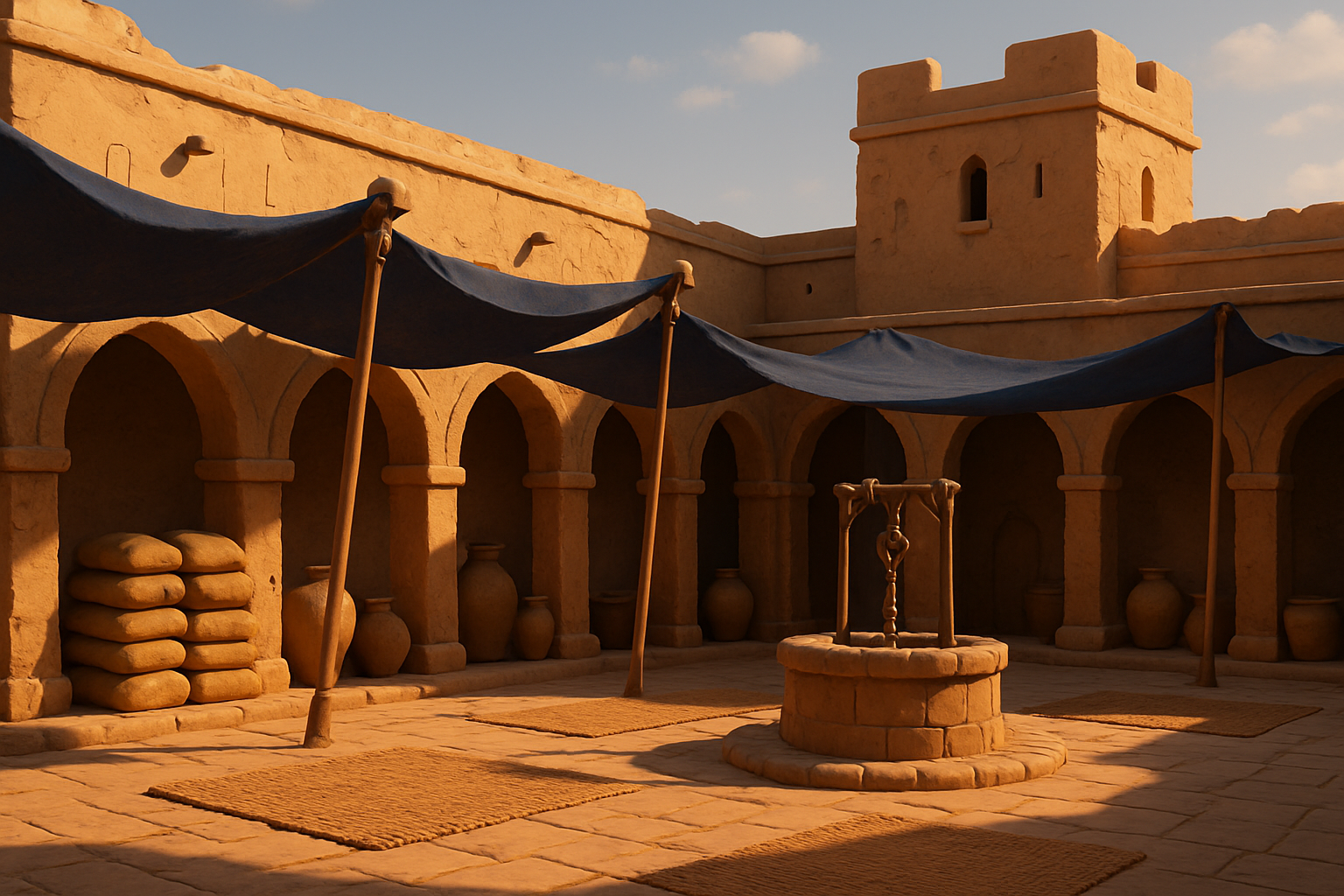
A wind-powered sand-sailing world: lateen-rigged skiffs cross a sea of apricot dunes between an oasis slot-canyon and a mudbrick caravanserai. One committed palette — apricot sand, terracotta, saffron sailcloth, deep indigo, sun-bleached timber, tarnished bronze — across every sheet. A studio-style seven-sheet concept pack, authored, audited and probe-built end to end by AI agents, that shipped only after the skiff itself was modelled from the turnaround, cloth-simulated sail included.
7 sheets · probe-built in 6 audit-driven rounds · cloth-simulated lateen sail included
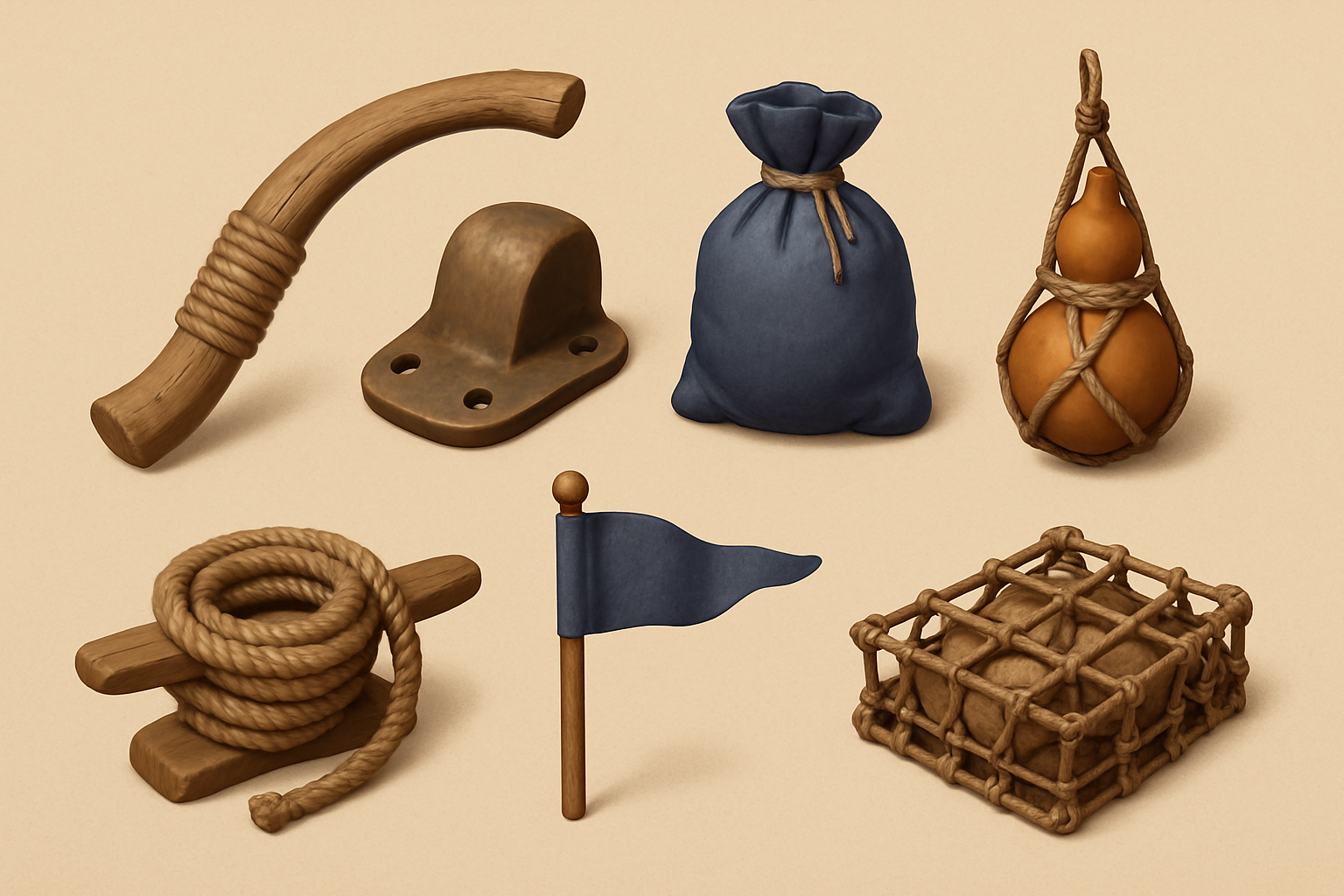
The turnaround is the modelling contract this pack is audited against, in the classic marine three-view convention: side profile, stern with the tiller, and quarter view. Three strut legs with bronze skid-shoes, a mast raked fifteen degrees aft, a patched saffron lateen sail, indigo masthead pennant, and a spice-sack cargo net — every element named in the pack's element inventory. Beside it, the buildability probe: the same skiff authored headless in Blender from this sheet and that inventory alone.
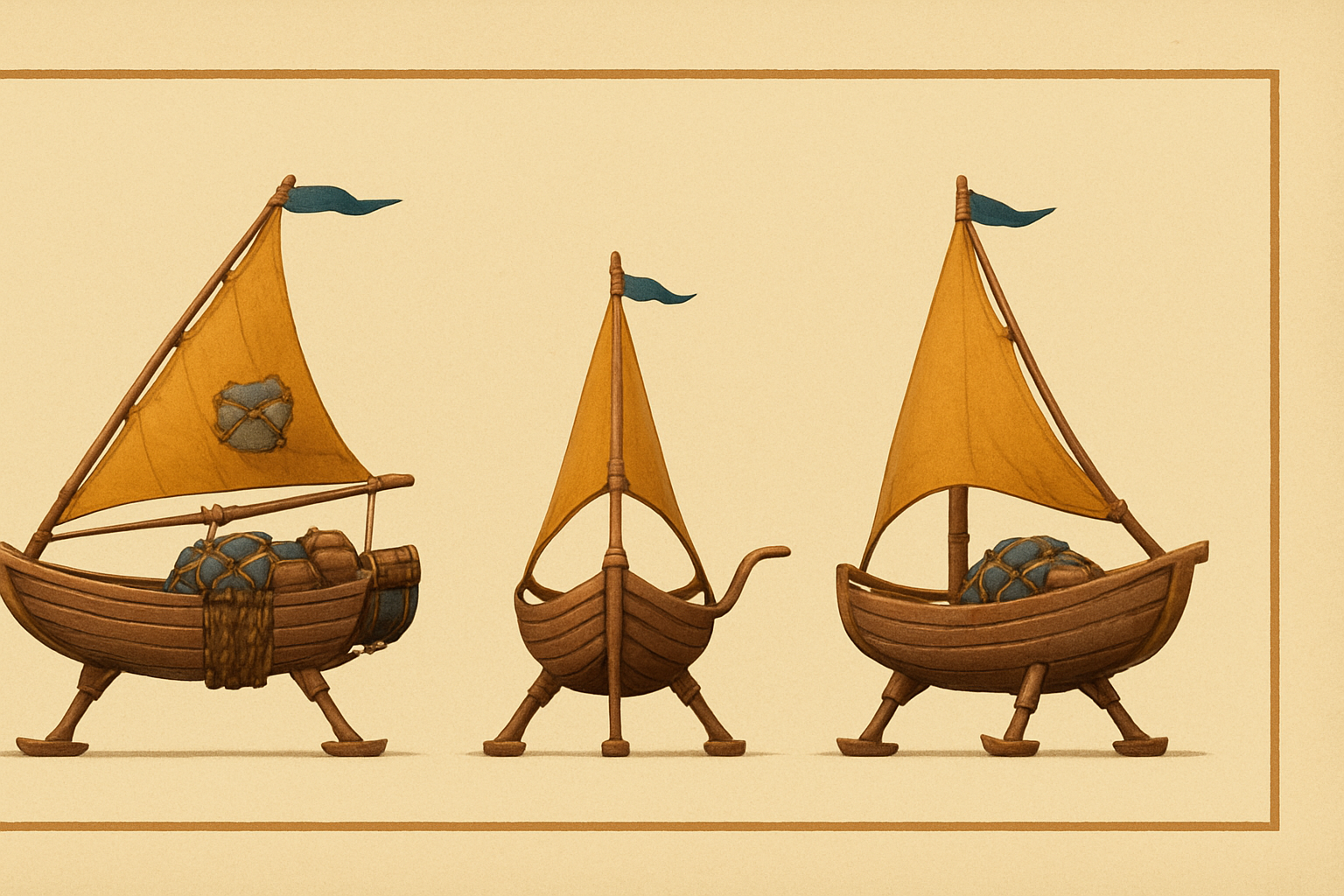
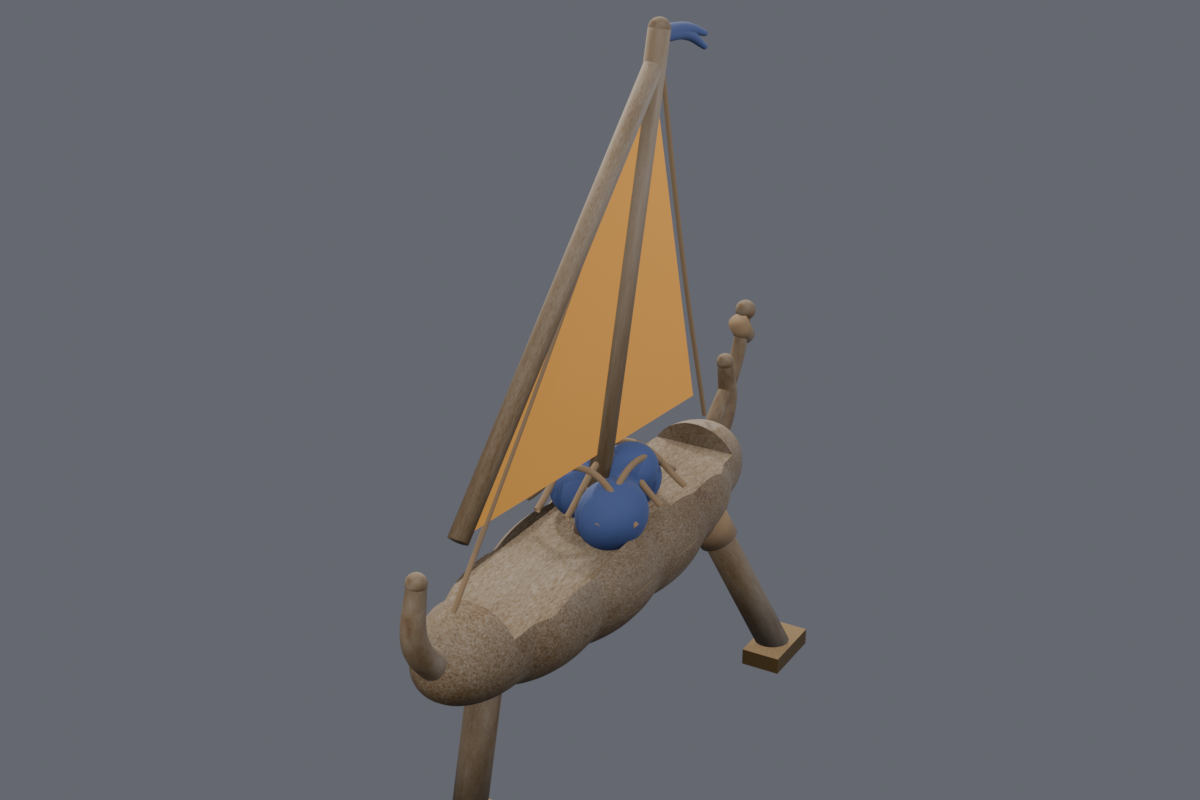


A pack only ships after an asset has actually been modelled from it. The skiff below was authored headless in Blender from the turnaround alone — fused plank hull, strut undercarriage with bronze shoes, and a real cloth-simulated lateen sail draped over its yard — across six audit-driven rounds, then compared back against the sheet for silhouette, proportions and signature details. Verdict: the turnaround and its element inventory under-specified nothing.
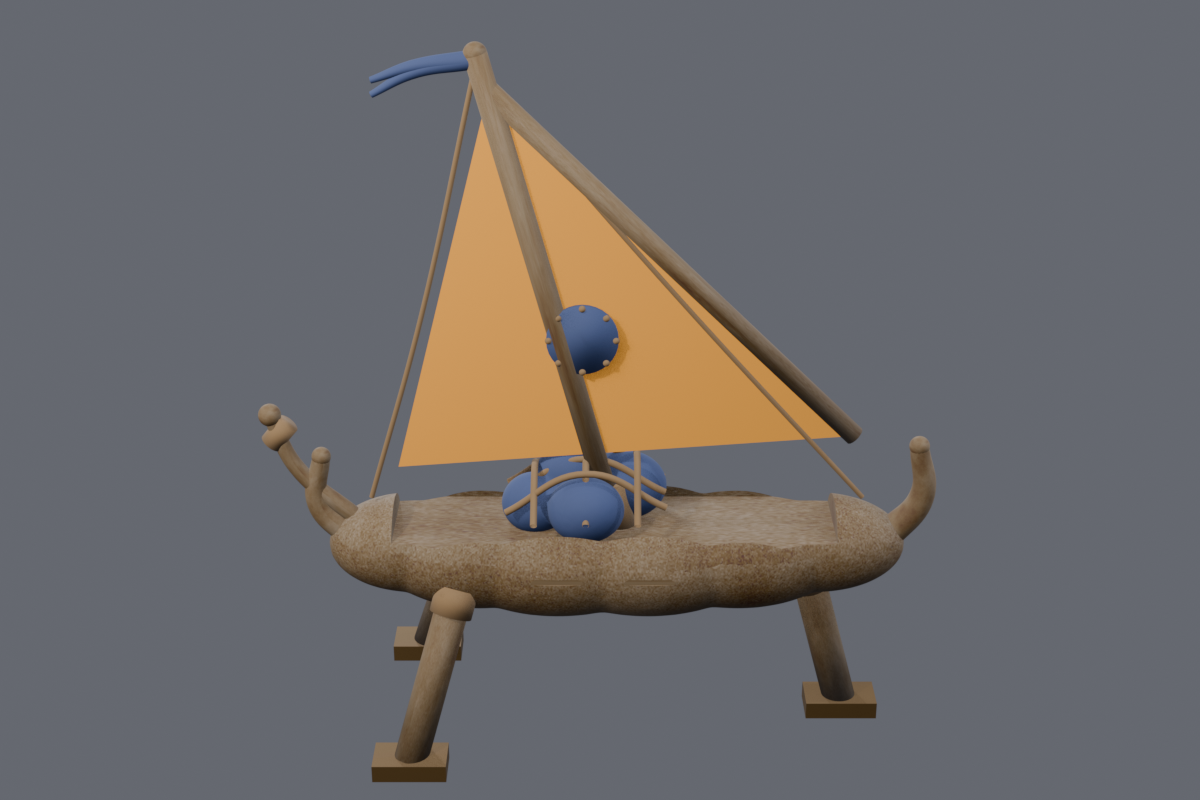
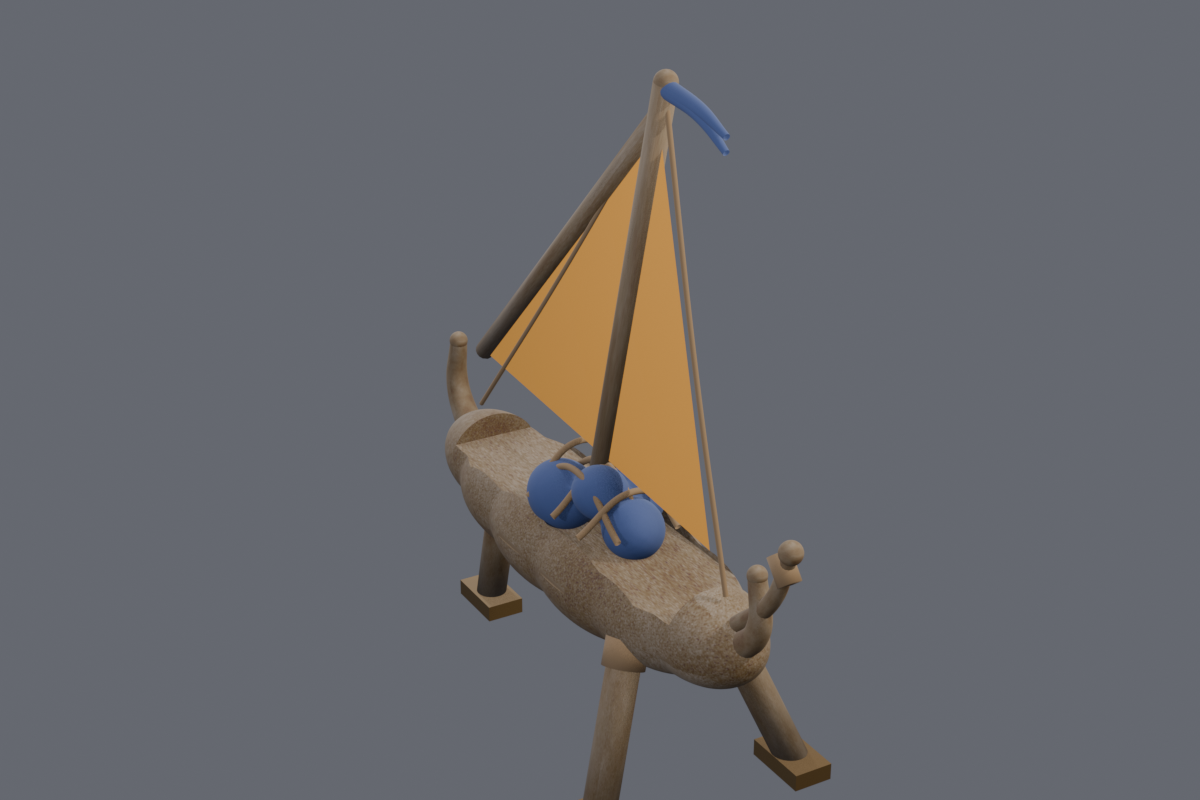
| Measurement | Value | Conditions |
|---|---|---|
| Sheet generations | 12 total (7 base + 5 regenerations) | 5 of 7 base sheets first-try clean — the pack-01 lessons paid for themselves |
| Turnaround canon | v3 of 5 attempts | v4 and v5 regressed (tiller vanished, materials re-rolled) — best-sheet + inventory canon beats chasing a flawless generation |
| Coherence audit | 1 full round + confirming pass, clean | subject identity, proportions ≤10%, one palette, all elements nameable |
| Probe authoring rounds | 6 | rounds 5–6 spent hunting one strut sign-flip — invisible in the side view, obvious at 210°/330°; fixed with a track-quaternion |
| Sail cloth sim | 30 frames, thickness 10 mm | kit.drape_cloth, pinned at yard + luff; patch decal conformed to the post-sim mesh |
| Shipped skiff glb | 5.7 MB | un-optimised probe artifact, simulated sail baked as mesh |
What the pack proved: enumerating rows ("top row exactly four, bottom row exactly three") fixes odd-count prop sheets; a single row at 3:2 holds only three vehicle views, so masted vehicles get the marine three-view convention or an enumerated 2×2; and load-bearing structure needs a "NOT" clause ("strut legs, NOT sled runners") or it flip-flops between generations. Full findings feed the platform's concept generation pipeline.
The lateen sail is a subdivided triangle draped by a real cloth solver, pinned along yard and luff — not a modelled bulge.
All three skid-legs aim with to_track_quat — the hand-rolled euler they replaced hid a sign error until off-axis renders exposed it.
The hull is a voxel-remeshed fusion with a boolean-cut cockpit and grooved planking — one watertight sweep from bow horn to stern.
The sail's rope-wrapped roundel patch snaps to its nearest draped vertex after simulation, so it rides the cloth, never floats.
Bow horns, tiller sweep, rigging lines and the swallow-tail pennant are swept tubes with tapered ends.
Undercarriage disputes (struts vs runners, leg count) resolved once in the written inventory — the sheet contradiction that drove the "NOT" clause.