Defold Lab piece 01 · verified playthrough, desktop + mobile

Washline

A storm front is rolling over the rooftops and the laundry is still out. Run, jump and save all eight washing lines before the rain breaks — a complete precision platformer authored end-to-end by AI agents in the real Defold engine, and playing in seconds on a phone connection.

Play it now

Arrows / WASD / touch · ~1.8 MB over the wire · starts in seconds

▶  Play

From concept to rooftop

The piece was concepted first: a key-art sheet, a character turnaround and an environment callout board set the palette — terracotta caps, cream plaster, white linen, a slate-blue storm. Every named element in the sheets was then authored as a real asset.
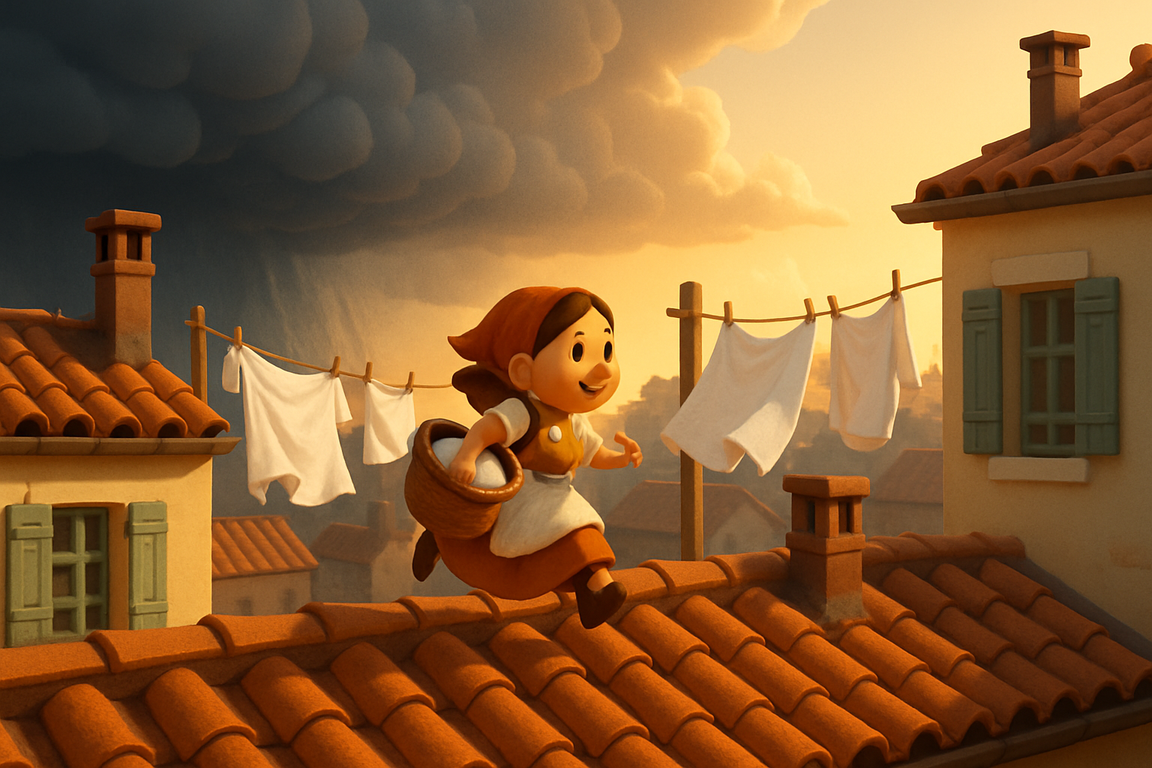
Washline concept key art
Concept key art — the contract the piece is audited against
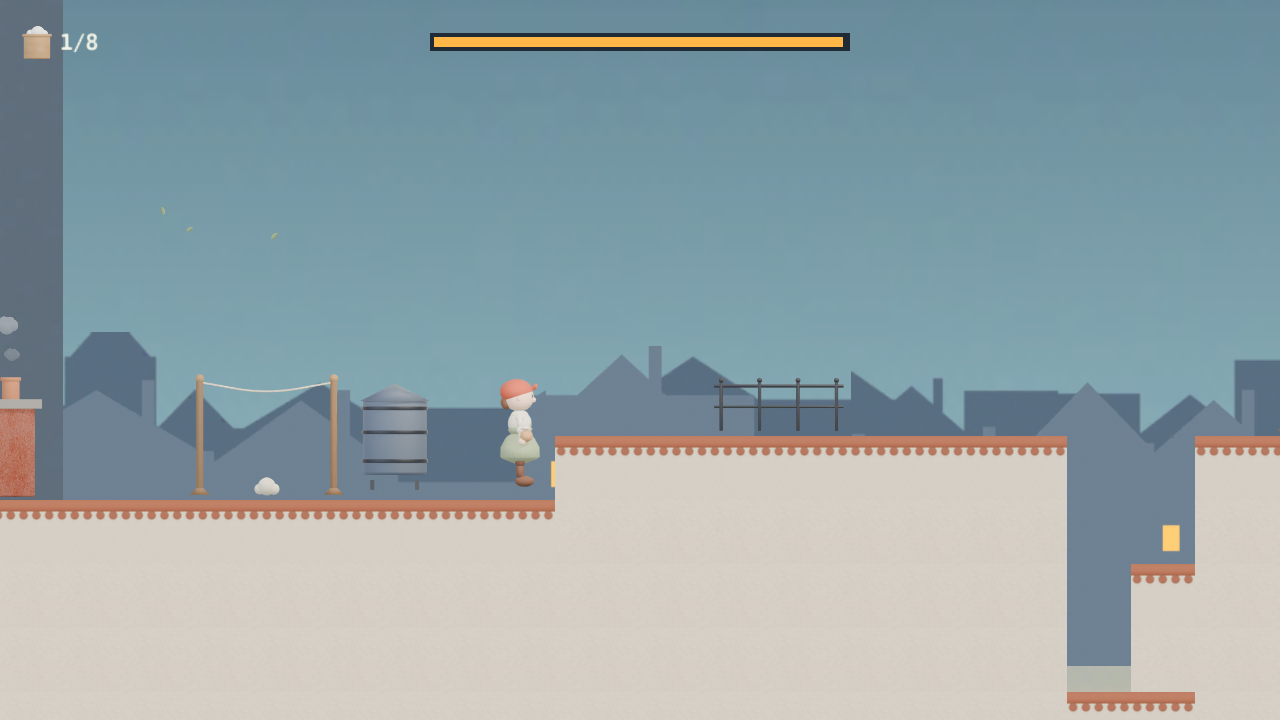
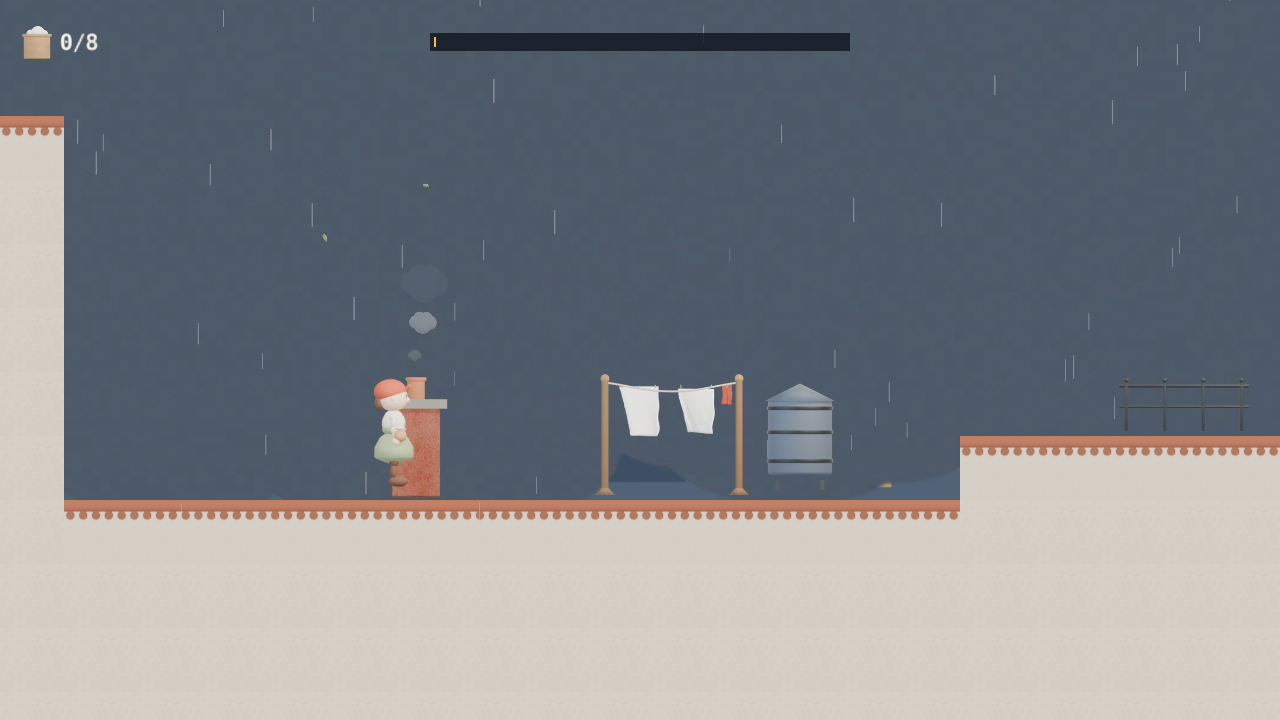
Washline in-engine frame
The same morning, live in the engine
Gray boxes before art

The whole game ran and was beaten as gray boxes before any art existed — feel (coyote time, jump buffering, asymmetric gravity, camera lookahead) and the level's fall-recovery routes were tuned where changes cost minutes. An automated player drives every build through all eight lines to a verified win on each audit round.

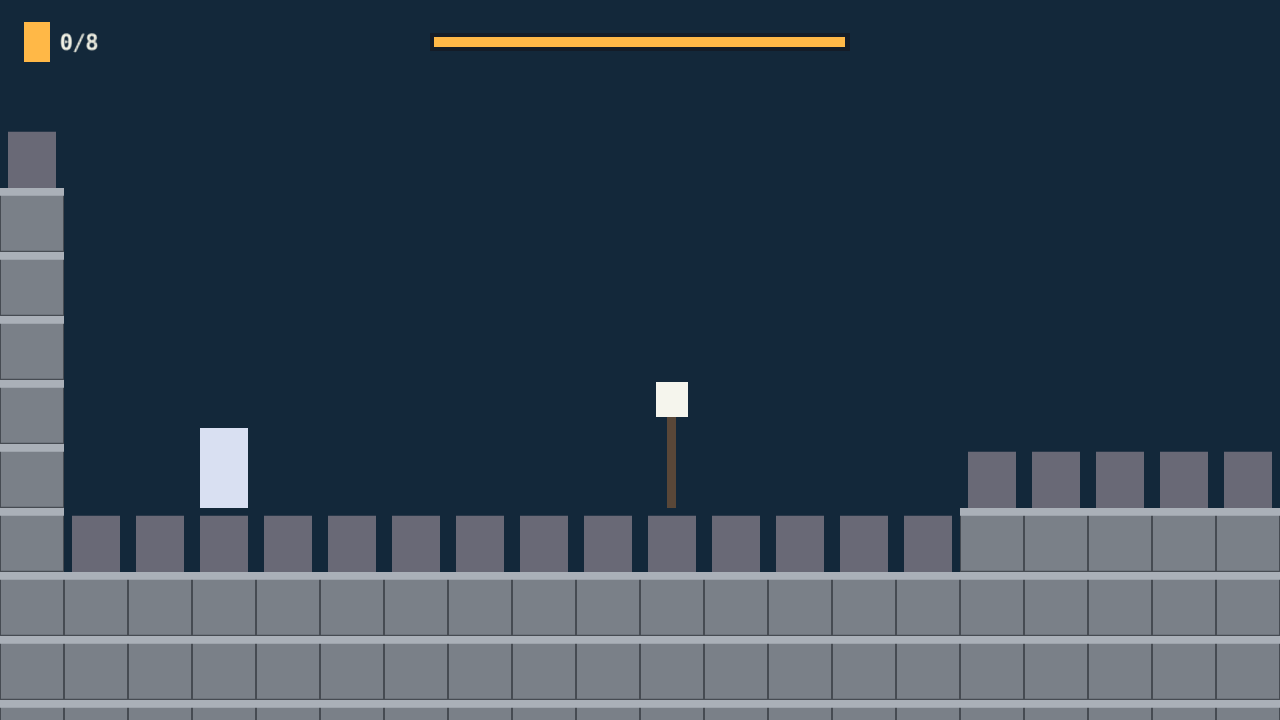
blockout gray boxes
Blockout: the full level playing as gray boxes
late storm in game
The storm at 90% — rain, tinted world, meter nearly out

A Blender pipeline, rendered to sprites

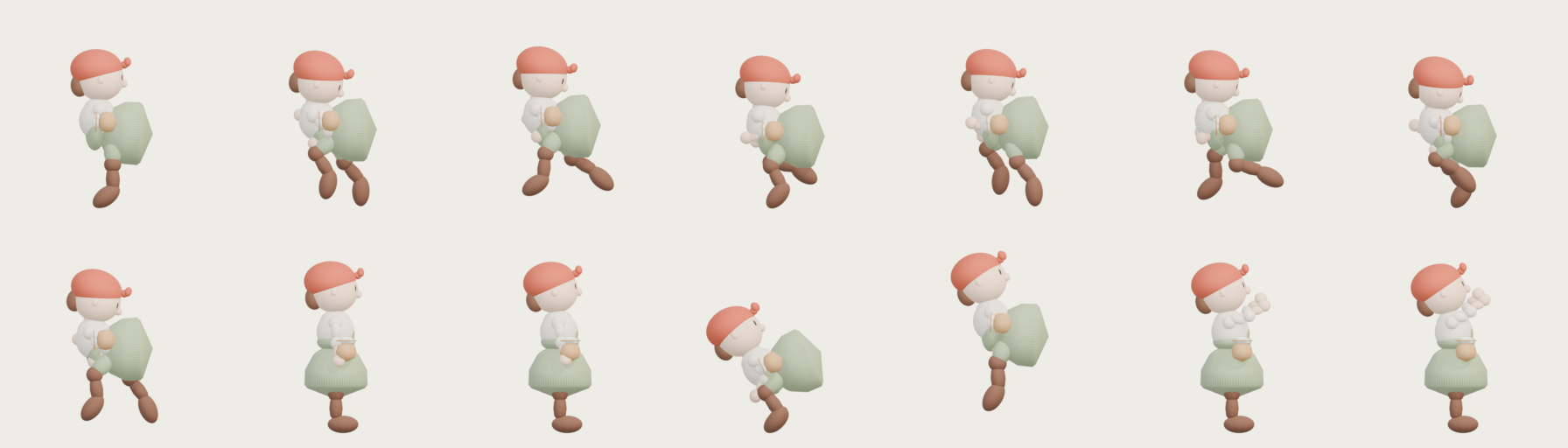
The heroine is a rigged Blender character whose run and jump come from retargeted CMU motion capture, rendered to sprite rows. The washing lines are real cloth simulations — three wind phases baked into a flutter flipbook. Tiles, props, skyline ranks and the storm bank are all Blender renders packed into Defold atlases.

hero sprite sheet
The shipped sprite rows: mocap run cycle, breathing idle, leap, fall, reach

The instant-load signature

This lab exists to prove a real-engine game can be playing before a phone user loses interest. Every payload ships pre-compressed and is inflated in the browser, so any static host serves it optimally. Measured first-playable times, Playwright CDP network throttling:

Connection profileThroughput / RTTFirst playable frame
Wi-Fi / 4G10 Mbps · 60 ms2.7–3.0 s
Fast 3G (HSPA+ class)6 Mbps · 150 ms3.5–4.4 s
Chrome DevTools “Fast 3G” preset1.44 Mbps · 562 ms12.2 s

Total transfer 1.82 MB (engine 976 KB + game data ~0.8 MB, gzip + RDO-basis textures). Measured headless on software rendering — real devices boot faster.

Real engine features, earned

Sprite atlases

Mocap-driven hero flipbooks; cloth flutter; props — all Blender-rendered, basis-compressed.

Tilemap level

Hand-generated tilemap with per-tile collision hulls; raycast locomotion against them.

Box2D triggers

Washing lines are trigger collision objects; the player body raycasts the world.

Particle FX

Chimney smoke, wind-blown leaves, and a full-screen rain front — hand-written particlefx.

GUI scenes

Resolution-independent HUD laid out in physical pixels — one layout from desktop to phone portrait.

Message passing

Factories spawn lines and scenery; every system talks via msg.post — no globals.

coyote timejump buffering asymmetric gravitycamera lookahead squash & stretchrising celesta chime storm-tinted parallaxarrows + WASD + touch pauselocalization-ready strings