Paddy Steps
A flight of rice terraces at first light, where the environment is not scenery but the machine. One spring runs at the top of the hill and never stops. Walk the bunds, stand at a sluice gate, lift it, and the water leaves the basin above and runs into the basin below. Bring every terrace up to its cut stone fill-mark. The water is conserved — what you move into one basin is water that is not in another — and a basin filled past its brim sheets over the bund and is gone for good, so the puzzle is sequencing: you cannot fill the bottom terrace without first passing the stream through every one above it. Modelled, composed and coded end to end by AI agents.
Play it now
WASD walks the bunds · E works the gate you are standing at · P pauses, R restarts
The contract this piece was built against
Every piece in this lab is authored against a contract and then audited against it. The image account was out of credits this cycle, so the contract stayed in words — written and saved before generation was attempted — and each element it names still got its own modelled unit. The engine frame beside it is the shipped build.
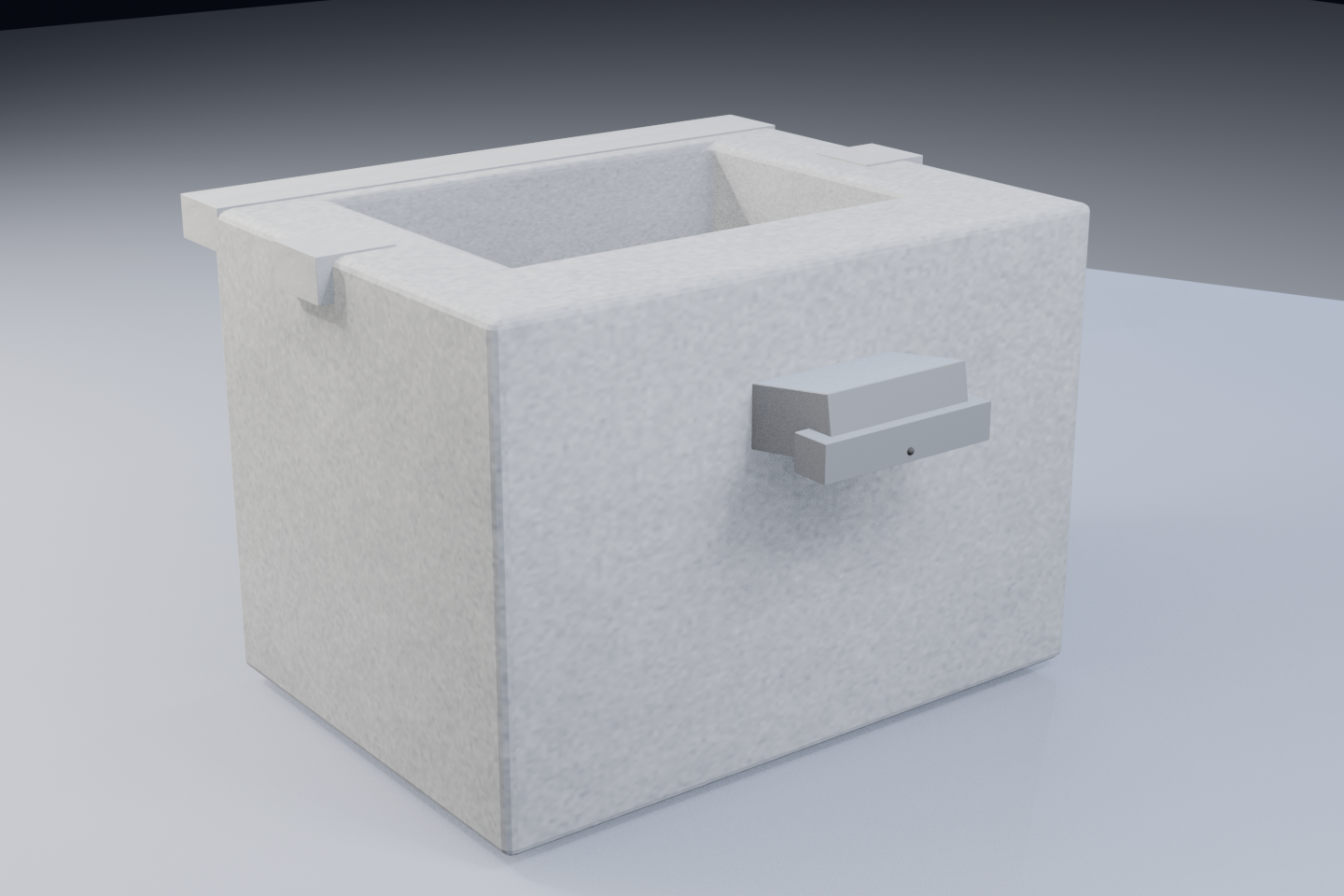
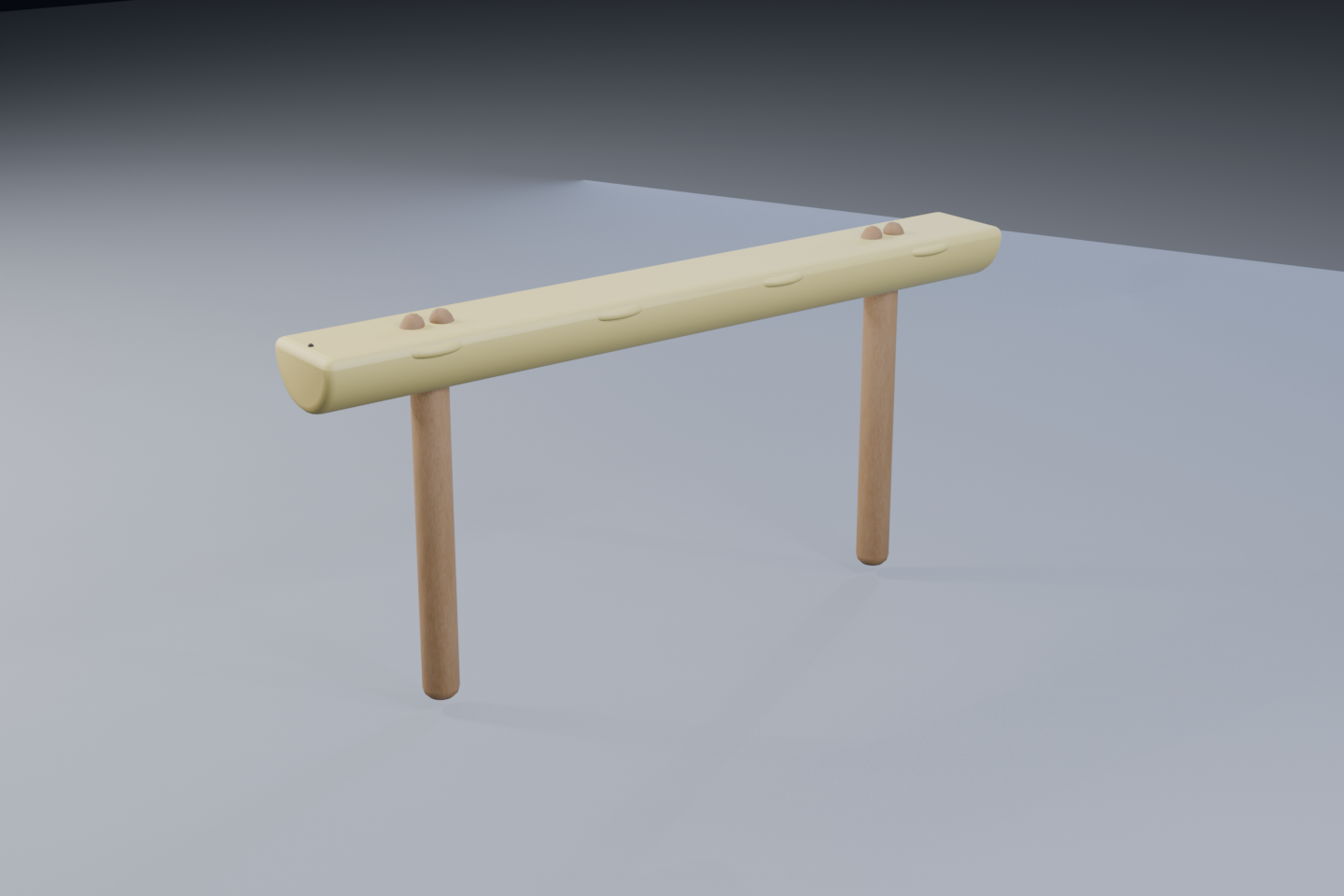
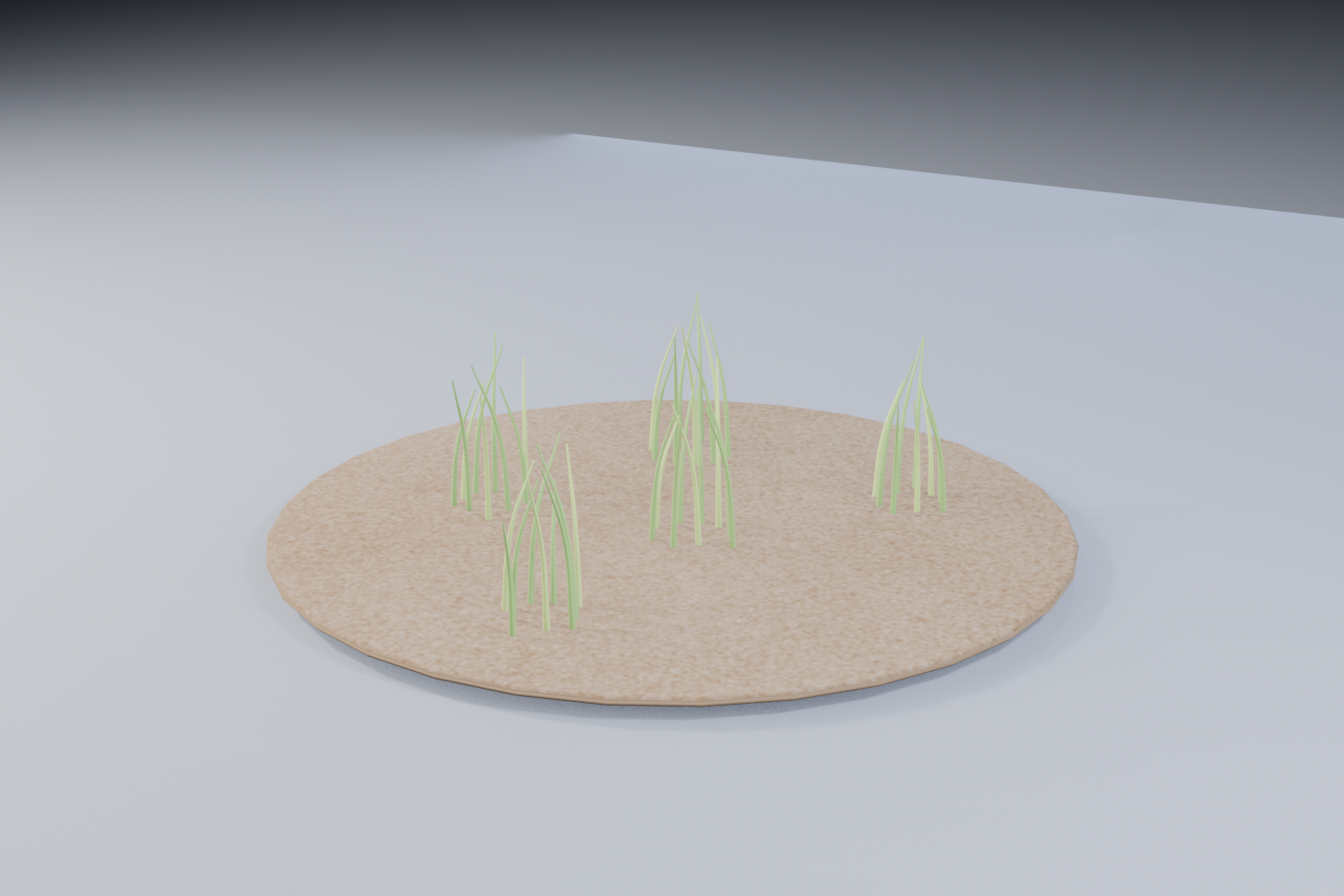
The written contract. Mountainside rice terraces at first light: a flight of narrow stepped paddies curving around a hillside, each basin a still sheet of water mirroring the pale dawn sky, separated by grassed earth bunds faced with dry-stone retaining walls; a carved stone spring head at the top spilling a thin stream into the first basin, split bamboo flumes carrying water across the bunds, small wooden sluice gates set into each bund with worn lift handles; rows of young rice seedlings standing in the flooded basins as fine upright blades, a low field hut of weathered timber on short stilts, a long-handled hoe and a flat carrying basket leaning against it.
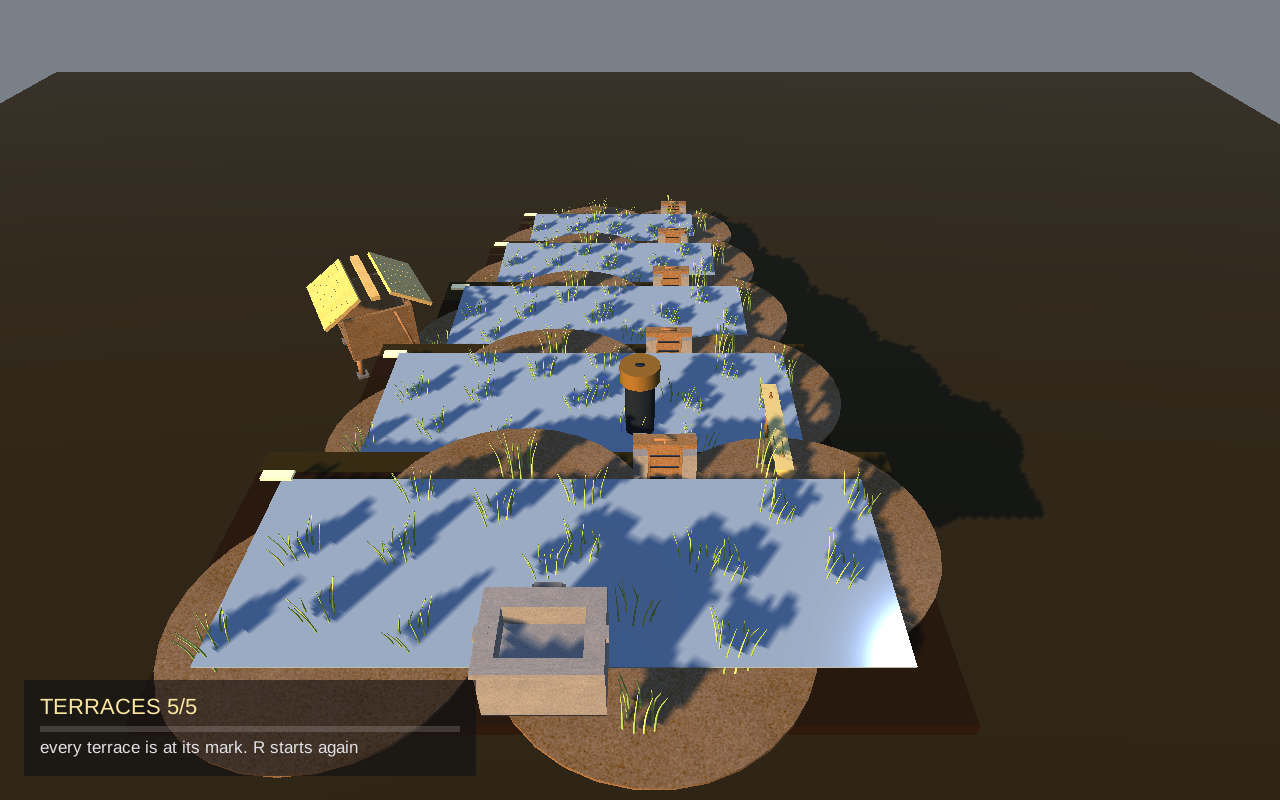
The water is the readout
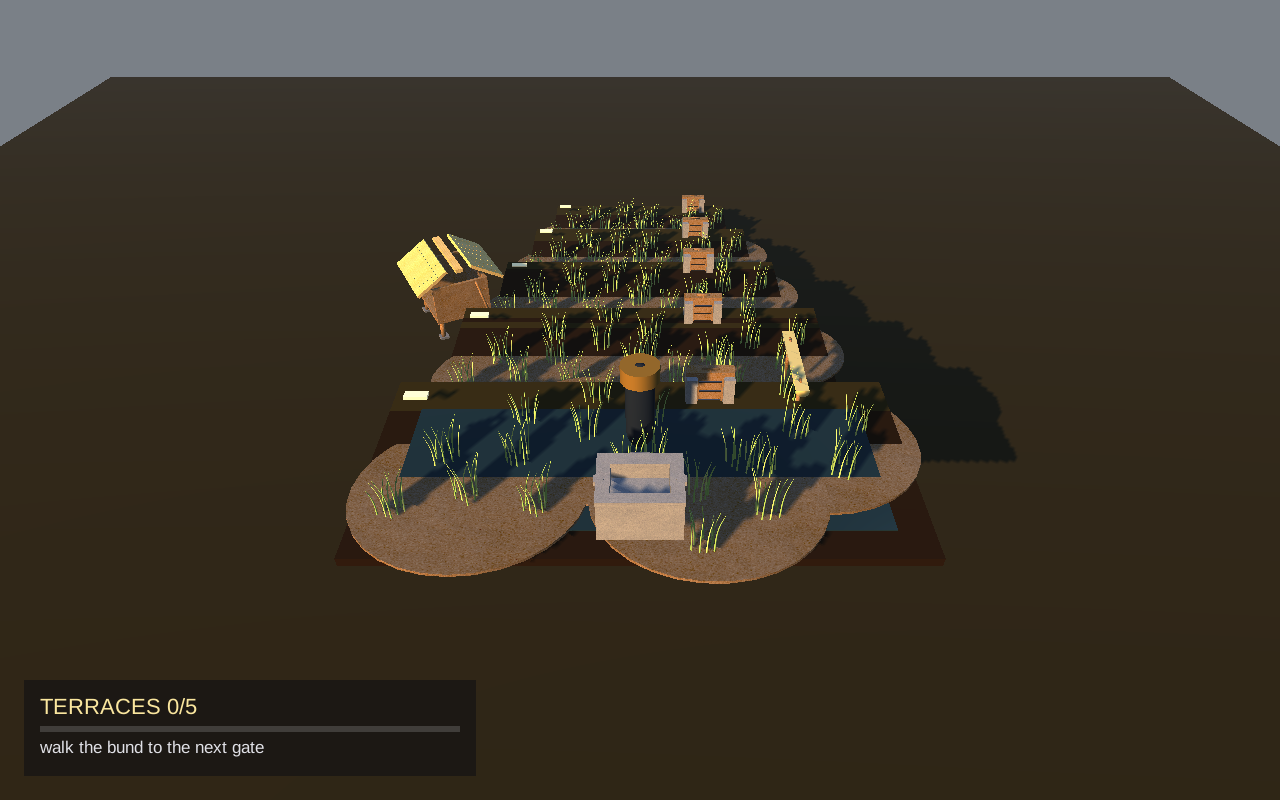
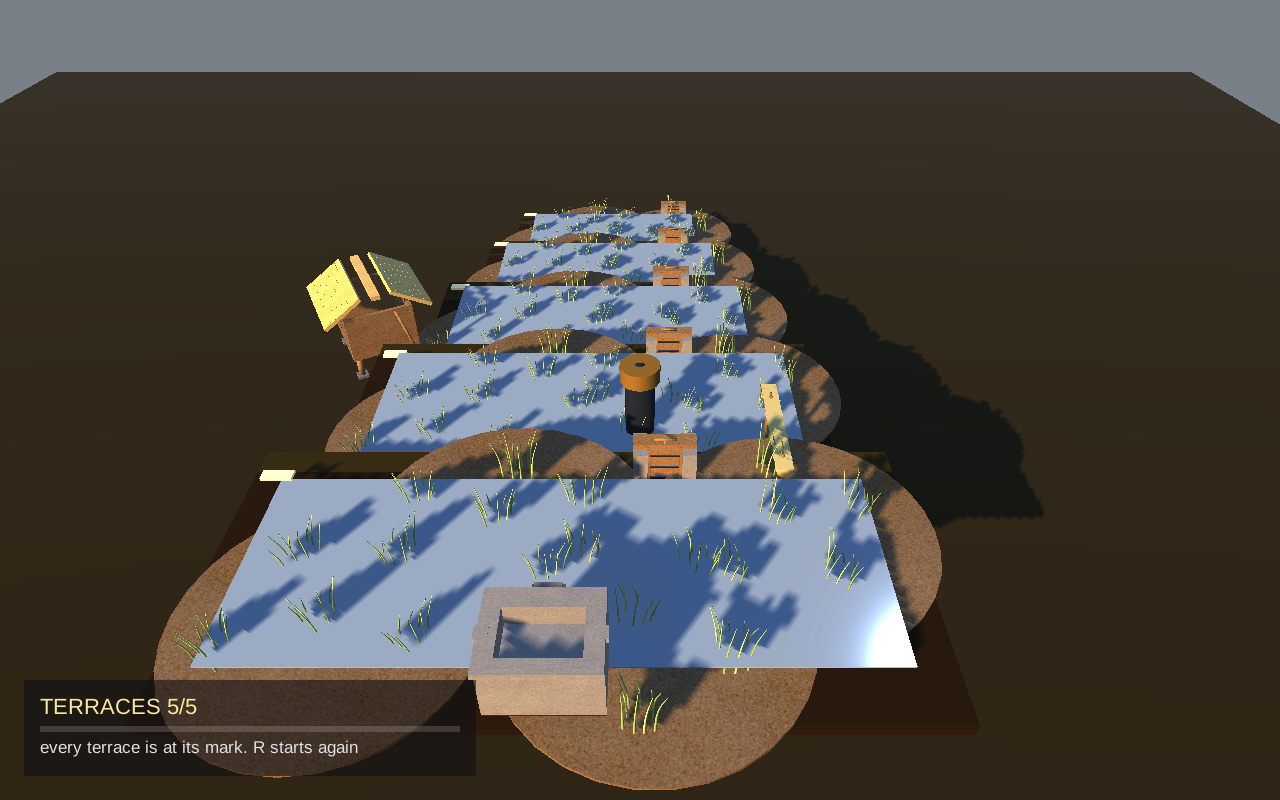
There is no bar to read. Each basin's water plane really rises, and a basin that reaches its mark goes still and becomes a mirror that catches the dawn. Empty and full, from the same seat:
Code-modeled in Blender
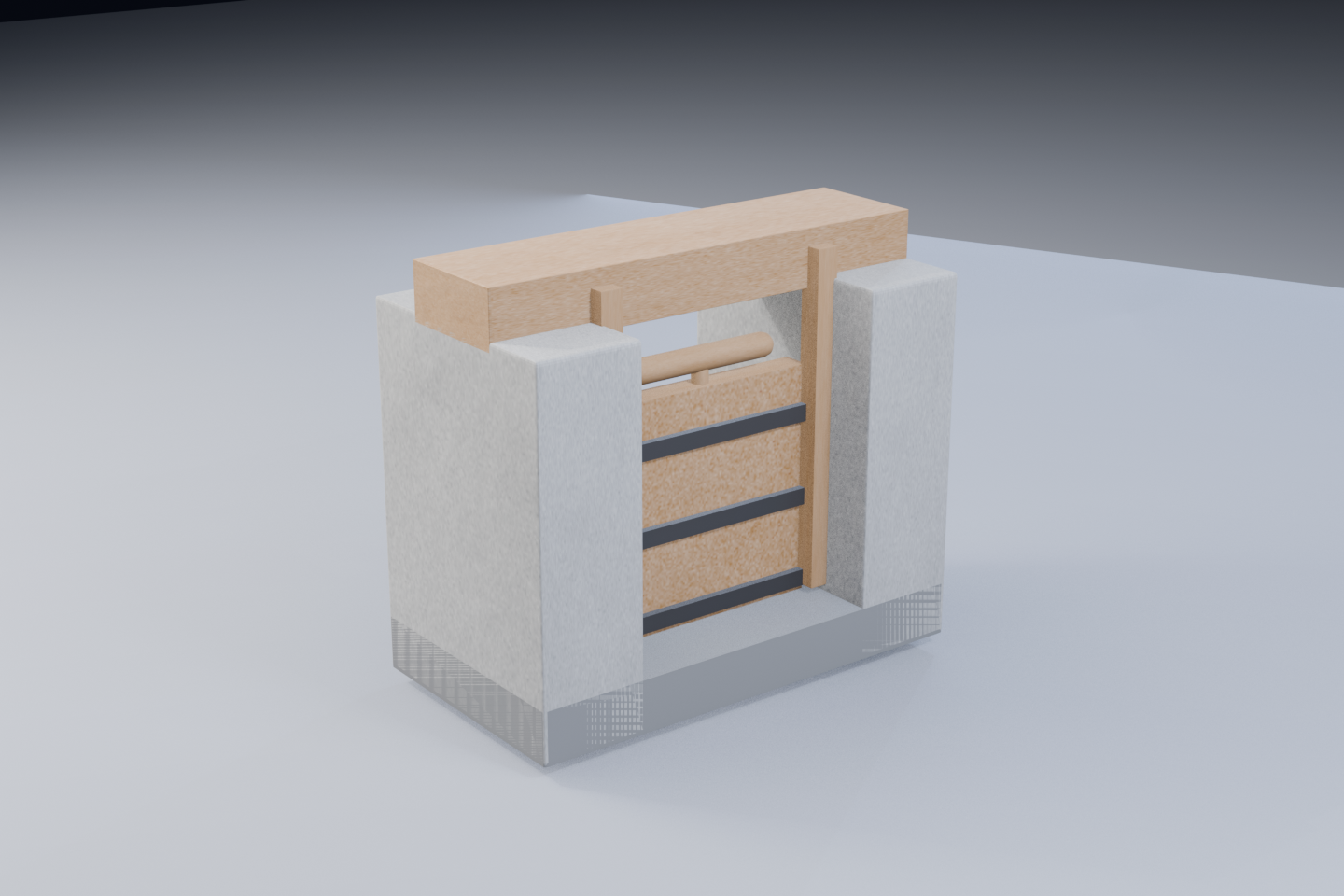
Seven units, one per element the contract names, written as Blender code against the platform sculpt kit — no downloaded models anywhere. The sluice ships named nodes so the engine lifts the real gate rather than faking it, and the rice is built as fine upright blades, never a green blob.
Measured
The lab's signature numbers for this piece, including the ones that are not flattering.
| Measurement | Value | Condition |
|---|---|---|
| Terraces in the flight | 5 | 0.92 m drop and 3.3 m run between each |
| Water conservation error | 0.0000001 | asserted at boot: transfer neither creates nor destroys water |
| Spring inflow / gate transfer | 0.115 / 0.190 per second | a gate drains faster than the spring fills, which is why sequencing matters |
| Fill mark / brim | 0.78 / 1.00 | past the brim it sheets over the bund and is lost |
| Audited playthrough | 5 / 5 terraces | autopilot flooded to the bottom, then closed gates upward |
| In-fiction refusals proven | 2 / 2 | no gate within reach, and the bottom gate that would drain the flight |
| Water spilled in the audited run | 4.07 units | the autopilot dawdles between gates; a careful player wastes less |
| Sampled note files shipped | 47 | koto, harp, cello, clarinet, marimba, celesta |
| Ambience beds | 2 | one of them reactive — it tracks how many gates are running |
| Blender units modelled | 7 | one per element in the written contract |
| Console errors, desktop and mobile | 0 / 0 | boot, full irrigation, both refusals, pause, restart |
| Mobile horizontal overflow | none | scrollWidth == clientWidth at 390 px |
What the piece earned
Engine and craft features this piece genuinely used, with the constants it settled on.
A conserved system, not an effect
Water moved into one basin is water that is not in another, and the boot self-test asserts it to a millionth. The flight is a real accounting problem wearing a hillside.
The environment is the mechanism
Every other environment piece in this lab is scenery you walk through. Here the terrain holds state you change: gates you lift, basins that fill, and water you can lose over a bund for good.
Refusals that cost nothing
Working a gate with none in reach, or the bottom gate that would drain the flight into the valley, are each refused in the loom of the fiction and cost only the moment — consequence without a wall.
Audio that answers the work
Forty-seven sampled notes across six instruments in D dorian, plus two ambience beds — and the second one is reactive: the sound of running water rises and falls with how many gates you actually have open.
Made by AI, compiled by the real Unity 6 engine
The spring head, sluices, flume, seedlings, seedling bundle, field hut and tools are seven code-modeled Blender exports; the terraces, their water and the walker are the piece's own code. Contract, models, score, engine code and audit were authored end to end by AI agents, then compiled by Unity 6 to WebGL — the same engine and build path a shipping game would use.