From concept to engine
Every panel from this asset’s gallery card — click a panel to open it full size.
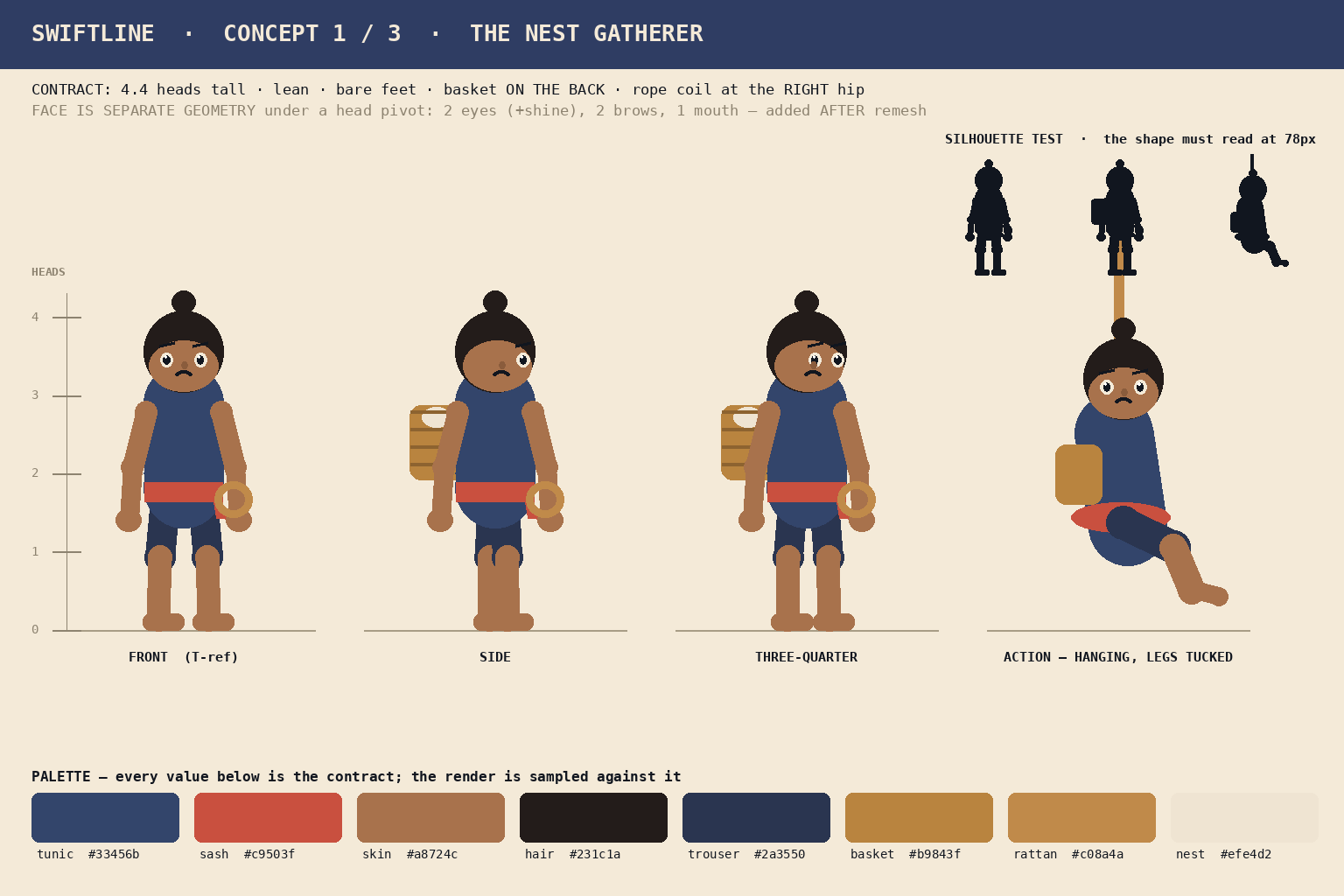
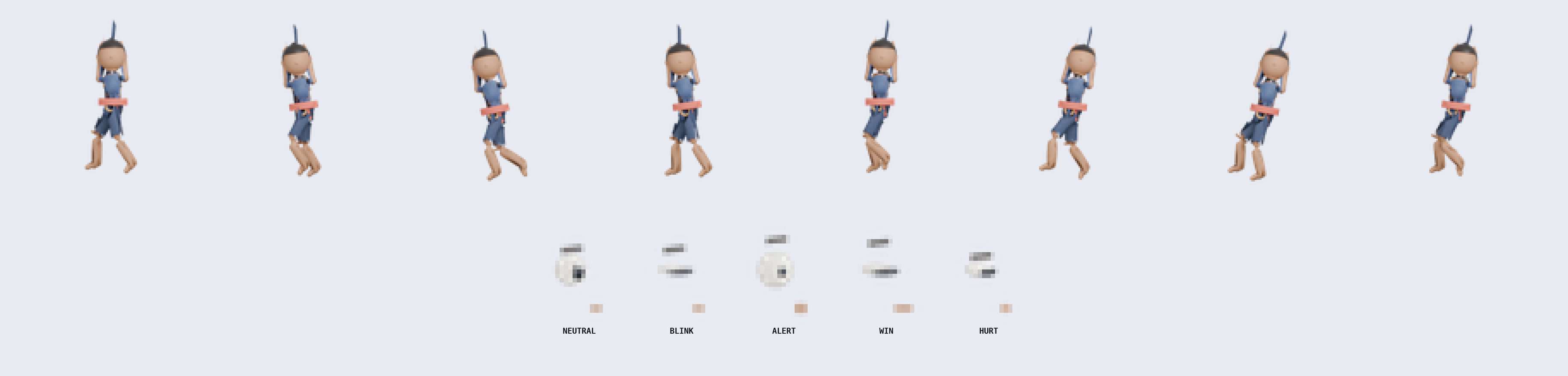
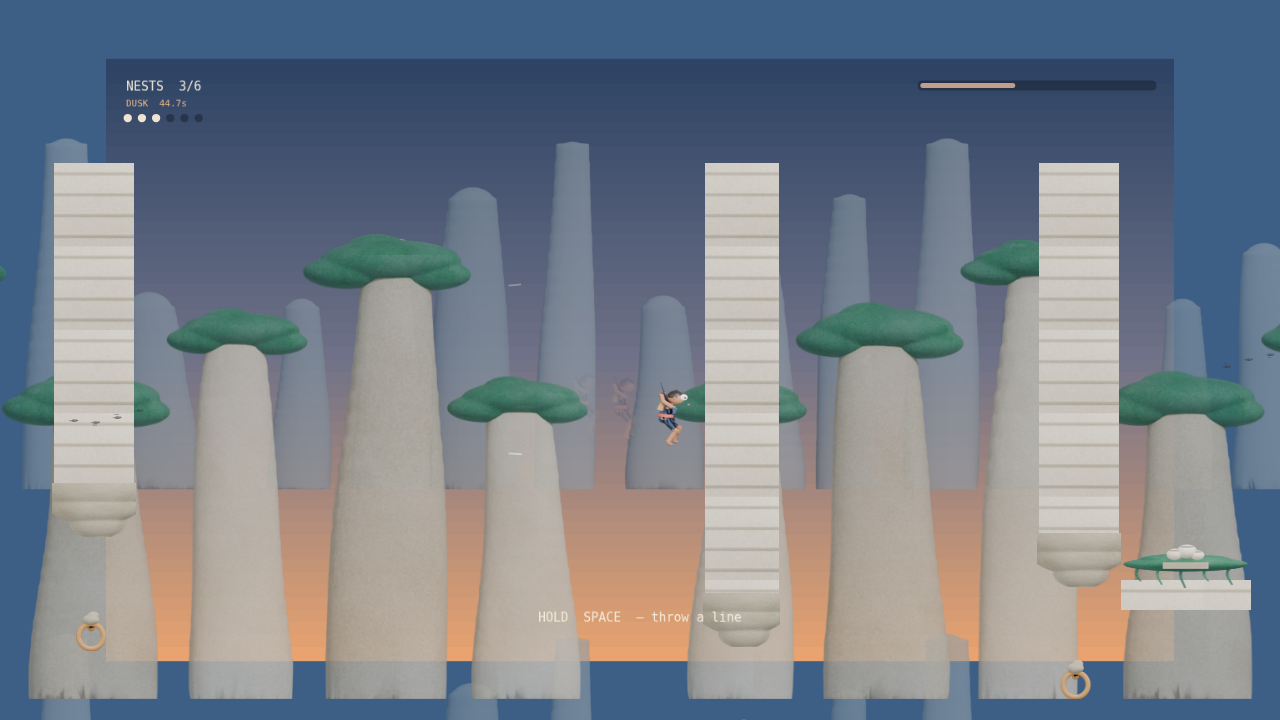
The Phaser Lab's third hero, and the first built for a SIDE-SCROLLER — which changed the modelling brief: in a profile camera the X axis is the silhouette, and the first two rounds were authored wide in Y and read as a broomstick. The concept sheet was painted in-lab this cycle (the platform's concept-image service was out of credits), which made it a numeric contract: every colour a named hex, every proportion a stated measurement (left). The Blender build is a voxel-fused body whose every limb is a capsule between two named joints, with the face added AFTER the remesh as separate parts — and it ships as its own five-state sheet plus a baked per-frame head-pivot table, so the face blinks and reacts in ANY body pose without multiplying the body sheet (centre). And the gatherer live in Phaser 4, swinging on a rope constraint that was measured before this art existed (right). Download the mocap-animated rig below.
swiftline_gatherer.glb · 4.8 MB · glTF 2.0 — modeled in code, exported from headless Blender
Every panel from this asset’s gallery card — click a panel to open it full size.
The swing cycle is motion capture, but not from one clip. The studio’s curated library had no hanging motion at all, so the full CMU archive’s own description index was read rather than guessing subject numbers — which found subject 43, “playground: grip bar, swing body”. Retargeted and measured frame by frame (wrist height against head height, torso verticality), that clip holds a usable hang for eight frames out of 181, and eight adjacent frames at 120 fps are the same picture: a cycle sampled from them fails an adjacent-frame difference gate, correctly.
So the cycle is composed: the arm chain is held at the pose measured from the hang segment, and legs and spine are driven by a locomotion clip (CMU 02_01) with the arm F-curves stripped out of the bake — because a keyed bone is re-evaluated from its action on every frame change and silently overwrites a pose set by hand. Arms locked overhead on the line, legs scissoring fore-aft: which is what pumping a swing looks like. The shipped sheet passes the adjacent-frame gate and a foot-sweep deform gate of 0.66 units.
This asset was built for Swiftline, a Phaser Lab piece. It was modeled entirely in code (Blender’s Python API) by an AI agent, rendered by headless Blender, and audited against its concept over four model rounds before export — the pipeline every Blender Studio asset goes through.